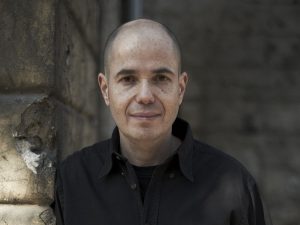
Five Centuries of Jewish Life in Brazil. What Comes Next? An Interview with Fernando Lottenberg
Brazilian Jews After Lula’s Reelection
Brazil left the IHRA in 2025, and its president compared the war in Gaza to the Holocaust. Yet twelve Brazilian states, and eleven countries across the Americas, have adopted the IHRA working definition of antisemitism. Fernando Lottenberg, a lawyer with a PhD in International Public Law, former president of the Jewish Confederation of Brazil (CONIB) and, since 2021, the first Commissioner of the Organization of American States to Monitor and Combat Antisemitism, argues that this fight cannot be left to Jews alone: antisemitism is an assault on human rights and on democracy. Conducted before and after Lula’s re-election, this conversation ranges from Recife’s first synagogue and the murder of the Jewish journalist Vladimir Herzog during the military dictatorship to the evangelicals’ embrace of Israel, the IHRA debate and the regulation of social platforms.
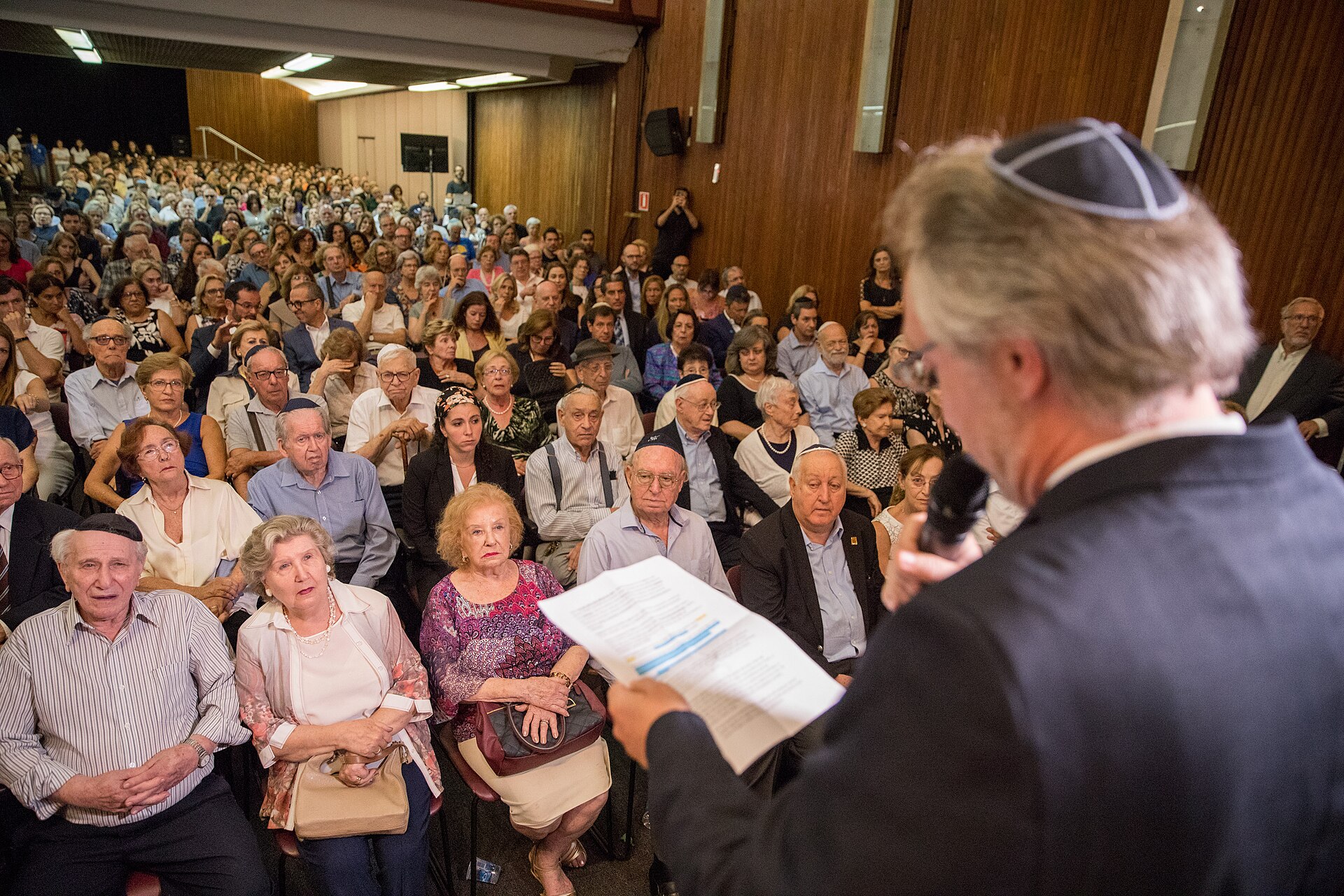
For five years, K. has documented the life and situation of Jews in Europe, first in French and English, through the work of a team of European researchers and journalists. The review is now published in five languages, including Portuguese, thanks to Breno, a long-time Brazilian reader who heard in the situation of Brazil’s Jews some echoes of what is happening in Europe, and who wanted to bring Brazilian voices to a wider audience. K. remains free, and is read by Jews and non-Jews alike: it is not a community magazine, but an attempt to take part in academic and political debates.
It is in this spirit that we approached Fernando Lottenberg, whose career spans Jewish community leadership in Brazil and an international mandate covering the whole of the Americas. The conversation took place in English, over Zoom, on 20 October 2026 and, after the second round of the Brazilian presidential election, on 5 November 2026. It has been lightly edited for length and clarity.
From Płońsk to São Paulo
EP: Let’s start with your family. Where did the Lottenbergs come from, and how did they end up in Brazil?
FL: The Lottenbergs came from Poland. On my mother’s side, the family is Kasinski, and came from Russia. My grandfather was from Płońsk, the same town as Ben-Gurion, and apparently they knew each other, according to my grandmother. He went to fight in the First World War in Russia, met my grandmother there, stayed, got married, had two children, and then they came to Brazil in the 1920s. If you ask why, from what I know, it was a place Jews could come to: as some went to Argentina, as some others went to Uruguay, they came to Brazil.

My father was the first generation born here, as well as my mother. And this is something we can be proud of in Brazil, as in some other countries: my grandfather, who faced numerus clausus and couldn’t go to school in Poland, had a son, my father, who went not only to public schools but to a public – and free – university. Brazil provided opportunities that were not available in their native land, in a country that was growing and, at that time, free from antisemitism. It was not a big issue here in the 1920s and 1930s.
EP: You trained as a constitutional lawyer. Did your Jewish upbringing shape this, or did the two paths meet later?
“Adam was not Jewish. Adam was just a man, and nobody can claim that his background is better than anyone else’s.”
FL: I think it had some influence. My PhD was in International public law, so I studied the framework of human rights built after the Second World War, and I think it bears a strong Jewish influence: René Cassin, Hersch Lauterpacht, Raphael Lemkin and many other Jewish figures shaped the world we lived in until a few years ago, let’s put it that way. I think the people of the book also have lessons to teach the world in that sense: equality, the idea that we are all descendants of one man, without distinctions. Adam was not Jewish. Adam was just a man, and nobody can claim that his background is better than anyone else’s. So yes, I think there was some influence.
EP: How did you move from the courtroom to communal leadership? Was there a particular moment, or a cause that pulled you in?
FL: I was a member of a Jewish youth movement as a teenager. Then, in Law school, I left it behind for a few years. After my Master’s and PhD, I came back to work with the Jewish community, and I became secretary general and then president of the Jewish Confederation of Brazil (CONIB). When this was over, in 2020, I was invited a year later to this position at the Organization of American States. So yes, I feel there is a continuum across different arenas: no longer within the Jewish community, but from an outside perspective, fighting for the same causes.
Recife and the return of the Anusim
EP: Brazil’s Jewish story is often said to begin in Recife, with Kahal Zur Israel, the first synagogue in the Americas, in the 1630s. Does this founding myth still mean something to Brazilian Jews today?
FL: Yes, it does. And even before that, you could say that Jews came in the caravels with the conquistadors, because it was the time of the Inquisition – in Spain and Portugal. Recife is very important because of the Dutch. When the Dutch took Recife, they instituted a kind of freedom of religion, so Jews could express themselves, and the synagogue in Recife dates from that time.
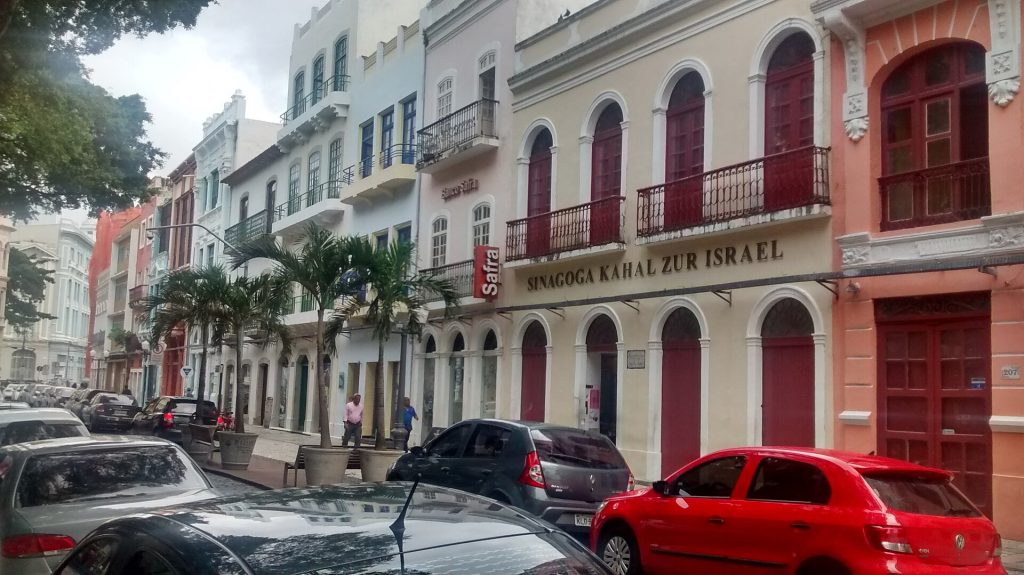
In this way, the presence of Jews in Brazil has to do with the country’s own foundation. You have communities of Bnei Anusim, people who were forcibly converted, and who were, as in Portugal, crypto-Jews, practicing Judaism in hiding. So yes, this is a formative element of Jewish identity in Brazil.
EP: Brazilian Jewry was built in successive waves. The community is diverse: Moroccan Jews, Eastern Europeans, agricultural colonies, later arrivals from Egypt and Lebanon. Would you say there is such a thing as a Brazilian Jewish identity?
FL: I think so. At the end of the day, people are here for many years. The people who came the latest, the Sephardim, in the ’50s and the ’60s, kind of mingled while preserving their traditions. But now you can say there is a unified Jewish community, sharing common trends and a common identity. Of course, some people, as you mentioned, the Moroccans, came to the Amazon. So there is a Jewish community in the Amazon. The president of the Brazilian Senate, Davi Alcolumbre, is a Moroccan Jew. So, there are Jews who rose to important positions in Brazilian public life. And you have at the same time Ashkenazim and Sephardim, Mizrahim, and I think we live together with common elements.
EP: In the Northeast, more and more people claim descent from New Christians and seek to return to Judaism. How should Jewish institutions respond to these people willing to come back?
“They feel, with reason, that they don’t need to convert, because they feel they are somehow already Jewish.”
FL: When I was president of the Confederation, we tried to create a path for them to return, because it’s a very delicate balance. They feel, with reason, that they don’t need to convert, because they feel they are somehow already Jewish. On the other hand, you have the halakhic rules: if you cannot trace the maternal lineage, they would have to convert. In some cases, for instance in Rio Grande do Norte, a state in the Northeast, we worked with a Reform synagogue, where the rabbi gave classes, and they agreed on not exactly a conversion, but a return to the Jewish tradition. It was done in a respectful way, so they could be accepted. That’s not the case everywhere. In some places you have the traditional community and the Anusim community, and they don’t mingle. There is some resistance.
Herzog, Vargas and the ambivalence of the state
EP: The murder of Vladimir Herzog under the military dictatorship was a turning point. What role did Jews play in Brazil’s democratic struggle? Is this memory still alive?
FL: Yes, very much alive. Vladimir Herzog was an important journalist. He worked at a public TV station, here in São Paulo. There were moments when the army went to people’s homes, arresting them or summoning them to give a deposition. He said he would go the next day. He went, and never came back. He was tortured, he was killed, and it shook public opinion.
“It took ten more years until it finally opened and we became a democracy again, but it was the first crack.”
There was a very important reaction from the whole of civil society, and the rabbi of CIP, then a Conservative synagogue, Henry Sobel, played a major role. Back then, and this no longer happens, people who had killed themselves had to be buried close to the wall of the Jewish cemetery. He refused to do that, and Herzog was buried in an ordinary grave. The military were very nervous about it, because their official version was that he had killed himself. Then there was a public ceremony at the São Paulo Cathedral, with the rabbi, the cardinal and a Protestant pastor, full of people. This was October 1975, 51 years ago now. It shook the foundations of the authoritarian regime. It took ten more years until it finally opened and we became a democracy again, but it was the first crack.
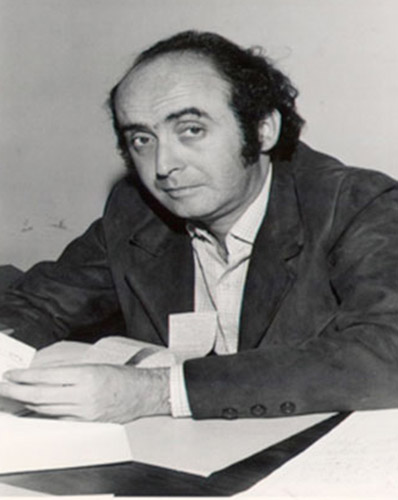
This also had repercussions inside the community, because other Jews were involved. There was an armed struggle here in Brazil, some Jews took part in it, and some of them were killed in action.
EP: In the 1930s, during the Vargas era, secret circulars restricted Jewish visas, but at the same time diplomats like Souza Dantas or Aracy de Carvalho saved lives. How do Jews today react to this ambivalence? French Jews, for example, know this ambivalence well: they are deeply attached to the state, yet they remember how it treated them under Vichy.
FL: We had those circulars from the Justice Ministry and from Itamaraty, our Quai d’Orsay, restricting Jewish immigration. Even so, Brazil was one of the countries that received a large Jewish immigration during those years, despite the restrictions.
But people have mixed feelings, because you had the initiatives of our Ambassador in Paris, Souza Dantas, who was very important, and of Aracy de Carvalho Guimarães Rosa at our consulate in Hamburg, as you mentioned, with her husband, the vice consul. But the establishment was very much against Jewish immigration, and sometimes sided with the Nazis. So this is not a period we can be proud of.
A success story, and its old myths
EP: You knew the Jewish community well, but when you led CONIB, what surprised you most?
“It comes from family tradition, and many people don’t even know they may have been Jews.”
FL: I got to know each and every community I traveled to much better. With the Bnei Anusim in Rio Grande do Norte, for instance, I went to a Kabbalat Shabbat, talked to people, saw how they live, and you discover habits among the population whose origin they don’t even know: covering the mirrors when someone dies, or cleaning the house on Friday afternoon. It comes from family tradition, and many people don’t even know they may have been Jews.
My last year was the year of the pandemic, so we had the difficulties everybody had, and at the same time an increase in antisemitism, three years before October 7: Jews were accused of being behind the virus and its spread, or of trying to sell medicines. We had to take people to court, and they were convicted, because they were spreading antisemitism on social networks, recycling old tropes like the Black Death and the poisoning of the wells, old myths that were recycled during the pandemic.
EP: Brazilian Jews are deeply woven into national institutions: there is the Albert Einstein hospital, the Lasar Segall museum, you are involved in both. Is the integration of Brazil’s Jews a success, or does it also hide its share of fragilities?
FL: I think it’s a success story, in the general picture. There were no restrictions on Jews doing anything they wanted to do; they took their chances very quickly, and they could express themselves. Of course, there were some issues, like the accusation of double loyalty, the kind of antisemitic feeling that always shows up. But it was not something that could prevent the development and success of individuals and of the Jewish community as a whole.

Compagnons de route
EP: From Europe’s secular societies, it’s difficult to understand the role of the millions of evangelical Christians who openly identify with Israel, sometimes waving Israeli flags. Is it philosemitism, or is there also a risk for the Jewish people in allying with them? A friend of mine went to the airport because his sister was making aliyah. He looked at the person managing the group of French Jews who were leaving, and he saw something strange: she was from an evangelical group that had paid for the Jews’ tickets, and they were handing out flyers about Jesus. He said to his sister: “This is madness.” But maybe it’s different in Brazil.
FL: First of all, I think we don’t have many friends. So we cannot be picky and say: “I don’t want you to be my friend because you do this and that.” We need friends, and they have been friends to the Jewish community in many ways: in politics, in parliament, in moments when Israel is ostracized, they have been very faithful and loyal. Having said that, I’ll use a term you may know from French history and politics: they are compagnons de route. We are not the same thing. We have some things in common, and some things that are different. Sometimes, of course, we are bothered by the use of our symbols for things that have nothing to do with our identity.
“You cannot use the Israeli flag for a purpose that has no connection with the country.”
When I was president of CONIB, I went to the newspapers to criticize the use of the Israeli flag in demonstrations by people who supported military intervention, the closing of the Supreme Court, anti-democratic acts. I complained, because Israel is a democracy, so it has nothing to do with this. You cannot use the Israeli flag for a purpose that has no connection with the country.
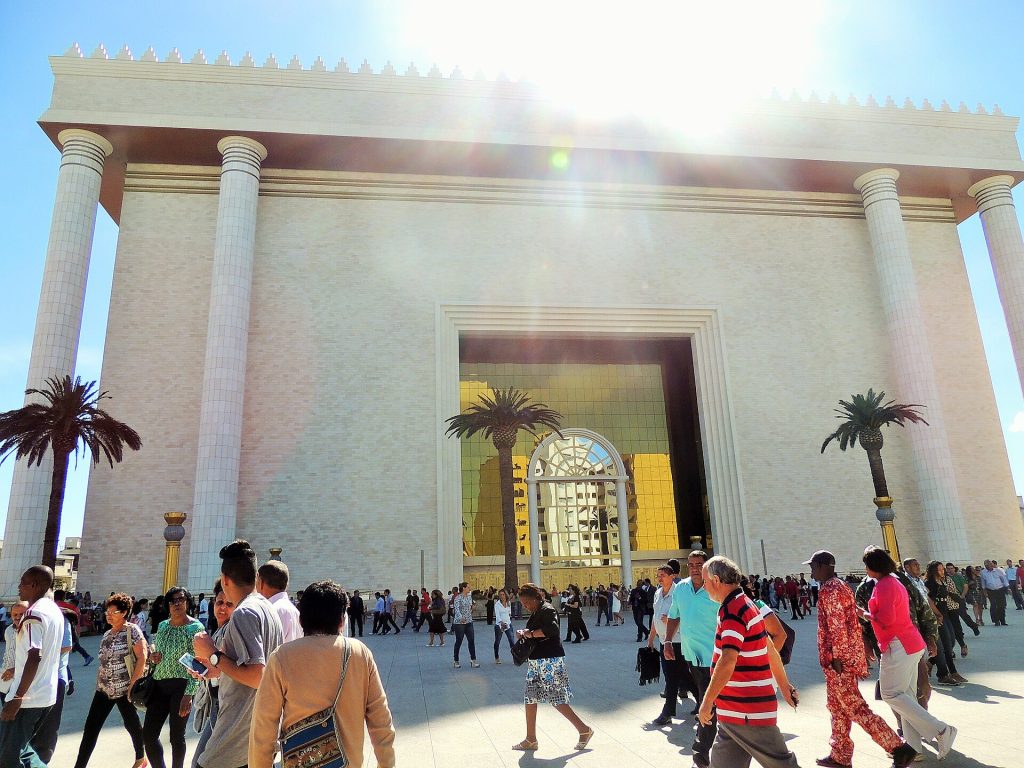
And as you say, they were handing out flyers: in the end, maybe they think their mission is to convert us. But I say, as a joke, that they’re not in a hurry, so they can wait for the time if/when Jesus Christ comes back, or when all the Jews are in Israel. Meanwhile, I think we can work together on some things. In terms of allyship, of bringing friends to our causes, they have been important, and we should value that.
Not only a Jewish problem
EP: In 2021, you became the first Commissioner to Monitor and Combat Antisemitism. What did the job consist of on day one, given that no one preceded you?
FL: The idea was to have, as in Europe, where I think you have been pioneers, and as in the US, Canada and Australia, someone and an office, inside an international organization, looking into this.
“Antisemitism is not only an assault on Jews and the Jewish community, but an assault on human rights and democracy.”
Because the idea behind it is that combating antisemitism should not belong exclusively to the Jewish community. Of course, the community has to do it. It’s its raison d’être, at least out of self-interest, to preserve its rights and its ability to keep living in open societies. But it should also be in the interest of governments and international organizations, because antisemitism is not only an assault on Jews and the Jewish community, but an assault on human rights and democracy. If you allow antisemitism to grow within free societies, you may have a problem, because the reasoning behind antisemitism, whether from the far right or the far left, is that Jews are somehow in control. In control of something: the press, the banks, the movie industry, whatever.
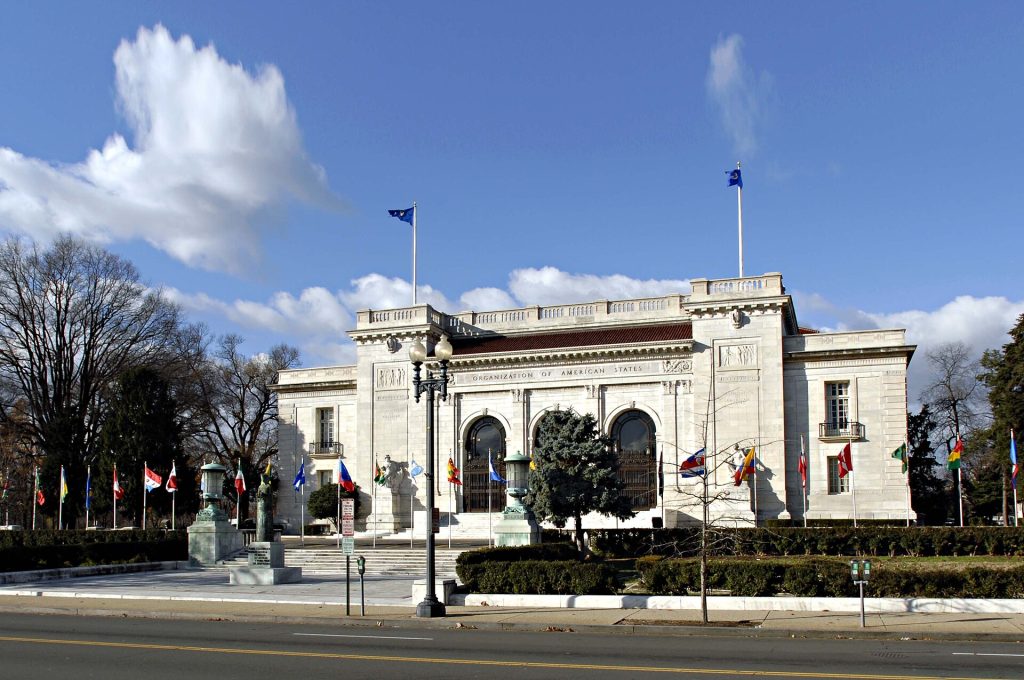
I truly believe it’s in the interest of societies to fight it and to raise people’s awareness about it. This is, I think, my most important mission: raising awareness about the dangers of antisemitism in our societies. Because people tend to think, especially in our region, that this is not a local issue: “We don’t have it here. This is a European problem,” or “a Middle Eastern problem,” or nowadays, “a United States problem.” That was the first thing.
The second is expanding the adoption of the IHRA definition, which I do believe has been helpful, with all the controversies it may have. I think it’s better to have it than not. Not necessarily in a legislative manner, to forbid certain behaviors or speech, but to formulate public policies. It can help the judicial system to identify when something is or is not antisemitic.
So I think the OAS is in a good position. With all the difficulties international organizations face nowadays, it is still an important platform to raise this issue, not only as a necessity of the Jewish community, but because it is good for countries not to let it grow.
Leaving the IHRA
EP: Is there other concrete progress you want to point to?
FL: In Brazil, we are working on building a National Strategy against Antisemitism. You know that Brazil left the IHRA about a year ago. We started talking with the government. We complained, because I think it was a wrong move.
EP: But they left because they think it’s an instrument to condemn people who criticize Israel. What do you answer them?
FL: First, there was a confusion between the organization and the definition. Belonging to the IHRA does not mean adopting the definition. Brazil had not adopted the definition, but it was an observer country. So why leave an organization dedicated to the memory of the Holocaust? There cannot be a good reason for that. Brazil has a day to remember the victims of the Holocaust. So why leave this tradition behind, because someone thought the definition might be this or that?
“Only a conspiratorial vision sees Jews who don’t live in Israel as co-responsible for what happens there.”
Second, I don’t buy the thesis that the definition censors freedom of expression. It says, literally, that Israeli governments can be criticized, as other governments. What you should not do is hold Jews outside Israel responsible for the decisions of the Israeli government. I don’t think the Prime Minister of Israel calls you, because he doesn’t call me either, to ask what he should do in Gaza or in the West Bank. We have no agency, no influence at all. Only a conspiratorial vision sees Jews who don’t live in Israel as co-responsible for what happens there. So I think it was a bad move, and unfortunately, here and elsewhere, this has become an issue of right versus left.
October 7 and its pretexts
EP: Yet Brazil left the IHRA, and at the same time President Lula compared Gaza to the Holocaust, which the IHRA definition cites as an example of antisemitism. What should we understand about the nature of antisemitism in Latin America, and what has changed since October 7?
FL: At the same time as the federal government left the organization, twelve Brazilian states, among them the most important ones, and both the cities of São Paulo and Rio, have adopted the definition. That has an influence, because not everything is federal in Brazil. Many things, the police or education, for instance, depend on the states, since we are a Federation.

As for what has changed: as in many places, we could expect some solidarity after October 7, but it lasted a very short time. Even in the following days we could see: “we have to stop the genocide,” Israel is doing this, Israel is doing that, and this conflation between what Israel does and what Jews in Brazil and Latin America are. In Latin America we had fewer violent in-person attacks than in other countries: nothing similar to Bondi Beach, or to the killings outside the Capital Jewish Museum in Washington, DC, or Pittsburgh. But we had a strong growth of incidents online, especially on social platforms. In academia, Jewish professors were canceled and sometimes prevented from taking part in debates.
“It’s the antisemites who take advantage of it, who use the conflict as a pretext to disseminate their hatred and to discriminate against Jews.”
I think it’s receding now. Not because the conflict is receding: I always say that antisemitism does not increase because there is a conflict in the Middle East. It’s the antisemites who take advantage of it, who use the conflict as a pretext to disseminate their hatred and to discriminate against Jews. So when the pretext is no longer there, it goes down, but we haven’t yet come back to where we were before 2023.
After Lula’s re-election
EP: Lula has won the election. What’s your first reading of the result?
FL: In a general sense, I think it came, I won’t say as a surprise, but as something unexpected, because in the history of second rounds in Brazil since re-democratization, a candidate who had lost the first round had never won the second. So I think there was an important mobilization during these three weeks, of people who hadn’t voted, or had voted for no candidate or for other candidates, and who embarked on what some experts called an “anti-Bolsonarism of arrival”. Not everyone agrees, but many people believe that the prospect of another Bolsonaro government made people turn to Lula, and allowed this big margin, more than four million votes in the second round. As regards the Jewish community, I hope he will be closer, re-establish connections, receive the community and open a dialogue that has been difficult during the current term, which ends in January.

EP: Looking back on the campaign: what did Brazilian Jews experience during this campaign? What statements or incidents particularly struck you?
FL: I think it was not a big issue. What we had were disputes within the Jewish community, because it’s a pluralistic community, as is the case everywhere. Some people were with Lula, some with Flávio Bolsonaro. And there were debates, for instance: should the community support one candidacy rather than the other? This is normal; it happens every election. Some things were not so nice: people from one camp saying that Jews who supported the other candidate should be boycotted. That was ugly. And on both sides, some groups positioned themselves as if they were the true Jews: the true Jews should vote for this one because he’s our friend, or for the other because he represents this or that value. There is a dispute about what the Jewish vote should be, even though Jews are electorally irrelevant: about 120,000 people, so roughly 0.06 percent. But there is something symbolic about where Jews should be placed in a dispute like this.
EP: Lula’s comparison of the war in Gaza to the Holocaust caused deep unease. How do you assess those remarks, and what do you expect from the language of the state towards Jews, and regarding Israel as well?
“Making Jews the new Nazis is improper, and it raises fears that should not exist in the 21st century.”
FL: We had some issues during his current mandate. One was this comparison, which I believe is inadequate and even offensive. You may criticize the Israeli government, the prime minister, or the way the war in Gaza was conducted, but this comparison is inappropriate. Making Jews the new Nazis is improper, and it raises fears that should not exist in the 21st century. The second issue, also important, is that Brazil withdrew from the IHRA. Nobody leaves the IHRA. I don’t know of any other country that has left it. And the third: he never received the Jewish community in his office. That’s on the negative side.
On the positive side, we started a conversation after Brazil left the IHRA, and I think it has already brought good results. The most important was the creation of a working group tasked with establishing a National Plan against Antisemitism, a National Strategy. We hope and expect that by December it will be brought to the President’s Economic and Social Advisory Council, and that it will become public policy. If this happens, it will be a positive development, and then we will have to look at its implementation. So you have both sides, and I think we should be positive about the outcome and expect a new relationship.
We are here to stay
EP: Looking back at your work at the OAS, which achievement do you consider the most durable, especially for Brazil or Latin America?
FL: First of all, raising awareness of the issue on the continent. People tended to see antisemitism as something that doesn’t happen here, something that happens in Europe or in the Middle East. Unfortunately, especially in the last three years, we saw that this was not true. Now, when I go to countries, they know it is a real issue, and why countries should be aware of it and take measures against it. One example is the adoption of the IHRA definition across the continent. When I took office at the OAS, four countries had adopted it; now there are eleven. Of course, adoption alone is not enough, but it’s an important first step toward public policies against discrimination, hate speech and antisemitism: you need to know what you’re facing. So I hope, and I believe, I have contributed to the fact that we are one step further today. We are now in another phase.
EP: Is there something you would like to add, about Brazilian specificities? Thanks to Breno Benedykt, K. has already published several pieces on Brazil. But on the current situation, from your perspective, what would you like European readers to understand about Brazil today?
“Jews have been here for 500 years. We are not war refugees.”
FL: If I can be useful to your magazine and your readers, it is with a look at the Americas, and especially Latin America: Jews have been here for 500 years. We are not war refugees. We are a group that has contributed since the beginning, since those who fled the Inquisition in the 15th century. And we are here to stay, to build a better society, by having allies, by not working only among ourselves. And after what we went through in the 1970s and 1980s, which you raised with your question on democracy, I strongly believe in reaffirming that the democratic system is the best system for minorities to thrive, to express themselves freely, to go to court and exercise their rights when they feel themselves at risk.
Nowadays, the avenues where hate speech flows freely are the social networks and the platforms. Content moderation is almost gone on all of them. I think there is an overly broad interpretation of the First Amendment in the United States, and since these are American companies, they tend to apply this standard to other countries. Freedom of expression is important, of course. It’s a constitutional value, a democratic conquest, and we must preserve it, but it’s not absolute. You have to balance it with other constitutional principles, such as: (i) combating racism; (ii) equality and (iii) non-discrimination, and you cannot use freedom of expression to insult, attack or discriminate against minorities.

In our Supreme Court, we were able to take part in a case, with other institutions, as amicus curiae, when the court regulated the liability of social platforms, establishing principles such as notice and takedown: when platforms have to remove, or not amplify, certain content, especially racist and discriminatory posts, of which they are not the authors but whose reach they can amplify or reduce through their algorithms. The algorithms are the property of the companies, and the companies should be liable for them. This was only possible in a democratic system, where you have access to justice and can make your point of view count in the public arena.
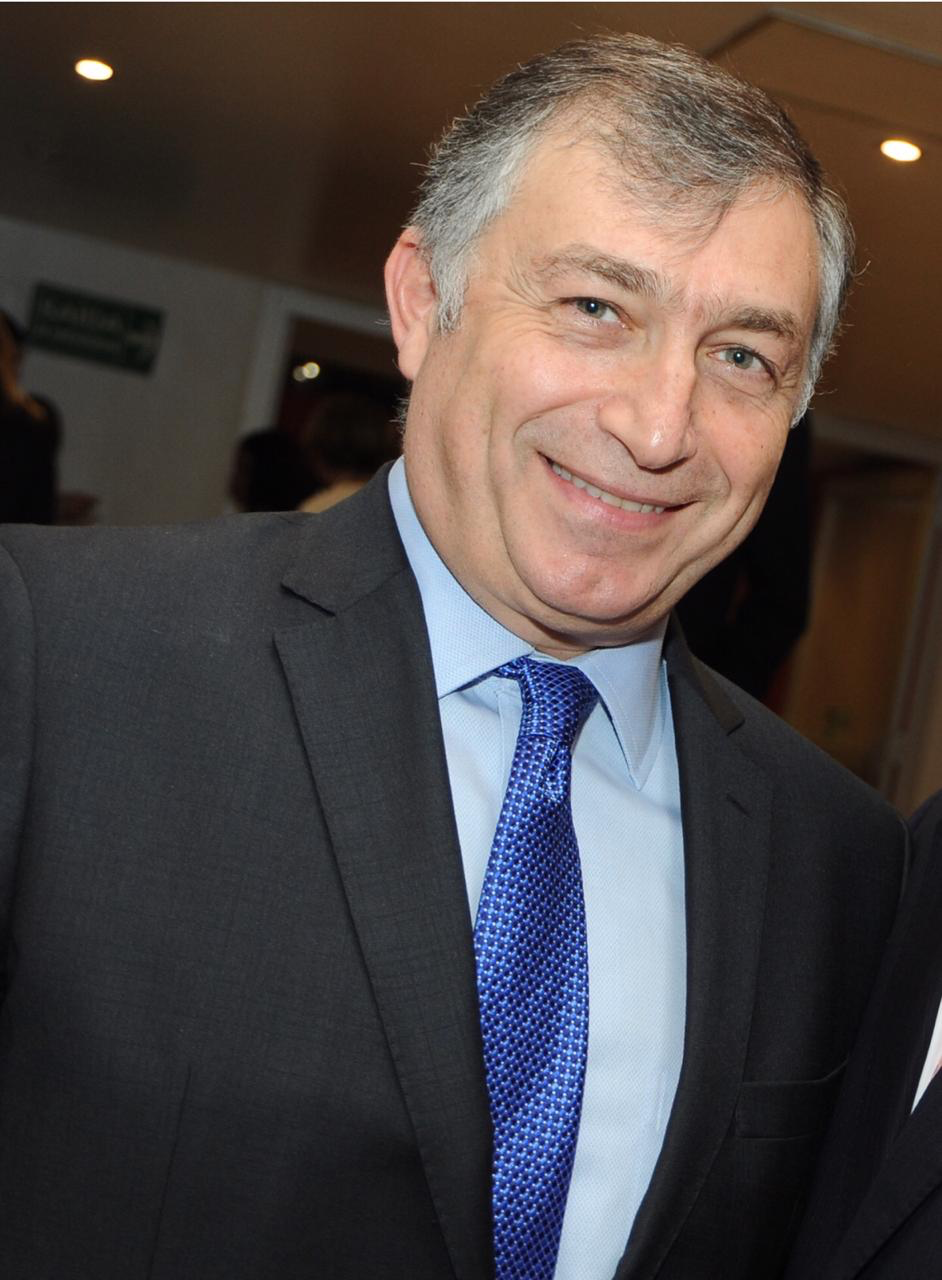
Fernando Lottenberg
Fernando Lottenberg is a lawyer in São Paulo and a partner at Lottenberg Advogados Associados. He holds a PhD in Public International Law from the University of São Paulo and was a Fulbright fellow at the LBJ School of Public Affairs in Austin. President of the Jewish Confederation of Brazil (CONIB) from 2014 to 2020, he became in 2021 the first Commissioner of the Organization of American States to Monitor and Combat Antisemitism. He chairs the Memorial Foundation for Jewish Culture and sits on the boards of the Hospital Israelita Albert Einstein and the Lasar Segall Museum.
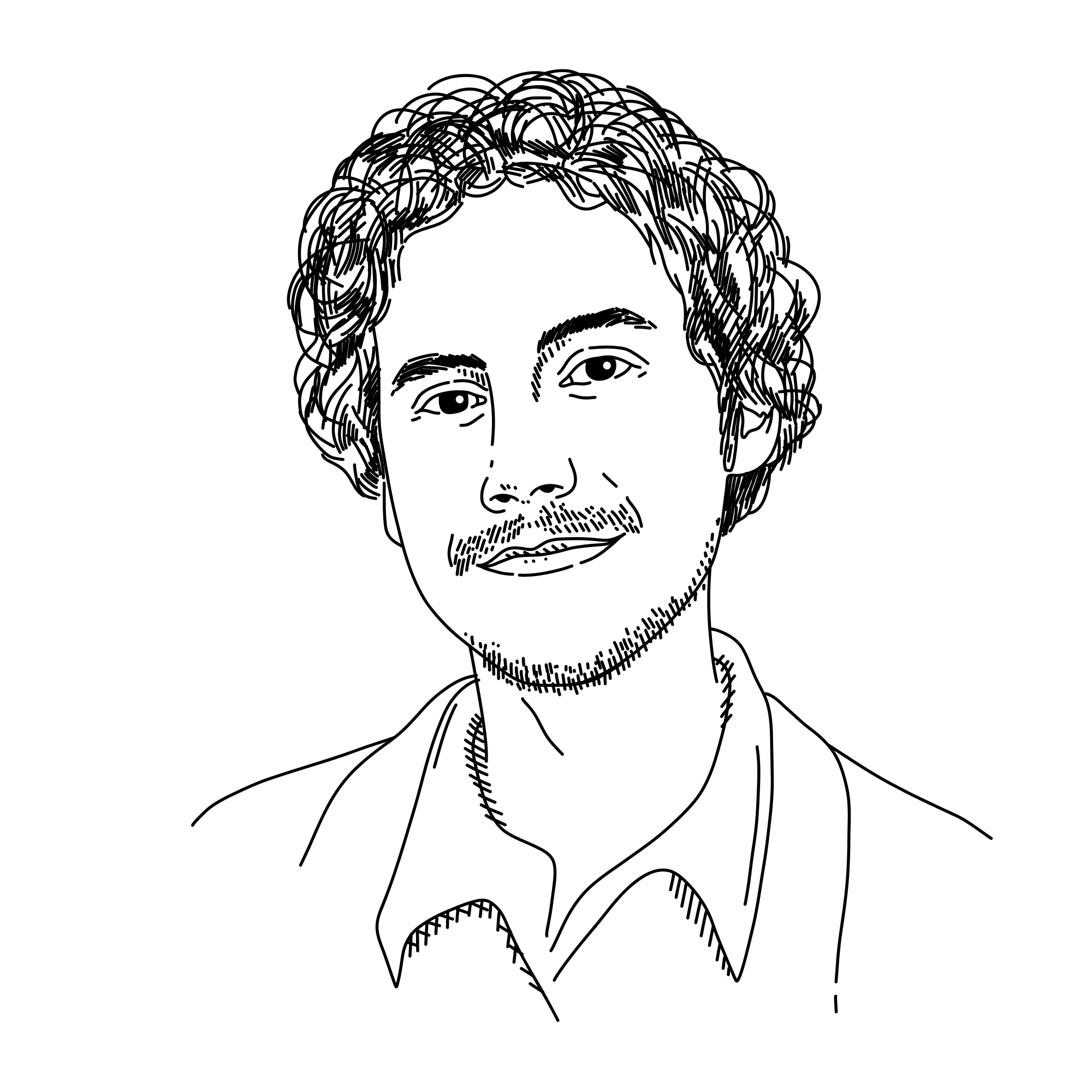
Elie Petit
Elie Petit is a journalist and deputy editor-in-chief of Revue K. He collaborates with numerous international media outlets, including The Washington Post, NBC, and the BBC.