Petition Against the Yadan Law: How to avoid facing antisemitism
Discussing the Yadan Law is one thing. It is legitimate to challenge the wording and vagueness of such a legal measure. The risks of it being misused by a far-right government, in particular, certainly warrant close scrutiny. But the petition signed by more than 700,000 people opposing it takes a decisive turn: it does not merely criticize the text; it rejects the very principle of this fight against antisemitism. Yet this fight has been renewed since October 7—ideologically, rhetorically, and practically. Under the guise of the fight for freedom of expression lies a far more problematic strategy: that of denial.
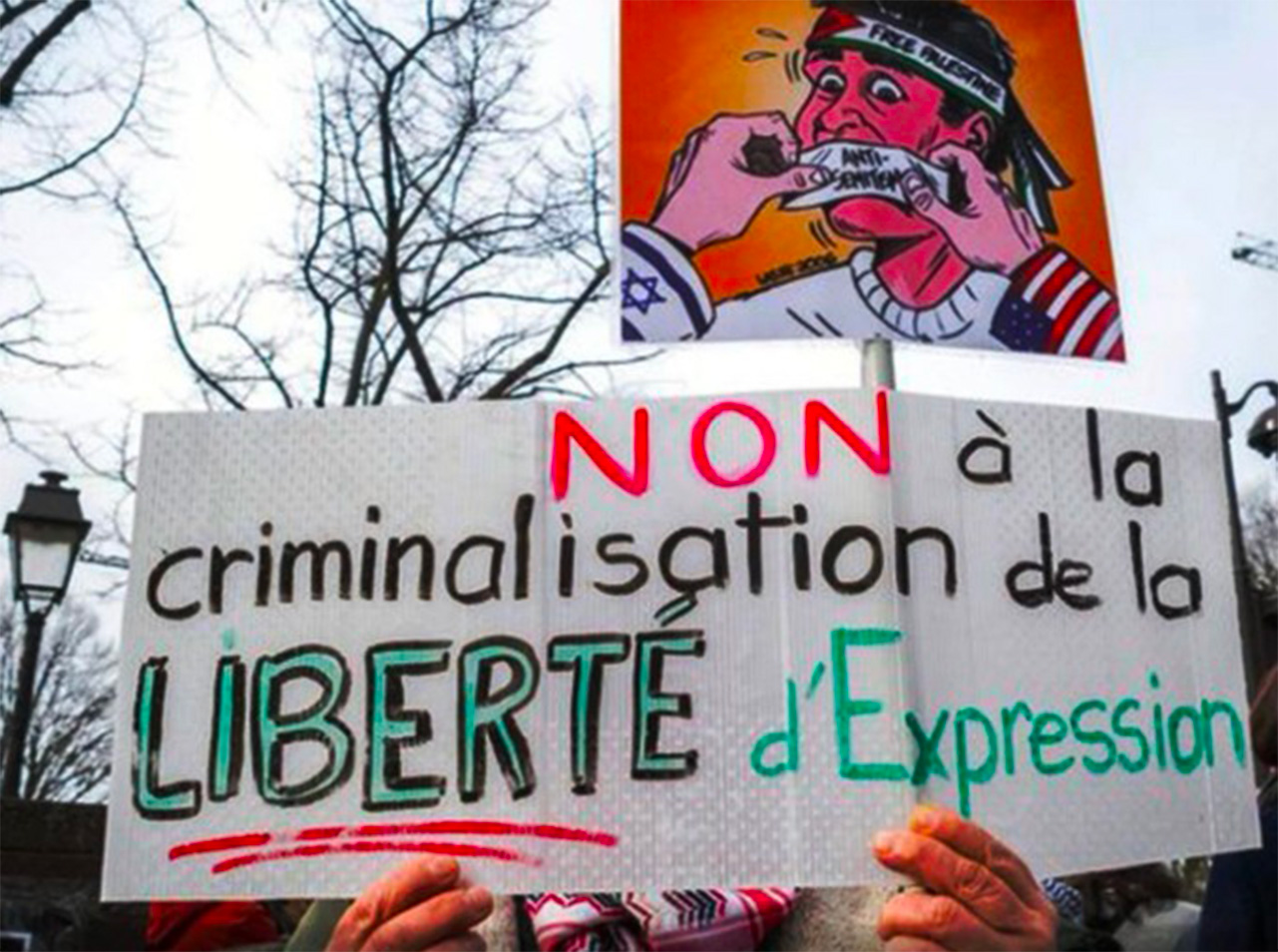
Context: In November 2024, French MP Caroline Yadan proposed a law to strengthen penalties against antisemitism, including criminalizing speech that justifies terrorism or calls for the destruction of a state following the extreme rise in antisemitism in France after October 7. In the past week a petition has been launched to counter said bill, arguing that it presents “a real threat to freedom of expression by silencing any support for the Palestinian cause.” The petition reached more than 700 000 signatories. The law was finally withdrawn from the majority group at the Assemble this afternoon. This text, in reaction to the petition was written before the withdrawal.
In just a few days, more than 700,000 people signed a petition protesting the Yadan bill, which aims to combat new forms of antisemitism. They did so in the name of free speech, arguing that it should extend beyond criticism of Israel’s policies to include calls for the state’s destruction, that it could be accompanied by support for Palestinian resistance “by any means,” including, therefore, terrorism and the indiscriminate killing of civilians, and that equating Zionism with Nazism was a legitimate opinion, not in itself suspect of antisemitic intentions. For all these signatories, antisemitism and anti-Zionism do not overlap in any way. The former, moreover, is not a new phenomenon; it stems from ancient prejudices that we certainly condemn vigorously, but on the same basis as all the racist prejudices to which it boils down and from which it must under no circumstances be distinguished. Whether it is on the rise—if one were to concede that—is a response to a general climate of brutalization of which all minorities are victims. Some of the petition’s promoters go so far as to say: focusing attention on antisemitism is dangerous for Jews themselves. If the law were ever to pass, would they not be seen as privileged beneficiaries of legal protection, the favorites of a state-sanctioned philosemitism that does not speak its name, thereby stoking a jealousy that is then quite understandable? Protecting Jews from the very law intended to protect them—that is the paradoxical conclusion one would have to draw, thereby quietly reminding them, not without malice, of the growing threat hanging over their heads.
That the Yadan law must be subjected to all the tests that ensure it does not infringe upon fundamental freedoms is certain. It must do so all the more because any legal measure today, regardless of its political origin, must consider the question of how it might one day be used by a far-right government. The vagueness and excessive openness to interpretation of certain provisions of the law have thus legitimately exposed it to criticism, in a context where reactionary forces and their desire for repression are indeed on the prowl. This is the contradiction inherent in any effort to make the fight against antisemitism today a genuine public issue, from which neither society nor the state can turn away. But these considerations, with all the tensions they entail, are not at all what concerns the authors and signatories of the petition. For their rejection denies the very intent of the legislature’s initiative. It is the principle of this law that is being challenged: specifically, the fight against antisemitism that has nevertheless proven, not only its documented resurgence, but its ideological, rhetorical, and practical renewal over the past two and a half years.
That the Yadan law must be subjected to all the tests that ensure it does not infringe upon fundamental freedoms is certain. But denying the intensity and current reality of antisemitic acts—this has become the norm, as evidenced by the petition against the Yadan Law. The fight for freedom serves as a pretext, with the false courage and true cowardice of doing everything to change nothing.
Nothing new under the sun since October 7—that is the credo that is taking hold. The denial, let us recall, began practically on the very day of the massacre. “Let’s put it in context…” the most avant-garde among them were quick to demand. No antisemitism, according to them, deserved to be invoked. “Death to the Jews”—that’s simply how people speak in those regions when engaging in legitimate resistance. When the threat is carried out, it is directed solely at settlers or their representatives, all of whom bear the sole real crime. In 2023, this vanguard of denial strove to be as vocal as possible; it was not in a position of strength. Public opinion, too stunned by the evidence of what had occurred, had not yet granted it a significant share of its support. It stood on the threshold, hesitating.
Today, it seems the dams have broken. Calling for the destruction of the Jewish state, denying the intensity and current reality of antisemitic acts—this has become the norm, as evidenced by the petition against the Yadan Law. The fight for freedom serves as a pretext, with the false courage and true cowardice of doing everything to change nothing. As for antisemitic words and antisemitic acts, they will be able to continue to flourish without disturbing the peace of these friends of the cause. As for the authoritarian, freedom-destroying regime they fear, it is true that it lurks, just as it lurks for all of us. But certainly not through the path they seek—one that, through precise definitions while guarding against self-serving reactionary hijackings, aims to equip us with the means to fight the present-day antisemitism with justice and acuity.