“The whole of Iran is a prison”
Interview with Mahnaz Mohammadi
On the occasion of the premiere of her latest film Roya at the Berlinale, Mariam Schaghaghi interviewed Iranian filmmaker Mahnaz Mohammadi for the Frankfurter Allgemeine Zeitung about the long resistance of the Iranian people and the massacres of protesters in January. K. publishes the translation of this interview, in which Mohammadi discusses her experience of imprisonment, the gap between the reality of Iran and Western perceptions, and the dignity of a people who refuse to give up their dreams of freedom.
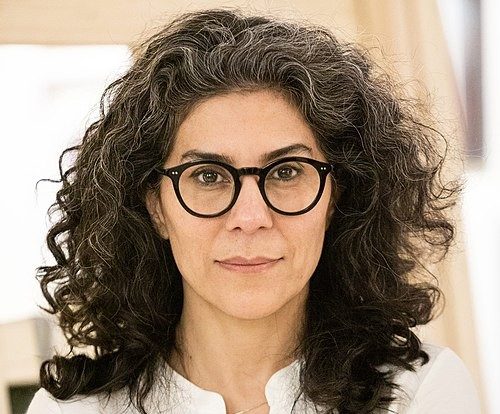
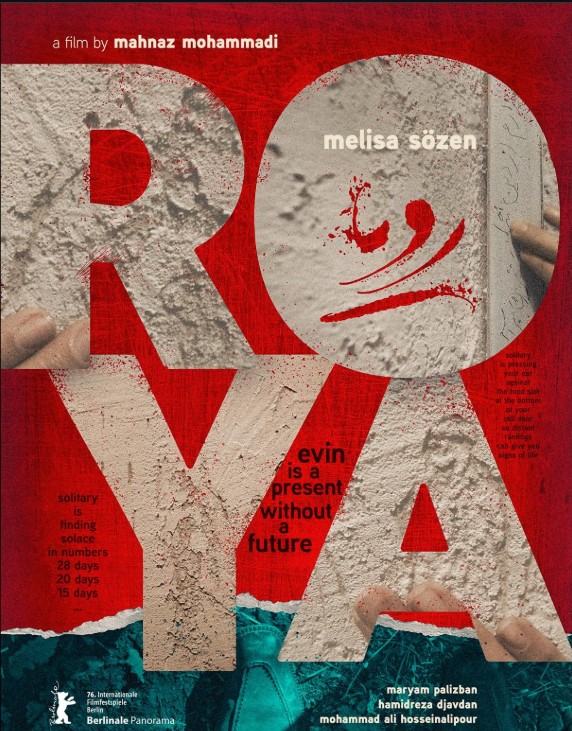
Gray-streaked curls frame the tense, pale face of 51-year-old activist and filmmaker Mahnaz Mohammadi. Political reality and artistic work define her oeuvre, as in her drama “Son – Mother”, which won awards at several festivals in 2019. Her new film “Roya” is now showing in the Panorama section of the Berlinale, taking viewers to a place that is synonymous with arbitrariness and state power in Iran: Evin Prison in Tehran. The protagonist is trapped in a system that breaks bodies, minds, and biographies alike. It is a reality that has become an experience for many in Iran – and one that rarely makes it to the cinema. In an interview, Mohammadi speaks, sometimes in tears, about the trauma of the recent wave of violence in her homeland, her time in prison, and film as a form of testimony – while at the same time documenting the indestructible dignity of an artist who refuses to be silenced.
Ms. Mohammadi, the Islamic Republic has just celebrated the 47th anniversary of the revolution. Yet the people are traumatized by the mass killings that took place on January 8 and 9 and are in a state of shock. “The dust of anger hangs over the country,” said one Iranian woman. What are you hearing about the mood in Iran?
The people there have been confronted with unimaginable, unprecedented cruelty. What the Islamic Republic has done here will go down in the history of humanity. No one is trying to quantify this massacre anymore. No one is talking about 3,000, 4,000, or 40,000 anymore—they estimate that there were over 100,000 deaths.
Many just say, “We are waiting.”
I understand that. Waiting here is not the same as waiting there. There, it is an existential crisis. Recently, someone started crying in the Tehran subway – and suddenly the whole car was crying. You can only understand this mood if you are there. I am in contact with many people throughout the country, trying to keep in touch as best I can and as far as the internet allows. The situation in Iran is very different from the image people have abroad.
In what way?
People know exactly what they want and why they are rebelling. They are sensitive to any voice that speaks over them – not only from the government, but also from others. And I understand that. For years, their dignity and autonomy have been ignored.
Many are counting on Trump to take action, especially after his announcement that help is on the way. What do you expect from the negotiations that the US is currently conducting with the Iranian government?
I am not a politician, I am a filmmaker. I talk about what is being done to people. Oppression alienates people from themselves and from normality. Ninety million people are hostages of a small group of occupiers, they are prisoners. And the world remains silent. Even an organization like Doctors Without Borders has fallen silent. Why? What is the difference between the injustice done to us and Gaza? Does a human life no longer matter if it doesn’t fit the ideology? I believe we are living in a time when much is subject to manipulation and much needs to change fundamentally—including human rights organizations.
Just as Iran’s history has been changed forever by the mass killings in January, my time in prison meant a total break in my life. Both times, a whole new chapter began.
If the internet had been working with the help of a foreign satellite, how would those days in January have unfolded?
That would have meant the end. The complete collapse of the Islamic Republic. Shutting down the internet is a tool of control. As soon as the internet was no longer available, the carefully planned, even more structured wave of violence could begin.
Your film “Roya” ends with the note “Written in Block 2 A of Evin Prison.” So is it based on your own experiences?
I have been imprisoned several times. But the experience in Evin in 2011, mine and others’, became the raw material for the film. The three-square-meter cell and everything I saw there. I wrote part of it one night when I was suffering from hallucinations. I managed to steal a pen during an interrogation. At a time when I no longer knew whether I was awake or dreaming, I tried to reassure myself that I still existed by writing.
What charges were brought against you at the time?
The usual: “conspiracy against national security,” “propaganda against the government”. The Revolutionary Guards’ scenario was that I would confess under torture to working for MI6 and using their money to buy off the actors and pay them to lie, as seen in my documentary1. Absurdities that they think anyone would believe.
How did you survive solitary confinement with physical and psychological torture?
Just as Iran’s history has been changed forever by the mass killings in January, my time in prison meant a total break in my life. Both times, a whole new chapter began. After solitary confinement, I never became the person I was before. And I don’t think anyone who has experienced the same thing can. You remain scarred forever.
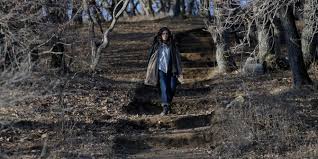
What did you experience? Everything you see in the film?
I can still see the blood-stained rubber sandals or the trail of blood left by a corpse on the floor. The film is only a censored version of my experiences and those of others. But I had to find a special narrative so that the audience doesn’t just watch, but experiences how isolation and violence blur the boundaries between dream and reality, between present and past, between being and non-being. So that they decide for themselves what reality is. Because I had lost myself in it.
The harassment at Evin is evident in its perfidies: prisoners are referred to as “guests”…
Exactly. There is a prison terminology: interrogations are called “interviews” there. The people who interrogate and torture you are called “experts.” They write up forced confessions that you are supposed to sign. When you were brought in for interrogation, they would say, “We have brought guests”. The guards only address you by your prison number. I deliberately wanted to retain this language because it documents a historical fact.
In addition, prisoners are confronted with false reports about the alleged death of close relatives.
Worse still, they seek out your relatives, torture them, and then play you recordings of their voices. And vice versa, of course.
Did you have contact with other prisoners?
No, I was put directly into solitary confinement. Because when I arrived, I recognized the voice of a friend and shouted loudly through the corridors that his family was well and stood behind him, that he should not be afraid – and was put in solitary confinement for this audacity. I made this film in the hope that my tormentors would see it. At every festival, they have agents who report back immediately. They should see what they have done. Maybe their foot will tremble for a moment before they continue torturing.
Coincidentally, Jafar Panahi’s Oscar-nominated film “A Simple Accident” also focuses on the interrogator, who is supposed to understand what he did to his fellow human beings. You were even arrested together with him during protests after the death of Neda Agha-Soltani.
Panahi and his wife were among the few who did not leave me alone during all the years I was banned from working. They kept asking how I was doing and if there was anything they could do for me.
Where do you currently live? In exile?
No – I am only abroad for this film project, most recently for the technical completion in Germany. Before that, I was somewhere else. I just don’t want to give any details about how long I’ve been outside Iran and where the film was shot or made, as that could endanger colleagues and employees. Every tiny piece of information can be dangerous. My family is also under threat. Even my mother doesn’t know where I am, so that no one can get anything out of her. I’m keeping a low profile at the moment. The Berlinale screening is the first time in a long time that I’ve appeared in public and announced my presence.
You say “only” – does that mean you intend to return to Iran?
Yes. My home is there. I had to give up my apartment because I couldn’t afford the costs anymore. When I return, I’ll first have to find a place to live. But it’s still my home.
Aren’t you afraid of being arrested again because of your film?
Danger has always been a part of life, especially in the Islamic Republic. Prison would be the best-case scenario. I fear something worse, a bullet in the head. But everyone is in prison there. The whole of Iran is a prison.
Where do you get your strength?
You only live once. And I want to spend that one life with the people I love.
Demonstrations have been announced for today, February 14, in Toronto, Los Angeles, and also in Munich, on the occasion of the security conference there. How are the expressions of solidarity perceived in Iran?
Oh, it means the world to them! The world! It’s incredibly important to them. I’ve experienced it myself. After the protests following the death of Mahsa Amini in 2022, there was no information, the internet was constantly down, we were worried and our nerves were shot. Then a friend called: he had received videos showing demonstrations everywhere abroad, and we had no idea what was going on! He played them for us, and we heard the demonstrators abroad chanting the same slogans as we were in Iran! We all cried when we saw with our own eyes: “We are not alone. Then let’s keep going!” Solidarity gives us so much strength!
There is unity in Iran. All groups are standing together on the streets, they know that this monster cannot be reformed. It only kills.
And once again, Iranians were risking their lives for their convictions. The images of endless rows of black body bags and relatives searching for their dead have been etched into my memory. Then they were asked to pay for the bullets.
Yes. And yet they continue to fight. I heard about a father who, when asked for the money, said to the guards: “I refuse to give you the money for the bullets you used to kill my son. Because with that money, you will kill the next child of the next father. I would rather give up my son’s body.” Our people still have that kind of greatness.
Why is there so little agreement when it comes to Iran’s future? There is already controversy over Reza Pahlavi’s qualifications and agenda, and the People’s Mujahideen, considered a terrorist organization, are already trying to regain ground. Isn’t the actual goal, the end of the mullah regime, being lost in the process?
There is unity in Iran. All groups are standing together on the streets: religious and non-religious, different generations, even women with and without headscarves are walking hand in hand. Because there, they know that this monster cannot be reformed. It only kills.
Many have pinned their hopes on Reza Pahlavi, who promises to lead Iran into a self-determined future. How credible is that?
The question is not why Reza Pahlavi has become so popular. The question is: where are the others? Why was no one else able to present themselves as a candidate after the Mahsa protests? Where is the opposition? We would like to have a choice between several leading figures! Pahlavi listens to us, especially the younger generation. No one has sworn allegiance to him; people are simply saying: we trust him for this transitional period. He has stood up for us now. Later, we can still see who is the most suitable.
“Roya” premieres at the Berlinale on February 18. The date falls on the 40th day after the January massacres – traditionally a day of mourning. Could this day mean the return of people to the streets?
You hear voices saying, “Get ready, the 40th day is coming!”. But those in power are merciless. Every new death brings another 40th day. How long can a regime continue this cycle of violence?
What do you think could happen – even more radical resistance? The collapse of one side? Intervention?
People abroad make a mistake: they think that just taking to the streets and demonstrating means resistance. But the government has long since stationed Basij militias in every alleyway. That’s why even breathing, just continuing to live, is resistance for us. Just the fact that you get up every morning.
It is said that not only tens of thousands have been killed, but also tens of thousands have been arrested. Logistically, that would mean completely overcrowding the prisons.
This regime’s weapon is threat and intimidation. It kills as much as it can. It imprisons as much as it can. But at some point, there will be no more room. How many loyalists does the system have, including militias, thugs, and civil servants? Two or three million? There are 90 million Iranians. Even if there were five million loyalists, we would still be 85 million against them.
So the rulers were unable to kill the hope for freedom in their January massacre?
No. They can never kill it, never. Our society is currently the most vibrant in the world: it still takes to the streets for its convictions. It pays the price for its desire for freedom. And it does not back down. For 47 years, they have been hoping to live. Whenever you judge Iran – what is good, what is bad – don’t forget: you are not paying the price for living there. Don’t decide for them. Support them, as with the “Woman, Life, Freedom” movement. The principle still applies today.
Has the slogan become a guide for society as a whole?
Yes, it doesn’t just belong to women: they took the first step when they set fire to their headscarves. The second step was when men rejected the oppression of women’s lives, which Sharia law authorized them to do, by symbolically setting fire to mosques. And then, at some point, freedom will come.
Interview by Mariam Schaghaghi
- Travelogue, 2006, premiered in 2010. ↩︎