How Berlin Is Renegotiating Its Responsibility Toward Israel
Since 2008, Israel’s security has been presented as a component of German national interest. In August 2026, by condemning, along with six other governments, the E1 settlement project in the West Bank, Chancellor Friedrich Merz made Berlin’s shifting policy clear. This shift concerns arms deliveries and compliance with international law as well as the boundaries of the fight against antisemitism in Germany. Far from renouncing its historical responsibility, the country now appears to be redefining its scope and limits.
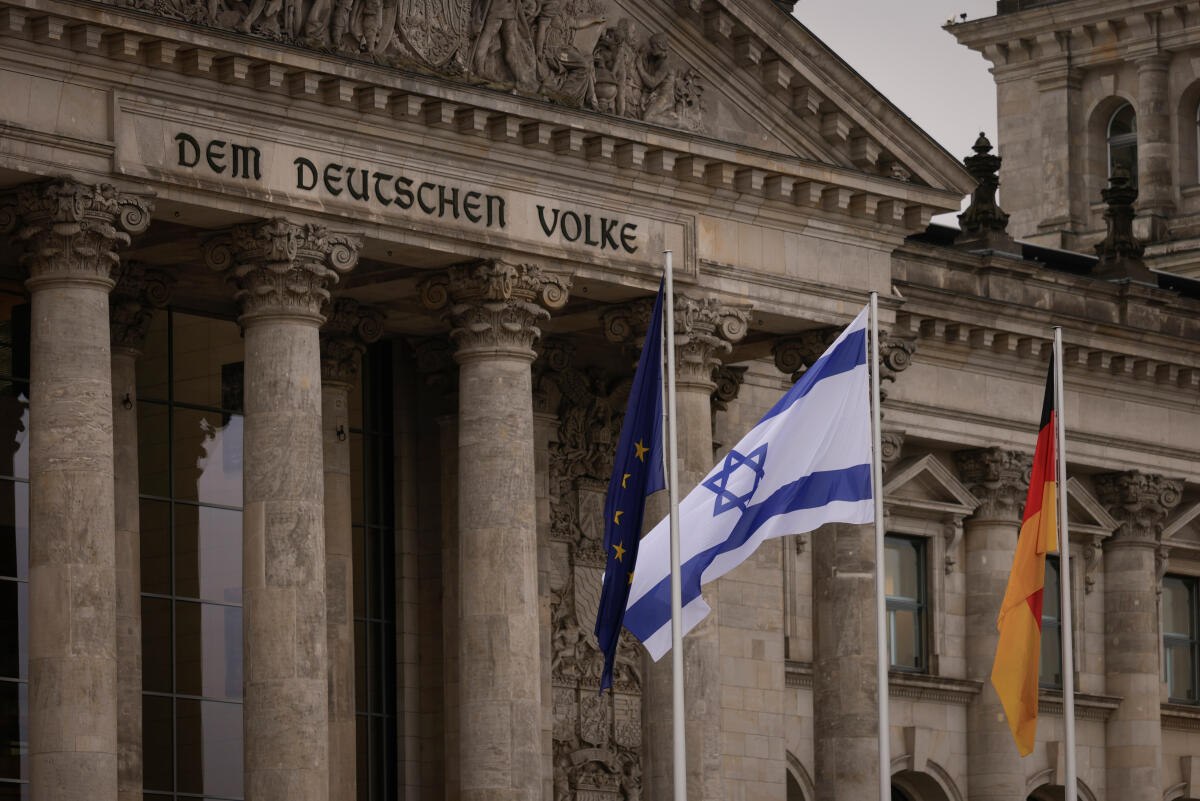
There are moments when a political doctrine does not change simply because a state abandons it. It changes because its contradictions become apparent. The summer of 2026 could be such a moment in German-Israeli relations.
On August 20, German Chancellor Friedrich Merz, together with the heads of government of France, Italy, the Netherlands, Norway, the United Kingdom, and Canada, signed a statement regarding the Israeli settlement project in the E1 area of the West Bank.1 The governments called on Israel to immediately withdraw the plans and halt the expansion of settlements. E1, they argued, is not simply another settlement project. Development there would further complicate the territorial connection between the northern and southern West Bank, thereby undermining the prospect of a Palestinian state. Companies participating in the bidding process were explicitly warned of possible legal and reputational consequences.
This is remarkable for Germany. Not because Berlin is only now considering Israel’s settlement policy to be problematic—the German government has done so for decades. What is remarkable, rather, is that the German chancellor has signed a declaration that explicitly links Israeli policy to international law and to the future of a two-state solution.
In light of recent developments, one can, or must, ask whether this might be the moment when Germany departs from its previous course regarding its policy toward Israel.
The previous year, Germany had not yet joined a broader joint statement on the E1 project, but had instead criticized the plan separately. Now the Chancellor himself is named in a joint statement by several heads of state and government.
Even more remarkable is what Felix Klein, the outgoing Federal Government Commissioner for Jewish Life and the Fight Against Antisemitism, said a few days later. He stated that Israel’s settlement policy violates international law. It leads away from the two-state solution. At the same time, he criticized the often lax handling of violence by Israeli settlers against Palestinian families. Ironically, it is the German Commissioner for Antisemitism who, in this context, speaks the language of international law.2
This is no minor detail. It touches on the very core of what Germany understands by its special responsibility toward Israel. For Berlin simultaneously adheres to a statement that has been one of the most important tenets of German foreign policy since Angela Merkel’s speech to the Knesset in 2008: Israel’s security is part of Germany’s national interest. Friedrich Merz explicitly reaffirmed this commitment after October 7, 2023.
In light of recent developments, one can, or must, ask whether this might be the moment when Germany departs from its previous course regarding its policy toward Israel. For Germany’s own historical obligation toward Israel is now, more clearly than ever, in conflict with another aspect of Germany’s self-understanding: namely, the obligation to defend international law, human rights, and the international order.
Germany’s special responsibility toward Israel stems from the Shoah. The fact that a Jewish state emerged after 1945 and saw itself as a safe haven for Jewish life is therefore one of the central historical experiences from which the Federal Republic has developed its own political identity.
The problem for Germany is that two lessons can be drawn from history that do not always align seamlessly.
The first is: Never again must Jews be left defenseless. Never again must Germany look the other way when Jewish people are threatened. For millions of Jews, the State of Israel is a central sanctuary and, in the wake of the Holocaust, also an expression of Jewish political self-determination.
The second is: Never again must the rule of law give way to power. German National Socialism was not merely a crime against the Jews. It was also the radical destruction of the rule of law, institutions, and universal norms.
Both lessons are part of Germany’s postwar history. The difficulty begins when they are pitted against one another politically.
Germany’s own historical obligation toward Israel is now, more clearly than ever, in conflict with another aspect of Germany’s self-understanding: namely, the obligation to defend international law, human rights, and the international order.
Diplomatic relations between Israel and Germany were not established until 1965. The rapprochement was marked by mistrust, memory, and political conflicts. Only gradually did that special relationship emerge that is often referred to today as German-Israeli friendship. In Israel, Germany has been regarded for years as its closest ally in Europe.
When Angela Merkel declared before the Knesset in 2008 that Israel’s security was part of Germany’s raison d’état, this was more than a diplomatic gesture. It was a political promise: Germany would derive not only remembrance but also a lasting responsibility from its history.
Yet from the outset, the phrasing was less clear-cut than its impact might have suggested. Merkel herself later explained that her statement did not imply a commitment to mutual assistance under Article 5 of the NATO Treaty. Rather, she meant a special relationship—one closer than that with many other countries. In concrete terms, this bond meant, among other things, as Merkel writes in her autobiography Freedom (St. Martin’s Press, 2024), support for the two-state solution and efforts to reach a negotiated solution regarding Iran’s nuclear program. The statement was therefore never synonymous with unconditional support for every Israeli government.
A look back shows that German support for Israel had never been free of tension even before that. The day after the first Iraqi Scud missile attacks on Israel during the 1991 Gulf War, then-Chancellor Helmut Kohl was presented with a classified military report revealing that German electronics had been used in the missiles’ guidance systems. Ultimately, compensation took the form of two German submarines, which Israel had repeatedly requested but could not afford at the time. The Dolphin-class submarines represent an enormous strategic advantage—especially with regard to Iran. They are custom-built and include the capability to launch nuclear weapons mounted on cruise missiles, thereby ensuring Israel’s second-strike capability in the event of a nuclear attack on its territory.
However, there were German attempts to later link the delivery of the submarines to a halt in Israeli settlement construction in the West Bank and support for the establishment of a Palestinian state. Christoph Heusgen, a close adviser to Merkel, had argued that “Germany’s historical responsibility is insufficient” to justify the export of such vessels.
Harsh words were never off-limits either. Following an Israeli airstrike on an Islamic Jihad training camp in Syria in 2003, Chancellor Gerhard Schröder publicly called for political pressure on Israel to facilitate a return to negotiations on the Roadmap. He explained that anyone seeking genuine de-escalation must strictly adhere to the efforts of the Middle East Quartet. Schröder’s clear rebuke of Israel did not meet with unanimous approval in Germany. Members of the opposition (CDU/CSU and FDP) as well as parts of the media accused him of failing to give sufficient consideration to the legitimate security interests and the right to self-defense of a democratic state (Israel) in the face of a totalitarian regime (Syria) that demonstrably harbored terrorist networks. These are just a few examples.
A look back, therefore, does not show that Germany has always stood unreservedly on Israel’s side.
The current crisis in Germany’s national interest lies in the fact that Germany is attempting to reconcile its special responsibility toward Israel with a foreign policy that invokes international law more explicitly than before.
The new zeitgeist had shifted, as the media and German officials had begun to call for a “reassessment” of Germany’s responsibility for Israel’s security as part of the special relationship between the two countries.
Following the Hamas massacre, German Chancellor Olaf Scholz was one of the first Western heads of government to travel to Israel. Germany reaffirmed Israel’s right to self-defense and also provided military support to Israel. German arms exports to Israel rose significantly in the months following October 7; in 2023, approved military exports totaled more than 360 million euros, and in 2024, more than 150 million euros. At the same time, images of destruction and human suffering in Gaza increasingly dominated media coverage.
This also influenced public opinion. An Allensbach poll conducted in June 2025 found that 57 percent of respondents now viewed Israel negatively. In 2022, that figure had been only 23 percent. At the same time, 77 percent of respondents supported the chancellor’s criticism of Israel. Only 28 percent agreed with the statement that Germany has a special responsibility toward Israel due to its Nazi past; 52 percent rejected this statement. At the same time, 37 percent viewed Israel as a major threat to world peace, compared to 11 percent in 2021.
According to a survey by the HU-EF Barometer3 at the Hebrew University of Jerusalem, 37 percent of German respondents (compared to 47 percent in 2024) believe that Israel’s existence is part of Germany’s national interest. Compared to 2024, fewer Jewish Israelis in the summer of 2026 also believed that the memory of the Holocaust influences German policy toward Israel—the figure dropped from 75 to 62 percent.
Chancellor Merz himself has increasingly highlighted this shift. Even as an opposition politician, he had spoken out against delaying German arms deliveries to Israel. Later, he said he could no longer understand certain Israeli decisions and called for an end to the war. He warned the Israeli government that Israel could lose its closest friends. Foreign Minister Johann Wadephul ultimately spoke of a solidarity that “cannot be forced.”
Merz attempted to adapt to the new zeitgeist, as the media and German officials had begun to call for a “reassessment” of Germany’s responsibility for Israel’s security as part of the special relationship between the two countries. A high-ranking parliamentary representative of the SPD in the coalition, Ralf Stegner, argued that German weapons should not be used to violate international law. In a letter, thirteen former German ambassadors called on their government to pursue an independent and more resolute Middle East policy by “exerting pressure on Israel.” They emphasized that such a measure—if aimed at helping a friend avoid straying from the path and heading toward the abyss—should not be taboo in the context of German-Israeli relations. “True friends take action when their friend puts themselves in danger.”
This development does not mark a break with the raison d’état. Rather, it shows how the federal government is attempting to redefine it. This includes well-intentioned, open criticism: As a close friend—or even as one who is obligated as such—one seeks to save Israel from itself. The raison d’état functions less as a stable normative principle within German political identity than as a flexible political framework whose meaning is continually reconstructed in the context of changing historical circumstances, public debates, and foreign policy challenges.
The current crisis in Germany’s national interest lies in the fact that Germany is attempting to reconcile its special responsibility toward Israel with a foreign policy that invokes international law more explicitly than before.
In the past, dealing with Israel was politically more comfortable. Critical discussions had always taken place behind closed doors, for instance regarding settlement policy. Everything else was considered largely counterproductive in Berlin. What is new today is the sharpness of the tone—and the fact that it is being voiced in public.
One might ask here whether this represents a gradual normalization of relations with Israel, enabling Germany to distance itself from the special responsibility it had politically imposed upon itself. Or is it precisely this responsibility—understood as a growing obligation under international law—that is now giving rise to such explicit criticism of Israel?
Compared to other European countries, Germany continues to be perceived in the collective Israeli consciousness as Israel’s closest ally. In 2026, the German government, in turn, feels increasingly compelled to disclose the reasons for its actions when it comes to Israel.
Berlin’s own reputation in the world is also at stake. That, at least, is the view of the authors of the aforementioned letter. Should the International Criminal Court in The Hague rule that war crimes and crimes against humanity—or perhaps even genocide—were committed in the Gaza Strip, the letter states, “Germany will have to face the accusation of having contributed to these acts, with full knowledge of the facts, by supplying weapons that were used in Gaza.”
Meanwhile, Nicaragua has filed a lawsuit against Germany with the International Court of Justice in The Hague, accusing it of aiding and abetting genocide. According to the complaint, the arms exports violate the Genocide Convention because they were used by Israel during the attacks in the Gaza Strip. At a hearing, Germany defended the exports as consistent with international law. “All German arms exports to Israel and other countries are subject to strict review procedures that are more stringent than international regulations,” said German legal representative Tania von Uslar-Gleichen, justifying Germany’s support in court.
Since the Gaza War, the cracks in relations with Israel have widened into a veritable breach, argued Ralf Fücks, the former mayor of Bremen and an early member of the Green Party. Referring to the “widespread perception” in Germany of Israel as the perpetrator, he noted in an article published in early 2025 that Germany had failed to understand the trauma of October 7 for Israelis.
His assessment of bilateral German-Israeli relations, however, went far beyond that: All the talk about Germany’s special responsibility barely masked the alienation from the Jewish state. People live in different realities, both geographically and mentally. Imposing on Israel the illusion of a world in which international law reigns and all conflicts can be resolved through dialogue and compromise had been a grave mistake. The “anti-Israel delusion,” Fücks admitted, was certainly not something that affected Germany alone; other countries were affected by it even more strongly, but the German case nevertheless remained unique. “Nothing relieves the German soul as much,” he concluded, “as declaring Israel a rogue state and accusing it of genocide.”
For Ralf Fücks, imposing on Israel the illusion of a world in which international law reigns and all conflicts can be resolved through dialogue and compromise had been a grave mistake.
This sentiment was indeed echoed in Stern magazine, where a journalist called on everyone to “speak out about Israeli injustice in Gaza—more openly and free from the stranglehold of collective guilt,” or as expressed on the sign at the opening of the 2025 Berlin International Film Festival (Berlinale), which stated that “reason of state is genocide.”
The term “reason of state,” which originally goes back to Machiavelli and had already been used in the Federal Republic long before Merkel’s Knesset speech and in entirely different contexts, has thus mutated into a battle cry. In international debates, particularly in the Global South, it is argued that Germany’s “reason of state” leads to a selective perception of human rights and international law. Now, Germany does indeed rightly invoke international norms. But in its foreign policy, it has itself repeatedly balanced legal principles, security interests, and political considerations. The willingness to consistently enforce international law against friendly or strategically important states has never been a given. Added to this is the fact that, in today’s changed geopolitical landscape, Germany relies heavily on Israeli military defense systems, to close critical gaps in national and European defense.
Another test of German national interest arises where the fight against antisemitism and the freedom of controversial debate come into conflict with one another. This leads to a paradoxical situation: Ironically, in the name of protecting Jewish lives, it is being determined which voices may be considered legitimate in Germany. Critics accuse the federal government of using the term as a “thought ban” or a tool to restrict freedom of expression and assembly. The challenge, however, remains: How can one, on the one hand, fulfill the obligation to combat antisemitism while, at the same time, safeguarding freedom of expression at pro-Palestinian demonstrations, some of which openly sympathize with Hamas?
Felix Klein himself drew a similar line in his farewell interview. Criticism of Israel is not antisemitic if it is comparable to criticism of other states. It becomes antisemitic when Israel’s right to exist is denied or Israel is demonized.
In 2019, the Bundestag passed the resolution “Resolutely Oppose the BDS Movement—Combat Antisemitism” by a large majority. This was not a law, but rather a so-called simple parliamentary resolution of a political and appeal-based nature. It is therefore not directly binding on universities and administrative bodies.
In the meantime, however, the debate has continued. In January 2025, the Bundestag passed a resolution proposed by the SPD, CDU/CSU, Greens, and FDP against antisemitism and hostility toward Israel in schools and universities. The resolution explicitly mentions the activities of the BDS movement and calls on universities to take action against such activities. At the same time, it explicitly designates the “space for free discourse” as worthy of protection.
Universities are a particularly significant arena in this context. In the recently published book Ausnahmezustand, more than sixty members of the Network of Jewish University Professors in Germany, Austria, and Switzerland, as well as members of its support group, describe how the atmosphere in their professional environments—beyond the cases highlighted in the media—has changed permanently since October 7.
The fact is: The number of antisemitic crimes has risen dramatically. Jews who identify themselves as such experience insecurity, verbal abuse, and threats. Israel-related antisemitism is real. The use of classic antisemitic conspiracy theories under the guise of criticism of Israel is not legitimized by anyone invoking human rights. Debates over what is—or is not—permissible in terms of free speech in the country that planned and carried out the Holocaust were already raging long before October 7, 2023. But who, then, should decide when and whether this line is crossed? University administrations, the police, the domestic intelligence service, Jewish organizations, Israel?
The German conception of how antisemitism should be combated does not automatically align with every policy of the respective Israeli government.
The “red line” regarding feared manifestations of antisemitism and extremism does not exclude Jews and Israelis either. Take, for example, the case of the Israeli psychoanalyst Iris Hefets. An event featuring her at the University of Bremen was canceled or prevented from taking place. Hefets is active in the “Jewish Voice for a Just Peace in the Middle East,” which the Office for the Protection of the Constitution classifies as a secular, pro-Palestinian extremist group. One can scrutinize her statements for support of problematic political positions. But this does not automatically mean that every event featuring one of its members at a university should be banned.
From the very beginning, the “reason of state” regarding Israel was a project of the political elite that enjoyed broad consensus and remained largely unchallenged for a long time. In recent years, however, the question has increasingly arisen as to what extent the special responsibility derived from German history should also apply to Muslim migrants. While left-wing critics viewed this as overreach, the demand found favor with politicians from the far-right spectrum—who otherwise do not particularly like to be reminded of the past—albeit for entirely different reasons. The state of Saxony-Anhalt was the first to link naturalization to the obligation to acknowledge Israel’s right to exist. In this state, the far-right AfD, which openly advocates for “remigration,” recently received just under 44 percent of the vote in the state election.
The fact that this side is just as eager to undermine the state’s raison d’état is evident in the statements made by the local deputy chairman and chief ideologist of the AfD, Hans-Thomas Tillschneider, who also invoked the rule of law in his criticism of Israel. “Israel is collectively punishing the Palestinians for the crimes of Hamas,” Tillschneider posted on TikTok. Only individual perpetrators should be held accountable, never an entire people. This, he claimed, is a “violation of human rights.” In his view, exactly the same principle applies, “by the way, to the Germans and the Holocaust. You cannot hold the entire German people responsible for the crimes of a few.”
The interpretation of the “reason of state” remains a broad field. This is all the more true given that the Israeli government itself has now sought close ties with European right-wing populist and far-right forces. When an international conference against antisemitism was held in Jerusalem in the spring of 2025 and prominent representatives of European far-right parties were invited, Felix Klein and the president of the German-Israeli Society, Volker Beck, among others, declined to attend. This was not a break with Israel. Rather, it was an indication that the German conception of how antisemitism should be combated does not automatically align with every policy of the respective Israeli government.
Does this now narrow the boundaries of the raison d’état, or does it rather broaden its perspective? For standing by Israel—as all those who firmly adhere to the raison d’état apparently see it—does not necessarily mean unconditionally supporting a particular government. Israel is a society with a vibrant opposition, a free press, and a strong civil society. Many Israelis reject their government’s policies. Hundreds of thousands have protested against it in recent years. Scholars, artists, lawyers, and former security officials are warning against political developments they consider dangerous. Elections are scheduled for late October.
European nations are now hoping that the Israeli Supreme Court will halt the E1 project. At the same time, the joint statement—which Germany also endorsed—sends a signal. Whether this will actually lead to a new European sanctions policy should the project move forward remains to be seen. What is decisive for now is something else: Germany is moving from mere disapproval toward political consistency, without having taken that final step just yet. This is not a break, but a shift.
Perhaps, now more than ever, dissent is part of the raison d’état. Germany will have to decide more clearly when it supports Israel and when it does not. It will have to explain why it supplies certain weapons and not others. And it will have to explain the significance of international law for its relations with Israel.
However, it would also be a mistake to believe that Germany’s invocation of international law automatically results in a better Middle East policy. For the debate falls short if the focus on Germany’s role toward Israel ignores the broader context in the Middle East as well as Europe’s weakness as a potential peacemaker. “For while there is much to be said for and against the Trump plan, it is a step forward. Failing to participate in it is a colossal mistake that cannot be made up for by condemning new settlement policies,” says Prof. Michael Wolfsson. His advice: Less talk, more action. Specifically, for example, participation in the military disarmament of Hamas.
Beyond the issue of how to deal with far-right parties in the Israeli government, the question is what risks Israel must take in order to conform to the German ideal of an international order. But it does not follow from this that Israel should stand outside this order.
- E1, the administrative abbreviation for East 1, refers to an area of approximately 12 km² located in the West Bank, east of Jerusalem, between the city and the Israeli settlement of Ma’ale Adumim. Conceived in the 1990s and then suspended for a long time due to international pressure, the project calls for the construction of 3,401 housing units as well as infrastructure designed to more closely link Ma’ale Adumim to the Jerusalem metropolitan area. Bidding processes were launched in 2026 for all of these housing units. In late September, however, the Israeli Attorney General ordered a one-month postponement of the deadline for an initial call for bids covering 1,234 housing units, so that the deadline would fall after the October 27 parliamentary elections. This postponement, motivated by the electoral context, does not constitute an abandonment of the project. Opponents argue that urban development along this corridor would further isolate East Jerusalem from the rest of the West Bank and make territorial continuity between the north and south of a future Palestinian state much more difficult. Israeli authorities contend that bypass roads could maintain connectivity between the various Palestinian areas. However, this road connectivity does not fully address the issue of their territorial and political continuity. The project also affects several Palestinian Bedouin communities established in the area, some of which are at risk of displacement. This is why E1 has been considered, for several decades, one of the most sensitive settlement projects in the Israeli-Palestinian conflict. [Editor’s Note] ↩︎
- According to Israeli legal interpretation, however, the West Bank is not considered to be occupied in violation of international law, but rather “disputed territories,” since there was no legitimate sovereign state to which the land belonged prior to 1967. Germany’s official position, however, has always been guided in this regard by the collective legal understanding of the European Union. ↩︎
- See: https://hu-ef-barometer.huji.ac.il/ ↩︎

Gisela Dachs
Gisela Dachs is a German journalist, essayist, and scholar who has lived in Israel since the 1990s. After studying literature and philosophy at the Sorbonne, she began her career at *Libération*, then joined the German weekly *Die Zeit*, where she became a correspondent in Israel and the Middle East. She holds a Ph.D. in communication from Tel Aviv University and is currently a full professor at the Hebrew University of Jerusalem. Her research focuses in particular on media, migration, national identities, relations between Israel and Europe, and journalism in conflict zones. Since 2001, she has edited the “Jüdischer Almanach” published by the Leo Baeck Institute in Jerusalem. She is also the founder of the “HU-EF Barometer,” launched in 2022, which measures every two years, across five countries, the mutual perceptions between Israel and Germany, France, Great Britain, and Poland.