Francesca Albanese: the Rapporteur preaching to the choir
Last October, Francesca Albanese, the United Nations Special Rapporteur on the Occupied Palestinian Territories, published When the World Sleeps: Stories, Voices, and Wounds of Palestine in French. The book has just been published in English. Liam Hoare read it on this occasion and offers us his disillusioned review. Intended to substantiate the accusation of genocide against Israel, it reveals an author incapable of stepping back from her subject. Albanese stages a moral fable in which she plays the leading role, both star and martyr of the anti-Zionist movement, overshadowing not only the complexities of the Israeli-Palestinian conflict but also the Palestinians themselves, reduced to the role of extras.
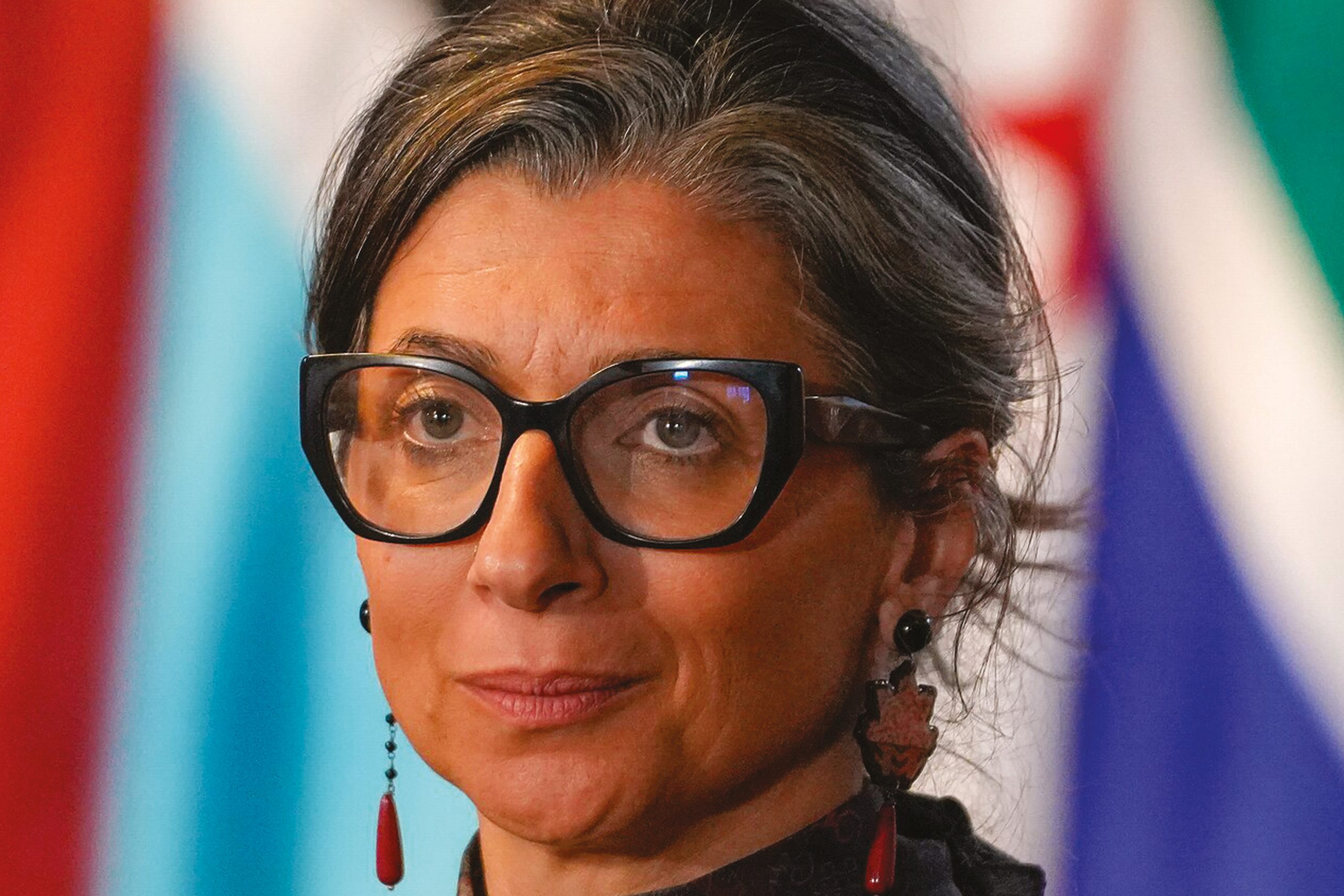
In July 2025, the United States imposed sanctions on Francesca Albanese, UN Special Rapporteur on the occupied Palestinian territories, under the terms of Executive Order 14203.
Signed by U.S. president Donald Trump on February 6, 2025, the order argued the International Criminal Court has engaged in “illegitimate and baseless actions targeting America and our close ally Israel,” declaring the body an “unusual and extraordinary threat to the national security and foreign policy of the United States.” In November 2024, the ICC had issued arrest warrants for Israeli prime minister Benjamin Netanyahu and former defense minister Yoav Gallant for possible war crimes and crimes against humanity.
The U.S. State Department’s case against Albanese is that she “has directly engaged with the ICC in efforts to investigate, arrest, detain, or prosecute nationals of the U.S. or Israel,” U.S. secretary of state Marco Rubio said at the time, including “writing threatening letters to dozens of entities worldwide, including major American companies…, making extreme and unfounded accusations and recommending the ICC pursue investigations and prosecutions of these companies and their executives.”
If the goal, however, was to diminish her standing, to silence her and turn her into a pariah, then these sanctions may have not only failed on their face, but had the opposite effect.
Albanese, Rubio continued, has long been “unfit for service as a Special Rapporteur. She has spewed unabashed antisemitism, expressed support for terrorism, and open contempt for the U.S., Israel, and the West.” Rubio’s conclusions jive with those of the Anti-Defamation League, who argue Albanese “has long coopted antisemitic tropes and legitimized support of terrorism in her critiques of Israel, using her platform to spread intense anti-Israel rhetoric.”
If the State Department’s intent was to punish the Trump administration’s adversaries by making their lives more difficult, then by restricting their freedom to travel and cutting off their access to the U.S.—and thus the international—financial system, the sanctions against Albanese were a success, including by her own account. If the goal, however, was to diminish her standing, to silence her and turn her into a pariah, then these sanctions may have not only failed on their face, but had the opposite effect.
When the author becomes the subject
Assuming the role of UN Special Rapporteur in 2022 and leading the genocide charge against Israel during the Gaza war made Albanese a folk hero of the international anti-Zionist movement. The imposition of sanctions against her now means the movement has its martyr. As her tendentious new book When the World Sleeps: Stories, Words, and Wounds of Palestine shows, this is a role Albanese is not only all too happy to play, but also self-produce.
When the World Sleeps is a strange book. Disorganized, boring, repetitive, poorly written, and not particularly well translated, it is ostensibly a “moving, essential exploration of Palestine through its history and people” that “brings the lives of the marginalized into focus, illuminating not only the injustice but also the beauty, humanity, and refusal of the Palestinian people to be silenced,” per Albanese’s English publisher. When the World Sleeps is, however, less a work of history or politics than one that puts the ‘me’ in memoir.
Each chapter is supposed to focus a different person or group of people who illuminate something of the Palestinian experience. “Each story offers a different, complementary lens from which to view ongoing genocide and the global missteps that brought us to this point and presents the raw human experiences from which we might fashion an alternative, shared future for Israelis and Palestinians alike,” she writes, one example of a belabored sentence translated with numerous mistakes (e.g. ‘lens from which’ instead of ‘lens through which’). In reality, the central figure in When the World Sleeps is the author, the sun god with the Palestinians orbiting around her.
Albanese’s contact with Palestine and its people is refracted through layers of interpretation. Strangely for someone appointed to a high-profile role concerning Palestine, Albanese, perhaps, does not feel confident enough in what she knows to use Arabic in her work, for she describes conducting remote interviews with children in Gaza thus: “Somebody translated, even though, especially in Gaza, most of the children spoke English well and so I could interact directly, without the need for mediation.” Of meeting Palestinian artist Malak Mattar for the first time, she writes: “She didn’t speak English but, through her teachers, she told me sweetly that she couldn’t sell me the painting I liked so much.”
Albanese is fundamentally incurious about the other side to the point that she is simply incapable of making even the slightest concession to the Israeli case.
In spite of this remove, she feels able to make astonishingly bold claims about both Palestine and Palestinians. When they’re not her accessories, Palestinians—as well as Israelis—are characters in her morality play of which she is both director and star. For someone supposedly well-versed in the works of Edward Said and committed to deconstructing colonialism not only in Palestine but around the world, her writing on the Palestinians comes across as patronizing and, above all, silly.
Back to her interviews with children in Gaza, conducted from the comfort of a beach club in Sicily, she reports:
Those encounters put me in front of an authentic miracle of life, vitality, and tenderness, a setting in which energy and hope seemed to persist despite adversity. In the midst of all the difficulties of the permanent occupation, …the children I met that summer demonstrated an extraordinary ability to preserve fundamental values. Above all, their love for school. And then their manners and care for their appearance, especially in front of strangers. The boys wore elegant shirts for the occasion with their hair well combed and stiffened with gel, and the girls were in colorful dresses, their long hair gathered in a scarf or hanging free down to their shoulders; their voices spoke to me of a great thirst for knowledge and a burning desire for the future.
It would be humorous if the Palestinians’ suffering weren’t so serious. Into the Palestinian people, Albanese pours all of humanity to the point of parody, reserving none for Israelis who themselves resemble cartoon figures. In Albanese’s didactic stage production, the Palestinians are the embodiment of all the good in the world, and the Israelis, ungodly evil. Israelis are “educated from an early age to fear and suspect the Other,” Albanese writes, “to normalize violence, to perpetuate a worldview based on racial domination and oppression.”
Good and bad Jews, according to Albanese
Albanese divides the world into good Jews and bad Jews. One has to distinguish, she argues, between “Zionist Jews—especially those who claim exclusive Jewish sovereignty “from the river to the sea”…—and Jews who oppose this vision, or who simply do not wish to be identified with this political project. In other words, Israel does not represent all Jews, just as Italy, Spain, or the U.S. do not represent all Catholics.” While picking and choosing one’s Jews is far from an original hobby, at least her claim that the U.S. is a Catholic nation breaks new ground.
Perhaps she might argue that it is not part of her mandate, but strangely for someone who, by her own account, “entertained the idea of becoming a journalist” before going into law, Albanese is fundamentally incurious about the other side. Of one particularly illuminating exchange with the late Israeli cultural historian Alon Confino that rather gives away her predilections, she writes:
I even remember that at a certain point, just as we arrived near the Colosseum, I was saying something to him like: ‘Don’t you believe that European Jews went to Palestine because they had nowhere else to go, and not because they really felt they had a connection with that land?’ The narrative about why the Jewish state had settled in Palestine seemed a bit flat to me. Certainly, compared to other countries such as Argentina or Uganda, Palestine had a biblical appeal, but it also had much less available land.
It was for Confino to tell Albanese: “There has always been a very strong bond with those places, and it would be wrong to say that the interest of the Jews in Jerusalem and Palestine is false and only an excuse. The love for that land is deeply rooted in our history and our culture.” Her ignorance about Israel, Israelis, and Judaism extends to a failure to get even the most basic information right, inexplicably and repeatedly using the outdated term ‘Wailing Wall’ to refer to the Western Wall.
Beyond the lamentable writing, sloppy translation, and disordered thinking, When the World Sleeps’s primary weakness is that it will fail to persuade anyone who does not already agree with Albanese.
Albanese is simply incapable of making a concession to the Israeli case. Compare her description of the Western Wall to the Temple Mount. The Western Wall, she writes, is “venerated as the only surviving part of the wall that once surrounded the Second Temple of Jerusalem, which some say was destroyed by the Romans in the first century AD, while others claim it never existed or did not exist there.” Some say; others claim. Nearby, she continues, “is the area of the Esplanade of the Mosques, otherwise known as the Temple Mount, one of the holy places of Islam”—full stop.
(Compare this to the way Albanese talks about Hamas: “an Islamic nationalist movement born in the 1980s from the political tradition of the Muslim Brotherhood during the first intifada. Over the years, Hamas has been both a form of armed resistance against the Israeli occupation and the apartheid system…and a political party.”)
Her potted history of the Israeli-Palestinian conflict continues in much the same prejudiced form. Amin al-Husseini, the Grand Mufti of Jerusalem during the Second World War, has been “strongly discredited by a narrative…reducing his figure to the controversial proximity to Nazi Germany,” which is quite the way to describe his collaboration. “Israel had been allocated 55 percent of historic Palestine, but instead grabbed 78 percent by 1949, leaving the ‘Arab state’ imagined by the UN, and opposed by the Arabs themselves, only 22 percent and thus grossly violating the terms of the partition,” forgetting, it seems, the assault on the nascent Jewish state by the Arab League that gave rise to these conditions. To call When the World Sleeps an ‘I hate Israel’ handbook would be to do a disservice to handbooks.
A lawyer without a case
Beyond the lamentable writing, sloppy translation, and disordered thinking, When the World Sleeps’s primary weakness is that it will fail to persuade anyone who does not already agree with Albanese. (“It is true that in some ways I am not constructive,” she writes in one of her more sentient moments.) Ostensibly, the book’s principal purpose is to press home the genocide charge against Israel. The word ‘genocide’ or ‘genocides’ is deployed 134 times in When the World Sleeps, stated as a matter of fact rather than investigation: “At the time this book is being translated, the Gaza genocide is a part of our history,” and so, with another clumsy sentence, it goes on.
In January, the IDF accepted the estimate previously put out by the Hamas-run health ministry in Gaza that approximately 71,000 Palestinians were killed during the Gaza war. “The Ministry’s tally includes only those killed directly by Israeli military fire in its tracking, not people who died of starvation or from diseases exacerbated by the war,” Haaretz notes, though it is of course also true that Hamas’s data does not distinguish between civilian and combatant deaths. As Alex Stein has written, “the terror group secured its greatest propaganda victory in its war against Israel when it took the simple but effective decision not to publicize the death of its fighters.”
The Gaza war was a devastating one: death, destruction, and displacement on a scale not seen in any previous phase of the long Israel-Hamas war that began around the unilateral disengagement in 2005. The responsibility for this lies both with Israel—whose actions may have amounted to war crimes—and Hamas, an organization which has consistently shown utter disregard for Palestinian life. Not that Albanese would put it that way. “That Hamas has ruled Gaza with an iron fist is beyond doubt, and the Palestinians have been their first victims,” she gives, before then taking with the next sentence: “But Hamas controlled Gaza for some seventeen years with the approval of Israel.”
In reality, the central figure in When the World Sleeps is the author, the sun god with the Palestinians orbiting around her.
War crimes are one thing; genocide quite another. It will be for the international court system to decide if the threshold was met during the Gaza war, but at the moment as a matter of public record, what is missing above all is proof of an “intent to destroy, in whole or in part, a national, ethnical, racial or religious group.” Albanese certainly believes she has seen it: “Today in Palestine, the genocide that was ordered in the aftermath of the attack launched by Hamas on October 7th clearly appears as a systematic action with the intention of destroying a people through a series of military operations that have indiscriminately affected civilians, causing death and devastation everywhere.”
But as is so often the case in When the World Sleeps, Albanese prefers to state rather than show. Had she been able, in the manner of a lawyer, to more clearly and cleanly marshal, arrange, and present the evidence that Israel committed genocide in Gaza from October 2023 on—both in intent and point of fact—then When the World Sleeps could at least be said to have a purpose. Alas. Perhaps the problem is that the intended audience for Albanese’s book is people who already agree with her. In a Norma Desmond-like turn, Albanese at one point makes note of “all of the people who since the beginning of the genocide have recognized in me a hope, a light, a point of reference.”
Since October 7, the genocide charge against Israel has been used and misused in ways that have proven deeply problematic. Especially on the anti-Zionist left where Albanese finds an audience, it has become a shibboleth and a gatekeeping mechanism used to exclude those who don’t sign up to it from organized politics and the land of the moral. It has also been wielded to further drive home the case for Israel’s non-existence: that a state built in part on the ashes of a genocide has negated itself by committing genocide itself, an argument that gets dangerously close to arguing that Israel has done unto the Palestinians in Gaza what was done unto Jews by the Nazis during the Holocaust.
Albanese has been prone to bringing up the Holocaust in contexts where it doesn’t quite belong. “America and Europe, one of them subjugated by the Jewish lobby, and the other by the sense of guilt about the Holocaust,” she commented in 2014. In When the World Sleeps, Albanese reflects: “The unfortunate choice of words in that post is extremely obvious: While it is true that there is a very strong pro-Israel lobby, and that it is indeed possible that many Jews are part of it, it is wrong to speak of a ‘Jewish lobby.’”
When the World Sleeps reads as the work of an author who sees the world in conspiratorial terms with Israel as the prime mover, the source of all the world’s ills.
Fair enough, yet her words continue to be unfortunately chosen. At a forum in Doha organized by Al Jazeera on February 7, Albanese said that “we who do not control large amounts of financial capitals, algorithms and weapons, we now see that we as a humanity have a common enemy.” Albanese later claimed she didn’t mean Israel, but rather “the system that has enabled the genocide in Palestine, including the financial capital that funds it, the algorithms that obscure it and the weapons that enable it.”
Her defense, however, does not chime with her thinking on this subject as presented in When the World Sleeps, which reads as the work of an author who sees the world in conspiratorial terms with Israel as the prime mover, the source of all the world’s ills. Albanese writes that the “system that represses the Palestinians” is “a well-established alliance between Israel and all the other states whose elites guarantee it the impunity it has always enjoyed” is “the same one to which we belong”:
It is the system that decides for us on issues that are crucial to our lives, without listening to us and representing us; it is the system that transforms secure jobs into part-time and temporary work, rights into privileges, that alienates us from each other, making us all more fragile and insecure; that considers solidarity a subversive act and empathy a form of mental and social dysfunction.
Employing the obsessive and troubled language of the terminally online, Albanese writes: “I have often reflected on the fact that for me Palestine was the red pill in The Matrix, the one that opens your eyes to the hidden reality of things. My work, all the study of the Palestinian question over the years, has helped me to see and understand better the system in which we live”—another of her turns that would be comedic were the matter at hand not so tragic.
Here’s another. In this scene, Albanese is in Bethlehem and visits the Church of the Nativity. Since she cannot leave any meme of the online anti-Zionist left well alone, she refers to Jesus of Nazareth as “a Palestinian born two thousand years ago”:
Every time I see the Basilica of the Nativity I cannot help but think of the birth of that boy and his crucifixion, which today I seem to see again in the destruction of his people, who have tried to resist but are succumbing. … The Palestinians will rise again, but now the Israelis are tearing apart the body of this oppressed people, just as the Roman politicians did two thousand years ago with the body of that boy.
At least she had the sense of mind to write that the Romans and not the Jews killed Jesus of Nazareth, lest the reader get the wrong impression. Miraculously, too, when Albanese visited Bethlehem and had in her mind’s eye “that boy” upon the cross, she allowed herself to think of someone up there other than herself.
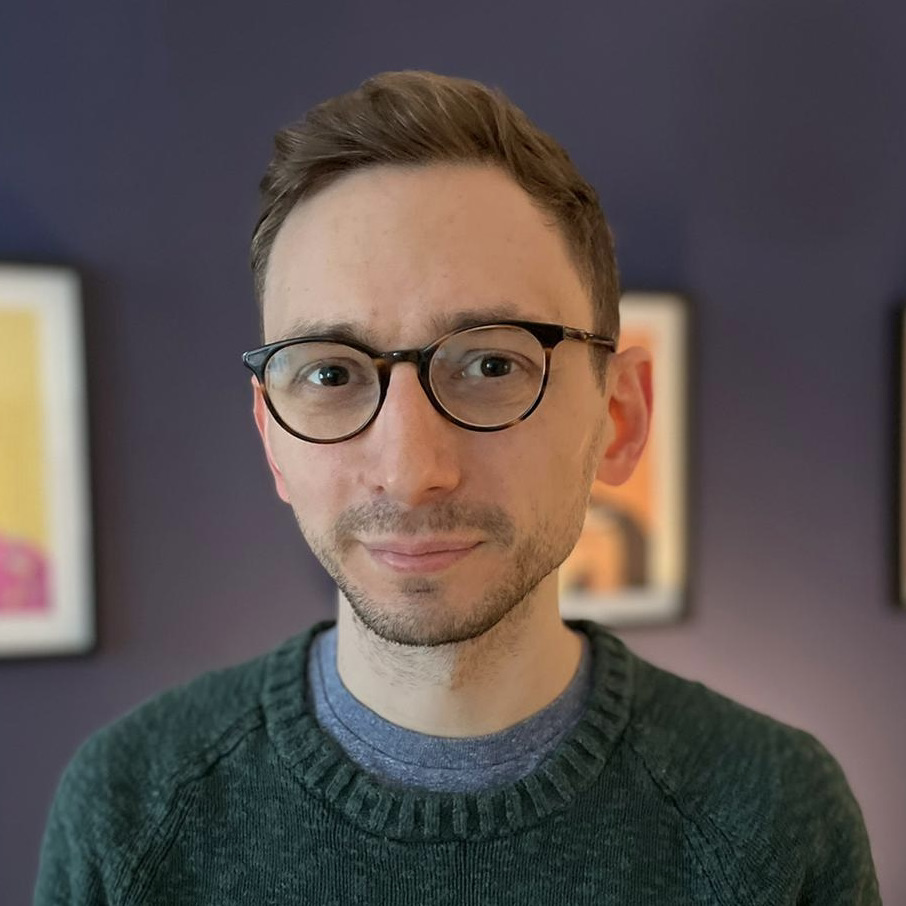
Liam Hoare
Liam Hoare is a Vienna-based journalist covering politics, culture, and Jewish life in Europe. He is Haaretz’s Europe Correspondent and writes “The Vienna Briefing”, a weekly newsletter on Austrian current affairs.