Noa Eshkol: Dance and Compositions
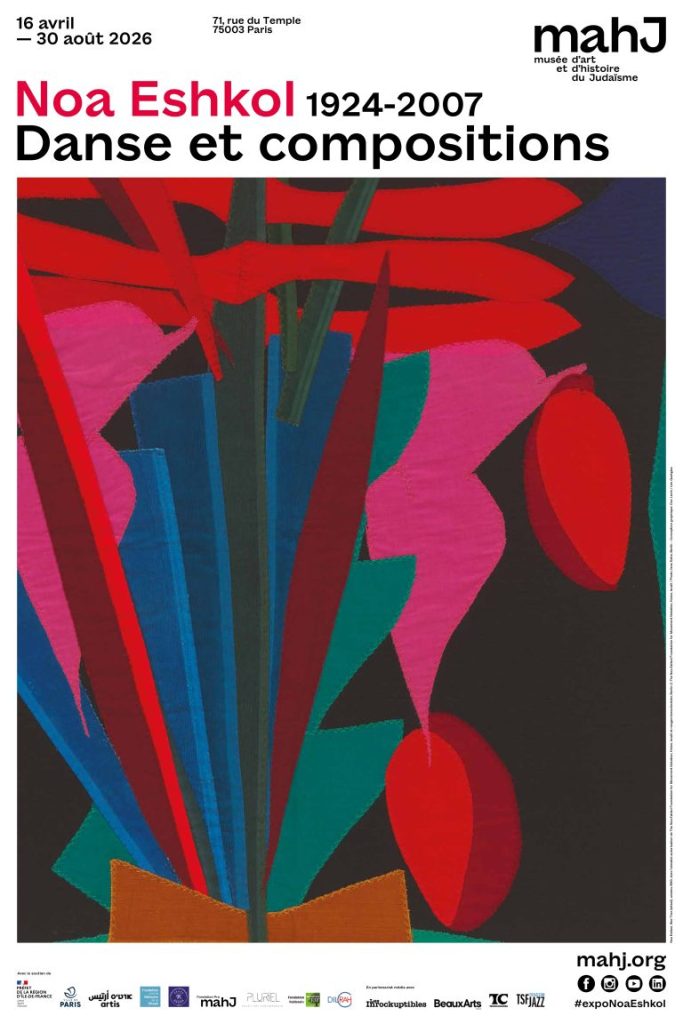
Exhibition at the Museum of Jewish Art and History in Paris, April 16–August 30, 2026.
A dancer, movement theorist, and visual artist, Noa Eshkol spanned three disciplines without fragmenting them. From her innovative system of movement notation to the 1,800 “wall carpets” she created after 1973, her work follows a single logic—that of rigorous composition, collective effort, and formal innovation. The Museum of Jewish Art and History is presenting, for the first time in France, this major artist whose career is intertwined with the history of Israel, from the Degania Bet kibbutz to the aftermath of the Yom Kippur War. Excerpts from the catalog.
Noa Eshkol at the mahJ
While European theatres have been closing their doors to Israeli artists since 7 October, the mahJ (Musée d’Art et d’Histoire du Judaïsme, Museum of Jewish Art and History) is paying tribute to Noa Eshkol, a major creator who is little known in France. As a dancer, choreographer, theoretician of movement notation, then visual artist, her trajectory and body of work are inextricably linked to the history of the young state of Israel, from her birth in 1924 in the Degania Bet Kibbutz to the organisation in Galilee of the commemoration of the Warsaw Ghetto Uprising, not to mention the presentation of her notation system at the Brussels World’s Fair in 1958 or her dramatic shift to the production of wall carpets after the Yom Kippur War in 1973. Through the diversity of her sources, her rigorous theoretical approach and the great variety of her choreographic and artistic compositions, she embodied an Israeli identity that was both cosmopolitan and connected to the land, attentive to traditions and enamoured with modernity.
Born into a family of Ukrainian origin, she was struck by the utopia of the early agricultural settlements in Mandatory Palestine and retained an attachment to group work. Her dancers also came from the kibbutzim; they shared her collective mindset and were inspired by her charismatic personality. After training at the Yishuv and then in England, where she rubbed shoulders with great figures of German expressionist dance, she soon made a name for herself in Israel. The Yom Kippur War took her in a new direction, acting as a catalyst for her work on an original and extremely sizeable textile oeuvre, which the artist refused to sell until her death in 2007.
It is this singular life and manifold body of work that is presented in the Noa Eshkol (1924–2007). Dance et compositions exhibition. Developed by Pascale Samuel with Dorota Sniezek, it is based on the rediscovery of Noa Eshkol by contemporary artists such as American Sharon Lockhart and Israeli Yael Bartana, whose artworks inspired by Eshkol are displayed in the exhibition.
Paul Salmona
Noa Eshkol. Dance and Compositions
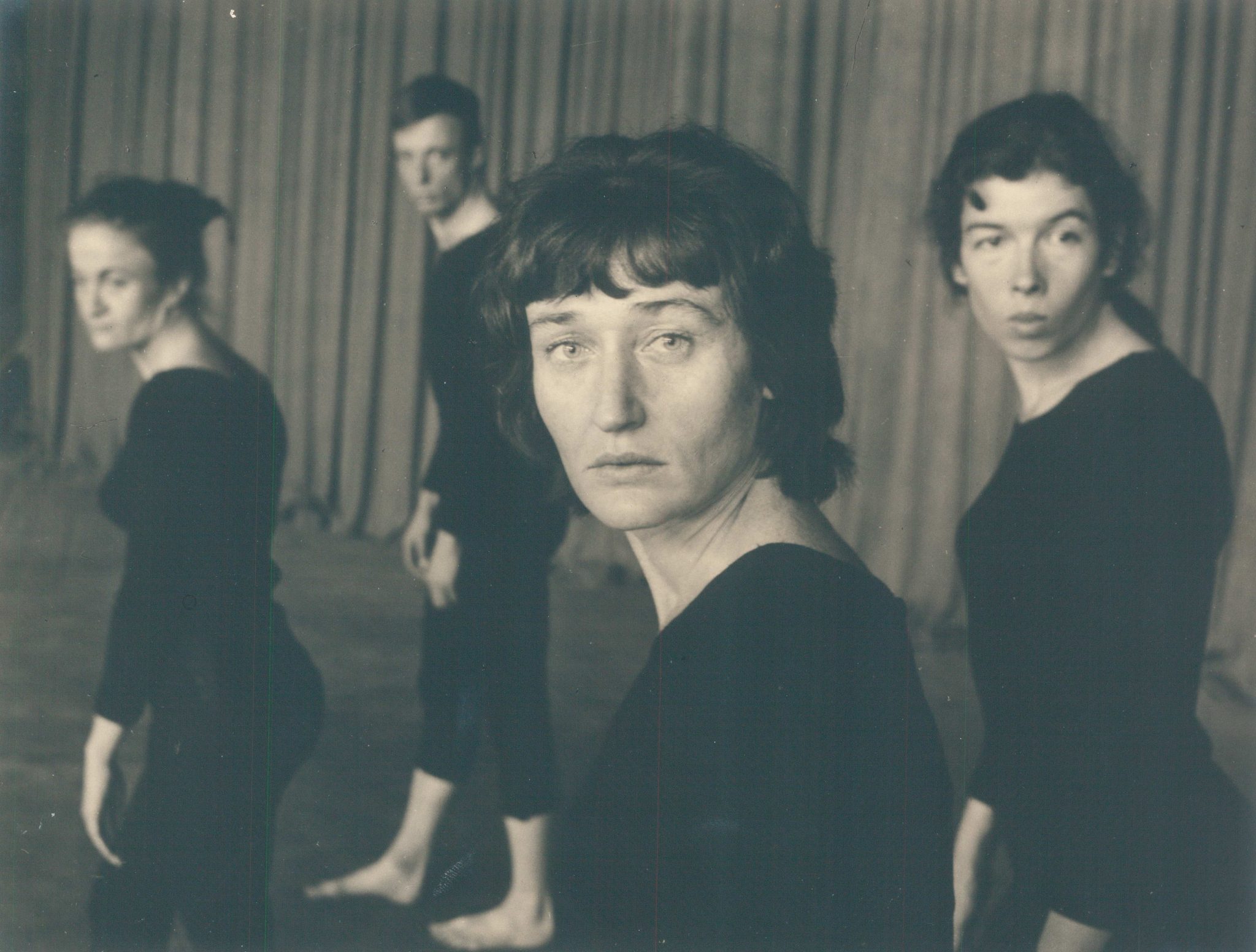
The archives of Noa Eshkol are today held in her house in Holon, in the suburbs of Tel Aviv. Acting as a kind of matrix for all the facets of the artist’s work, from her choreographic compositions to her research on movement notation, from rehearsals to creation in its many forms, it has remained unchanged since her death in 2007. Every week, the Chamber Dance Group continues to gather in the large room on the first floor that was set up especially for dance. During my visit in November 2025, they were rehearsing Peacocks. Racheli Nul-Kahana has been dancing with the troupe since 1964. Today, she starts the metronome at 120 beats per minute and counts out, “Akhat, shtaim, shalosh…” The dancers begin to move. The composition is exact. Each of the four dancers executes the sequences expressed in the Eshkol-Wachman Movement Notation (EWMN). Each performance lasts less than five minutes, without narration or stage effects. Four colourful, freeform hangings are on the walls, allowing visitors to simultaneously take in the principal features of Eshkol’s body of work: dance and textile creation. Although she drew a sharp division between the two domains during her lifetime, over the past ten years, the Chamber Dance Group and exhibitions dedicated to Eshkol have been presented conjointly.
Similarly, the mahJ’s retrospective devoted to the artist opens with a gallery presenting a dozen wall carpets from the 1970s to the 2000s and the first recording of Noa Eshkol dancing Stork in 1960 with Naomi Polani1 and Amos Hetz2, filmed by John G. Harries3. Several eras are combined: that of dance and that of the creation of the wall carpets. Eshkol had never imagined an immersive experience like this, from floor to ceiling, but the exhibition, and indeed the book, begins as such, before approaching her body of work chronologically.
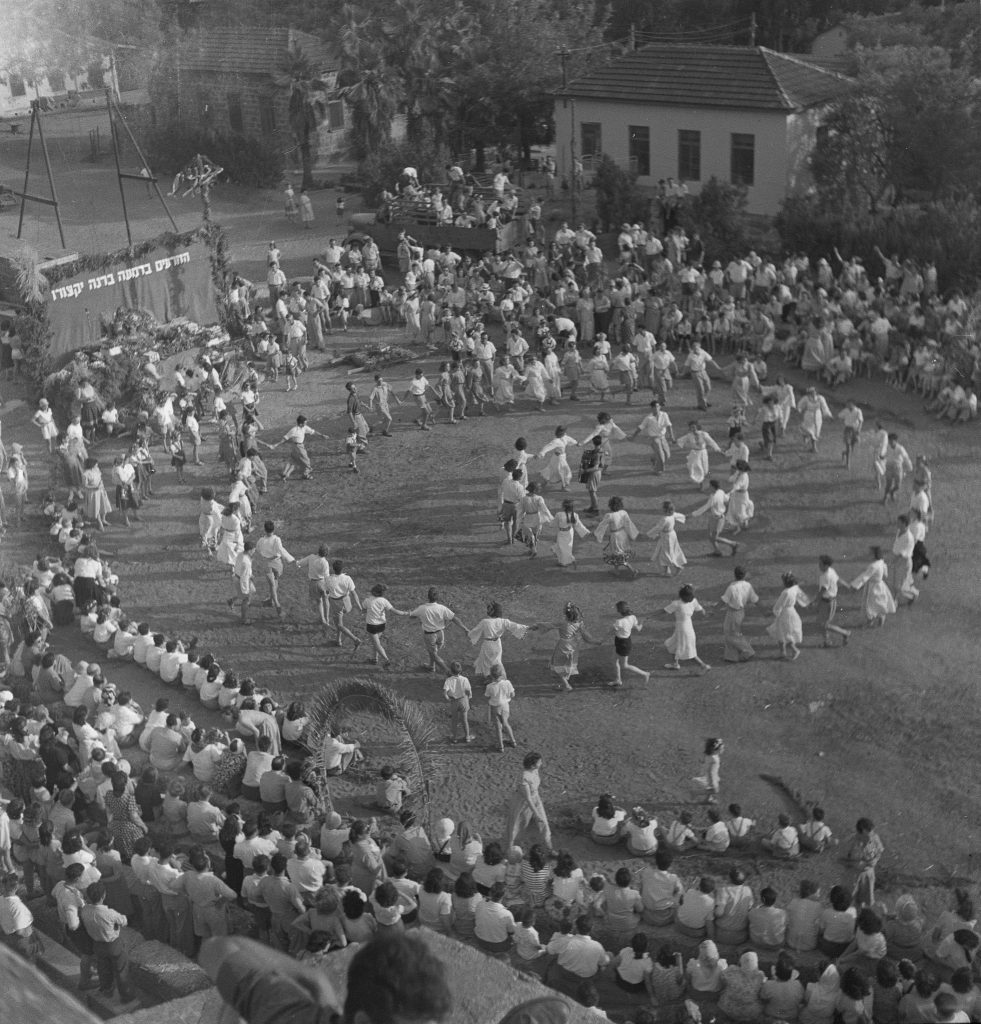
Eshkol belonged to the generation of sabras4 who were twenty years old at the time of the creation of the state of Israel. She spent her early years at the Degania Bet Kibbutz, then from five to eight years of age lived in New York, where her mother taught Hebrew. On her return to Palestine, she studied music before doing dance training with Tille Rössler5. In the 1940s, she studied overseas, a rarity for a young sabra, first in Manchester under Rudolf Laban6, then in London with Sigurd Leeder7.
On her return to Holon, she founded the Chamber Dance Quartet, which would later become the Chamber Dance Group. Already, dance was but one of her activities. She saw shortcomings in Labanotation, so she searched for ways to input, analyse, transcribe, and note down movement. In 1954, with her student Avraham Wachman8, who went on to become an architect, she developed an innovative system, designed like musical notation. For Eshkol, the challenge was twofold. The EWMN system enabled her to document traditional dances and create virtuoso performances; in it, the body is divided into six parts, which are themselves further divided.
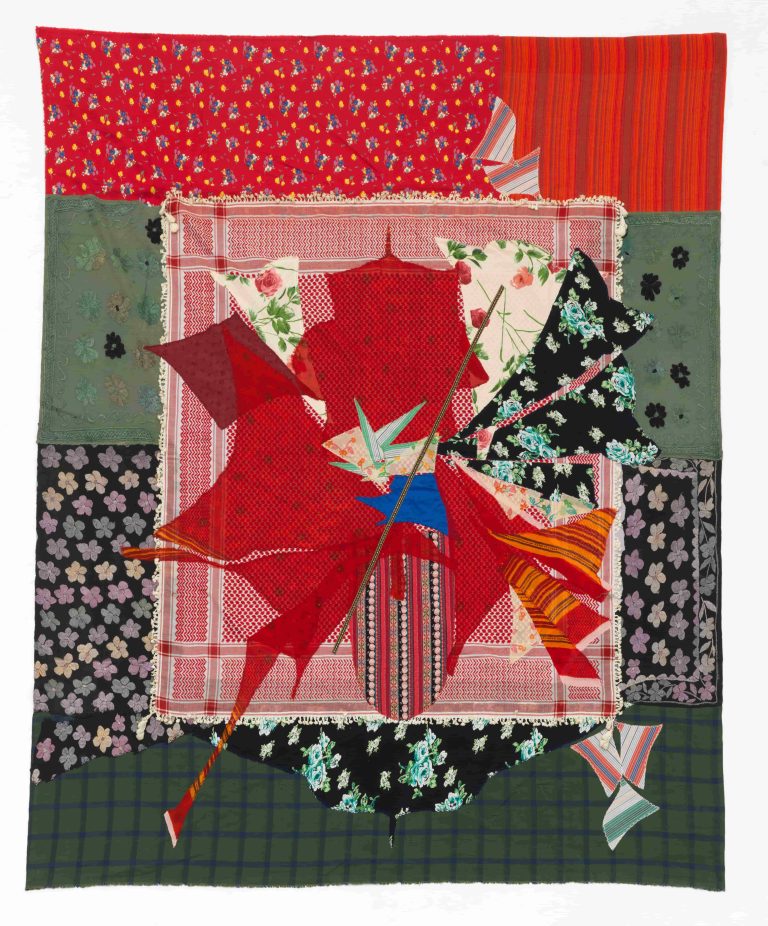
Eshkol saw herself less as a choreographer than as a “dance composer,” arranging and making the body act as a polyphonic instrument. Her research on movement is seen in the exhibition as a multidisciplinary and experimental practice, thanks to the loan of a major collection from the archives of the Noa Eshkol Foundation for Movement Notation, including illustrations of the EWMN system drawn by John G. Harries and Avraham Wachman, films and photographs, as well as the artist’s notebooks.
In London in 1958, Eshkol and Wachman published Movement Notation. Throughout the 1960s, Eshkol composed for the Chamber Dance Group and taught.9 The EWMN system gradually developed into a universal method for the writing of movement.
In October 1973, with the outbreak of the Yom Kippur War after a surprise attack by Egypt and Syria, resulting in the mobilisation of one of her dancers, Shmuel Zaidel, Eshkol said, “It is no longer a time to dance.” A new chapter in her life began, with the creation of wall carpets. Born from a need to occupy her hands during such troubling times and over a period of thirty years, this activity resulted in a corpus of nearly 1800 textile artworks, making Eshkol one of the most prolific textile artists of the twentieth century.
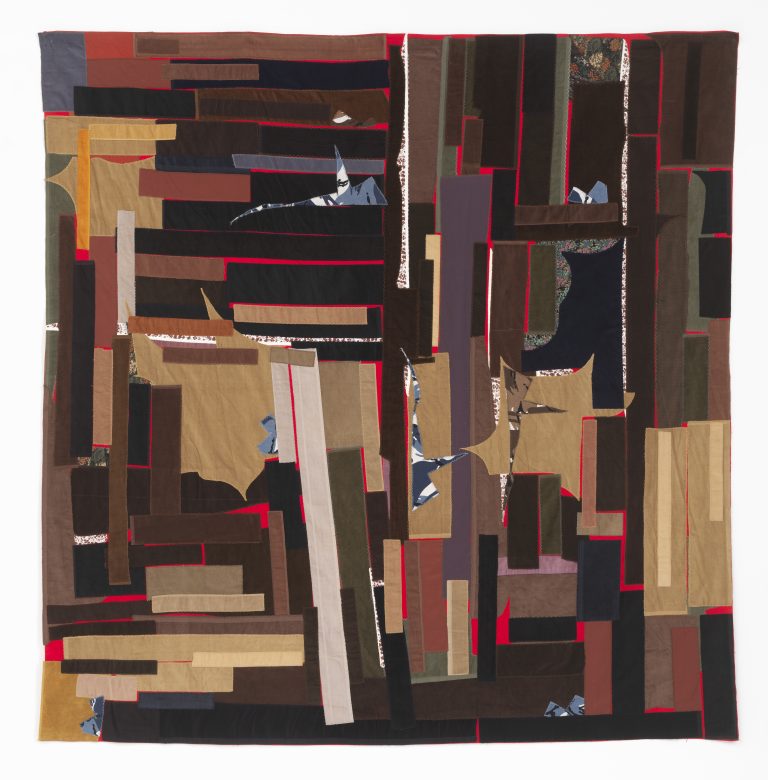
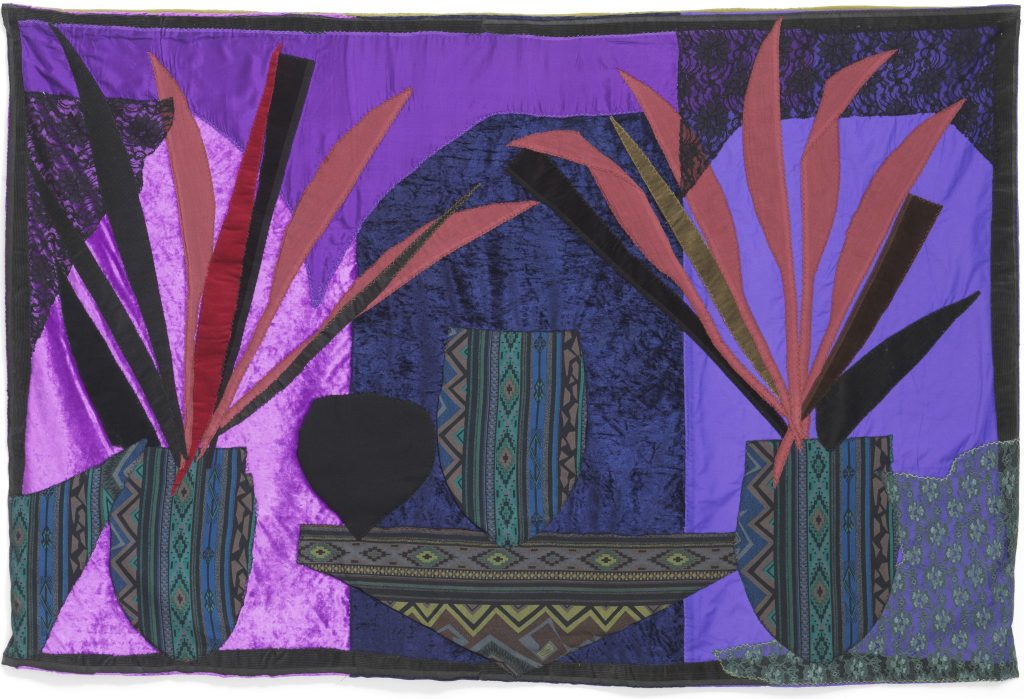
The wall carpets, as Eshkol called them, were designed to be presented vertically, against a wall or hung. They are not woven. They are hybrids, patchworks sewn onto large backing pieces—military blankets or curtains. She put them together on the floor using only fabric she had recuperated from garment factories in Tel Aviv’s suburbs. From the outset, she set herself strict rules: to reuse existing materials, never buy fabric, never use human or animal motifs, and never cut or modify the shape of a piece of salvaged cloth. Even though Eshkol put rehearsals on hold during the war, the dancers came to Holon every day, and the first wall carpets were sewn with Racheli Nul-Kahana, Ruti Sela10, Shmuel Zaidel, Tirza Sapir, and Michal Shoshani. As with her dance compositions, Eshkol’s textile compositions were the fruit of a collaborative effort with the dancers, who sewed the fabric she had arranged.
Created in the middle of the war, the Yom Kippur series was a response to the outbreak of hostilities of 6 October 1973, the Day of Atonement. The artist’s approach is reminiscent of Penelope in the Odyssey, waiting and weaving a funeral shroud in which to wrap the body of Ulysses’s father. Like the mythological heroine, Eshkol was seeking a coping mechanism while waiting for the return of her dancer. As recalled by Marc-Alain Ouaknin, the Hebrew words for “sewing” and “healing” have a shared root: tefira and teroufa.11 In this context, we can interpret YomKippur (In Memory of Dan Sapir) as a shroud paying tribute to the soldier who died on the front. The reference to grief is all the more palpable, as in Judaism, bodies are buried directly in the earth, wrapped only in a shroud. The theme of grief returns repeatedly in the titles of her works: Mourning Carpet (After the Ma’alot Scholl Massacre) (1974)12 Yom Kippur (Mourning).
The following wall carpets merge abstraction, landscape, and still life, in a variety of colours and patterns. For the exhibition, a conscious decision was made to choose artworks whose titles allude to the landscapes surrounding the artist: Gilboa Iris, Golan Heights, The Judean Desert, or Villagein South Lebanon. We also decided to present works such as Peacock, which bears the same name as one of her first dance compositions. Because although Eshkol considered her study of movement and her textile creations to be two separate worlds, Mooky Dagan nevertheless observed that “these opposite forms grew from the same inner world … Movement and textile came from the same deep source.”
Learn more about the mahJ exhibition by clicking here
Pascale Samuel
- Naomi Polani (1927–2004, Tel Aviv, Israel), winner of the 2019 Israel Prize in the field of theatre and dance, was a major figure in Israeli performing arts from the 1960s to the 1980s. She began her career during the War of Independence as the star singer for the Palmach’s entertainment group and the Chizbatron troupe, of which several songs would become classics in Israeli popular music. She attended Noa Eshkol’s classes at the Cameri Theatre School of Performing Arts in 1951. This meeting gave rise to a fruitful collaboration, with her participation in Eshkol’s first troupe, the Chamber Dance Quartet. ↩︎
- Amos Hetz (born in Jerusalem, Israel, 1933) is a dancer, choreographer, teacher, and director of the TNU’OT dance company in Israel. The EWMN forms the basis of most of his compositions and teaching work, as well as his publications. He produced the eight spheres of the EWMN reference system and designed the poster for the Chamber Dance Group for the 1958 Brussels World’s Fair. In 1965, he replaced Noa Eshkol as a teacher at the Rubin Academy in Jerusalem, where he created and directed the department of movement, dance, and notation until his retirement in 2003. In 1989, he founded the Heder Festival of Chamber Dance and became its artistic director. ↩︎
- John G. Harries (born in 1928, England) is a visual artist, designer, and Noa Eshkol’s longtime collaborator. He first met Eshkol in 1948 while studying at the Sigurd Leeder School of Modern Dance in London and became her first student, then colleague, to collaborate in the preparation of the first book on Eshkol-Wachman Movement Notation (EWMN). He continued to work with Eshkol on the explanatory texts and was a member of the first of her experimental dance groups, the Chamber Dance Group. Harries is a founding member of the Movement Notation Society and was a member of the Research Centre for Movement Notation at the Faculty of Visual and Performing Arts, Tel Aviv University, in 1973–1979 and 1983–1992. He introduced the application of EWMN in visual art, especially in abstract video art. He has written two books and several articles in international journals on the subject of notated visual art, and has collaborated with Tirza Sapir on the subjects of time and the body and space in EWMN. ↩︎
- The term sabra (“prickly pear” in Hebrew) refers to Jews born in Palestine under the British mandate. ↩︎
- Tille Rössler (also known as Tehila Ressler and Tilla Roessler) (1907, Tarnów, Poland – 1959, Tel Aviv, Israel) was a key figure in the development of dance in Israel. She emigrated from Germany to Palestine in 1933 following Adolf Hitler’s rise to power. Prior to her emigration, she served as director of the dance school founded by Gret Palucca, one of the leading figures of Ausdruckstanz. After settling in Tel Aviv, Rössler founded her own dance school, which became an important centre for modern dance education. In 1943, Noa Eshkol attended her first dance class there. ↩︎
- Rudolf Laban (1879, Pozsony, Austro-Hungarian Empire – 1958, Weybridge, United Kingdom) was a choreographer and seminal movement theorist whose ideas profoundly shaped European modern dance. His exploration of human motion led to the creation of Kinetography Laban and a comprehensive system of movement analysis that remains foundational in dance, theatre, therapy, and ergonomics. Across Central Europe, he established an extensive network of schools, studios, and festivals, becoming a central figure in Ausdruckstanz (dance of expression). Appointed in 1935 as director of the German dance scene within the Reich Chamber of Theatre, he initially received major state commissions but soon fell out of favour with the Nazi regime. Laban later joined other German émigrés in England, where he founded the Laban Art of Movement Guild (1945) and the Art of Movement Studio in Manchester (1946), where Noa Eshkol would eventually study. ↩︎
- Sigurd Leeder (1902, Hamburg, Germany – 1981, Herisau, Switzerland) was a German dancer, choreographer, and influential dance education theorist. Originally trained in graphic design in Hamburg, he turned to Ausdruckstanz and soon became one of its key figures. For more than two decades, he collaborated closely with Kurt Jooss, co-founding the Neue Tanzbühne and teaching at the Folkwangschule in Essen, where the two advanced both the practice and pedagogy of Kinetography Laban, Rudolf Laban’s system for analysing and notating movement. After the rise of the Nazi regime, Leeder sought refuge in England, co-founding the Jooss–Leeder School at Dartington Hall. He later established and directed his own schools—first in London, where Noa Eshkol studied, and from 1965 until his death in Herisau, Switzerland. ↩︎
- Avraham Wachman (Lublin, Poland, 1931 – Israel, 2010) studied under Noa Eshkol at the Cameri Theatre School of Performing Arts, before becoming one of her closest collaborators. With John G. Harries, he designed the illustrations. He also introduced the spherical model as the central concept of the EWMN system.In 1953, he danced in Decade with John G. Harries and Naomi Polani and participated in the creation of the David and Jonathan duo, with Amos Lev, who was killed in the second Arab-Israeli War in 1956.Alongside his work with Eshkol, Wachman was an architect. In addition to training generations of architects and urban designers, his university research focused on morphology. ↩︎
- A wonderful pedagogue, she taught at the Jerusalem Academy of Music and Dance, the Beit Zvi Schoolfor the Performing Arts, and then at the HaKibbutzim College of Education, Israel’s largest academic college specialising in teacher training. ↩︎
- Ruti Sela (1930–2021, Kvutzat Kinneret, Israel) was born and grew up in a kibbutz in Galilee, like most dancers who worked with Noa Eshkol. In 1966, she enrolled in Eshkol’s classes at the HaKibbutzim College in Tel Aviv, then joined the Chamber Dance Group in 1970 alongside Racheli Nul-Kahana and Shmuel Zaidel. From this date onwards, she worked on both the notation of movement and the fabrication of wall carpets. After the departure of Racheli Nul-Kahana in 2000, she stopped dancing, as the group could not continue with only one soloist. It was only after Eshkol’s death in 2007 that with Racheli Nul-Kahana she reformed the Noa Eshkol Chamber Group with new recruits such as Mor Bashan, Noga Goral, and Dror Shoval. ↩︎
- “Les mondes bridés de Pascal Monteil,” Talmudiques,France Culture, 21 September 2025. ↩︎
- A hostage-taking in a school in the village of Ma’alot by three activists belonging to the Democratic Front for the Liberation of Palestine, who executed twenty-five people on 15 May 1974. The inhabitants of Ma’alot blamed Israeli authorities, accusing them of having withdrawn the soldiers responsible for protecting the village twenty-four hours before the attack. ↩︎
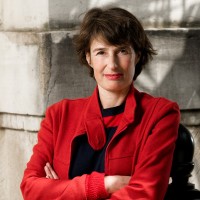
Pascale Samuel
Pascale Samuel est conservatrice du patrimoine responsable de l’art moderne et contemporain au musée d’art et d’histoire du Judaïsme (mahJ), où elle a été notamment commissaire des expositions « Chagall, Modigliani, Soutine... Paris pour école, 1905-1940 » (2021), « Si Lewen, Parade » (2021-2022), « Nouvelles venues » (2024-2025), « Le Dibbouk. Fantôme du monde disparu » (2024-2025). Depuis son arrivée au mahJ en 2019, elle invite chaque année un artiste à y produire une œuvre. S’y sont ainsi succédé Rainier Lericolais, Dove Allouche, Mili Pecherer, Joseph Dadoune, Jérôme Zonder et Pascal Monteil.
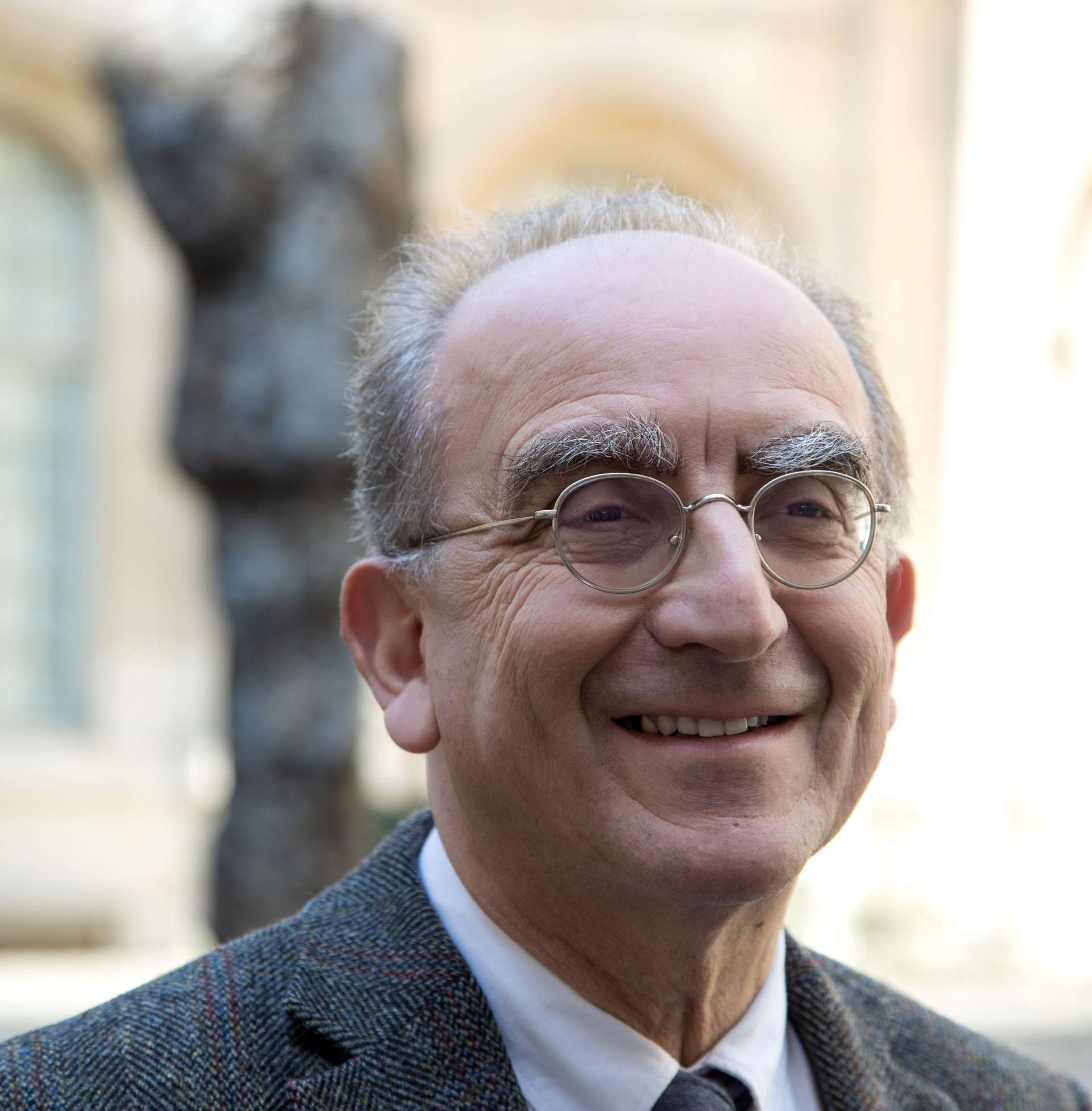
Paul Salmona
Director of the Museum of Jewish Art and History (Paris)