To renew a language
In the folds of a debate now worn out by the weight of its own words, Gadi Luzzatto Voghera’s intervention comes as a necessary attempt to realign vocabulary and reality. If the twentieth century bequeathed to the collective consciousness the term antisemitism — today incapable of restoring the complexity and metamorphoses of anti-Jewish hatred — the present demands a new vocabulary. In proposing the use of another term Gadi Luzzatto Voghera proposes “J-Hate” — Luzzatto Voghera does not perform an act of rupture but of responsibility: recognising that inherited categories no longer suffice and that only a renewed language can prevent generational, political and cultural misunderstanding from becoming an irreparable fracture.
Language is never neutral. The words with which we describe reality end up determining it, orienting our perception of phenomena and the very possibility of addressing them. For this reason, when a word ages, even the understanding of what it names stiffens, is emptied of meaning, becomes ineffective. This is what is happening to the term “antisemitism”, a concept born in the nineteenth century to name anti-Jewish hatred, but now inadequate to describe its contemporary forms. After numerous attempts and several options discarded, even with the help of artificial intelligence, it seems to me that I have identified an internationally acceptable term — “J-Hate” — to indicate in the twenty-first century anti-Jewish hostility in an immediate and communicative way, as an alternative to the now outdated and inappropriate concept of “antisemitism”. Already in 1879, when Wilhelm Marr proposed it in an article that became famous, this concept sounded wrong, although subsequently its fortune on the level of communication was very significant. In fact, there does not exist something called “semitism” (nor did it exist then), so placing the oppositional prefix “anti” before something that does not exist seemed a pointless endeavour destined to failure. And yet it worked, and very well at that. The term entered political and legal language, inspired research, laws, strategies of opposition. It was ideological basis for a genocide. Today, however, I believe it is necessary to change, taking note of its inefficacy and inadequacy. And this is written by someone who has written four books on antisemitism and an indefinite number of articles. Someone who directs a center — the CDEC Foundation — which within it has an Observatory on antisemitism, which collaborates actively for the implementation of the European strategy and the national strategy for combating antisemitism and who sits on the committee of the IHRA that deals expressly with this theme.
«“Antisemitism” evokes a closed past — that of pogroms, racist laws, the Shoah — and struggles to represent the new, hybrid, digital and globalised forms of anti-Jewish hatred. Continuing to use the same term means continuing to read the present with the categories of the past.»
Today its meaning has worn out. “Antisemitism” evokes a closed past — that of pogroms, racist laws, the Shoah — and struggles to represent the new, hybrid, digital and globalised forms of anti-Jewish hatred. Continuing to use the same term means continuing to read the present with the categories of the past. In recent years we have witnessed a great effort of codification. The Working Definition of the IHRA was approved in 2016 after a long gestation and not a few adjustments, and since then it has become an important instrument that has allowed concrete actions to be activated in the world of Western liberal democracies to effectively counter the spread of anti-Jewish hatred. Before that official act, that is, prior to it, the immobility on the part of governments and institutions and the inability to recognise the strong and misunderstood growth of that phenomenon was alarming and embarrassing, contributing greatly to a widespread feeling of fear and isolation within the Jewish minority.
However, the emergence of the IHRA definition has also produced critical reactions, especially in academia. In the subsequent years alternative definition attempts were developed (JDA and Nexus in particular) that explicitly tried to address in a politically directed way the theme of the link between antisemitism and anti-Zionism. I do not enter here into the subject, but I limit myself to noting the substantial inefficacy of these attempts on the institutional plane. They have not succeeded in displacing the IHRA definition in its function as a generally accepted reference, despite several attempts made in official contexts both at the United Nations and in numerous parliamentary debates.
«We continue to operate within a word — “antisemitism” — that no longer speaks to young people, that resonates as a technical term, linked to the nineteenth and twentieth centuries. Without new words, a new awareness cannot arise.»
Nevertheless, even in this debate, the problem is not only political or conceptual: it is linguistic. We continue to operate within a word — “antisemitism” — that no longer speaks to young people, that resonates as a technical term, linked to the nineteenth and twentieth centuries. Without new words, a new awareness cannot arise. The use and — often — abuse of the term antisemitism on the public scene has grown exponentially in recent years, especially because of three epochal crises that still make their effects felt. I am talking about the Covid epidemic, the conflict in Ukraine and the war that broke out in the Middle East following the massacre of 7 October 2023 and the consequent kidnapping of more than 250 hostages by Islamist militias. The concept has often been used in the political arena, demonstrating one of its greatest potentials certified by more than a century and a half of history.
«Antisemitism represents a concrete threat to Jews in the flesh and blood. (…) It is a phenomenon with which one cannot joke. That is to say, we are not authorised to take it lightly, to consider it a non-problem in the face of emergencies that enjoy greater media prominence.»
Antisemitism is, in fact, essentially a political language. The fundamental concepts it carries — conspiracy thinking, identification of a human group as “enemy” and threatening, elaboration of a set of negative images used in propaganda drawing on the imagery of a deep-seated prejudicial anti-Judaism of a religious nature — offer tools of extraordinary effectiveness also in contemporary politics. At the same time antisemitism represents a concrete threat to Jews in the flesh and blood. Physical assaults, murders, attacks on Jewish schools, synagogues and places of gathering, in universities across Europe and the United States have grown exponentially. It is therefore a phenomenon with which one cannot joke. That is to say, we are not authorised to take it lightly, to consider it a non-issue in the face of emergencies that enjoy greater media prominence. The national coordinators for the fight against antisemitism gathered in 2024 in Argentina reiterated this in clear terms, where — inspired by Prof. Deborah Lipstadt — a document was signed indicating antisemitism as a phenomenon to be considered a sign of an alarming attack on the very structures of liberal democracies. Freedom of speech, freedom of religion, freedom of movement, freedom of expression, and the right to study are all elements threatened by the growth of anti-Jewish hostility.
The recent episode that occurred at Ca’ Foscari University in Venice, where a group of students loudly interrupted a debate, is an emblematic example. Those who witnessed the scene spoke of antisemitism. The protesters, however, rejected the accusation as being instrumentalized. When the guest of honour, former PD deputy Emanuele Fiano, called to report on the situation in the Middle East and the prospects for peace, was interrupted by about fifty young people shouting «out with the Zionists from the university» in an aggressive and uncontrollable manner, he reacted by explicitly invoking the term “antisemitism”. Numerous commentators who intervened also in the following days in various media supported this direct and explicit accusation. However, the protagonists, or those who in any case gave a positive judgement on the reasons for the disruptive action, strongly contested this concept: «we are not antisemites, you are instrumentalising this concept». It was an unprecedented and in some respects paradoxically more mature moment compared to the slogan, heard many times in these two years, that reads: «we are not antisemites, we are anti-Zionists». The observation that it is common for accusations of antisemitism to be levelled against anyone who expresses critical or dissenting views on Israeli government policies is unfortunately accurate. Indeed, several members of this far-right government, as well as Prime Minister Netanyahu himself, never miss an opportunity to accuse just about everyone of antisemitism, from UN leaders to those who demonstrate in support of Palestinian civilians and their rights. The distortion and abuse of that term is evident, and it has been contested many times, including many figures in the Jewish world.
«The observation that it is common for accusations of antisemitism to be levelled against anyone who expresses critical or dissenting views on Israeli government policies is unfortunately accurate. (…) The distortion and abuse of that term is evident, and it has been contested many times, including many figures in the Jewish world.»
Ultimately, we face a dynamic in which the concept of antisemitism turns out on the one hand to be little known, and on the other hand poorly understood in its dangerousness and effects. The young men and women of the so-called Communist Youth front who express themselves through their press organ Ordine Nuovo (two denominations that harken back to the Gramscian PCd’I of the 1920s) think and interpret the terms antisemitism and Zionism in a manner totally different from that conceived and used by the undersigned, by Deputy Fiano and by other of our contemporaries who accuse them of antisemitic practices. To understand visually what I mean it is sufficient to go and rewatch the various footage of the disorders that took place at Ca’ Foscari. A small hall where the seated audience was made up of elderly people, most of them over sixty or seventy years old. Around them, along the walls, girls and boys (not always university students) between twenty and thirty years old who protested and prevented the debate, shouting nonsensical slogans, with some threatening gestures recalling a gun with an outstretched hand. A neutral examination, without entering into the merits of the political positions, shows us with all clarity a clear generational clash. Young against old.
«The conflict, in practice, goes beyond political confrontation and becomes linguistic. The words “antisemitism” and “Zionism” do not mean the same thing for the generations that use them. On the one hand there are adults and scholars who interpret those words through the historical memory of the twentieth century; on the other hand young people who read them in a geopolitical, media, often decontextualised key.»
The conflict, in practice, goes beyond political confrontation and becomes linguistic. The words “antisemitism” and “Zionism” do not mean the same thing for the generations that use them. On the one hand, there are adults and scholars who interpret those words through the historical memory of the twentieth century; on the other hand, young people read them from a geopolitical and media perspective, often taking them out of context. Without a common language, dialogue is impossible. And it is from here that the urgency to renew words arises. The proposal of “J-Hate” is not an academic exercise, but a necessity. It is a short, immediate term, comprehensible in different linguistic contexts. It does not carry with it the semantic and ideological weight of “antisemitism”, but maintains a clear reference to the victim of hatred — the Jew — placing it in a global communicative horizon, where hatred runs on the web, spreads in memes, hashtags, slogans. In this perspective, renewing languages does not mean denying history, but restoring its actuality. It means recognising that the forms of hatred change and that only new words can make them visible.
I see some priority issues that must be considered to assess effective actions, precisely with the intention of defending our democracies, which for better or worse have ensured decades of peaceful coexistence and absence of war. In a forcibly schematic form: a) the necessary renewal of words and languages; b) extension to non-“Western” worlds of reflection on J-Hate; c) writing and action for a global strategy of countering the spread of hate language, which is a necessary and sufficient premise for the outbreak of physical violence. I propose the adoption of the term J-Hate instead of antisemitism, because the latter is now an obsolete term linked to the imagery of the nineteenth and twentieth centuries. It is no coincidence that the rejection of the accusation of antisemitism is formulated on the site of Ordine Nuovo invoking the anti-fascist heritage of Eugenio Curiel, a Jewish partisan. We are no longer there, guys. That is not the antisemitism of which those young people were accused, even if the term is the same. Introducing languages and new words is a necessity and must be a priority. It means giving a name to phenomena that — although connected to the past — today assume completely new characteristics. Only with new shared denominations will it be possible to have a confrontation and a dialogue between old and young generations that does not degenerate into violence. And only starting from new languages will it be possible to give current meaning to the meritorious but insufficient “policies of Memory”.
«Introducing languages and new words is a necessity and must be a priority. It means giving a name to phenomena that — although connected to the past — today assumes completely new characteristics. Only with new shared denominations will it be possible to have a confrontation and a dialogue between old and young generations that does not degenerate into violence. And only starting from new languages will it be possible to give current meaning to the meritorious but insufficient “policies of Memory”.»
On the other hand, it is no longer acceptable for the debate on J-Hate to develop without taking into account the dynamics present in non-Western realities. One cannot exclude the entire Muslim world (nearly two billion people) from the debate and even from knowledge of the phenomenon. A world in which J-Hate is widespread in alarming forms, often politically manipulated, causing serious forms of friction where the two worlds — the Islamic and the Western one — meet thanks to migratory phenomena. The carpet under which the dust of this problem has been hidden can no longer contain it, it is crumbling. The problem must be faced now and with urgency. As should be considered in a not dissimilar way the reality of the Eastern European world on which the relevance of the Orthodox Church weighs and the persistence of long and consolidated anti-Jewish rhetoric traditions. J-Hate is a central theme in the conflict with Ukraine. It has been from the start, already in 2014, with the flurry of reciprocal accusations of Nazism and conspiracy. Excluding that world — in which the Protocols of the Elders of Zion were ideated and written — from open reflection on the theme means weaving warp and weft of a new carpet under which to hide new dust that will not fail to soil everyone a little.
Finally, including the theme of J-Hate in the more general and alarming spread of hate discourses. From adolescent bullying to gender violence, passing through racist practices and the sharpening of political oppositions made more of slogans than reflection, we are faced with a global, chilling and unrestrainable phenomenon that includes J-Hate in various ways. Activating forms of widespread cultural education, working from the first years of schooling on a culture of complexity, seems to be the only path that can be taken to counter a drift that we have the duty to stop. If not now, when?

Gadi Luzzatto Voghera
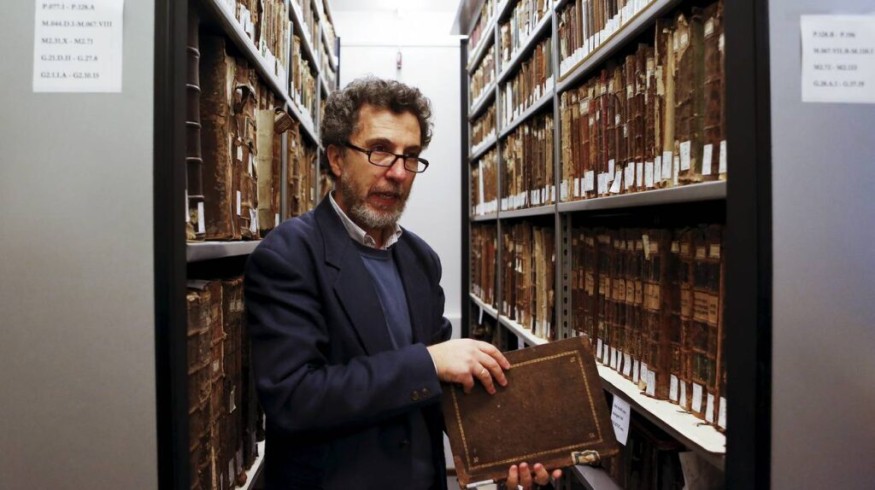
Gadi Luzzatto Voghera, veneziano, nato nel 1963, è storico e direttore della Fondazione CDEC di Milano. Studia la storia degli ebrei in Italia, l’antisemitismo e la secolarizzazione ebraica, intrecciando ricerca accademica e impegno nella memoria. Ha insegnato a Ca’ Foscari e al Boston University Study Abroad Program di Padova, e collabora con istituzioni come IHRA e il Museo Nazionale dell’Ebraismo Italiano e della Shoah. Autore di libri e articoli, lavora per rendere accessibile a tutti la conoscenza della storia e della cultura ebraica contemporanea.