The Indigenous Jews of Colonial Judaism
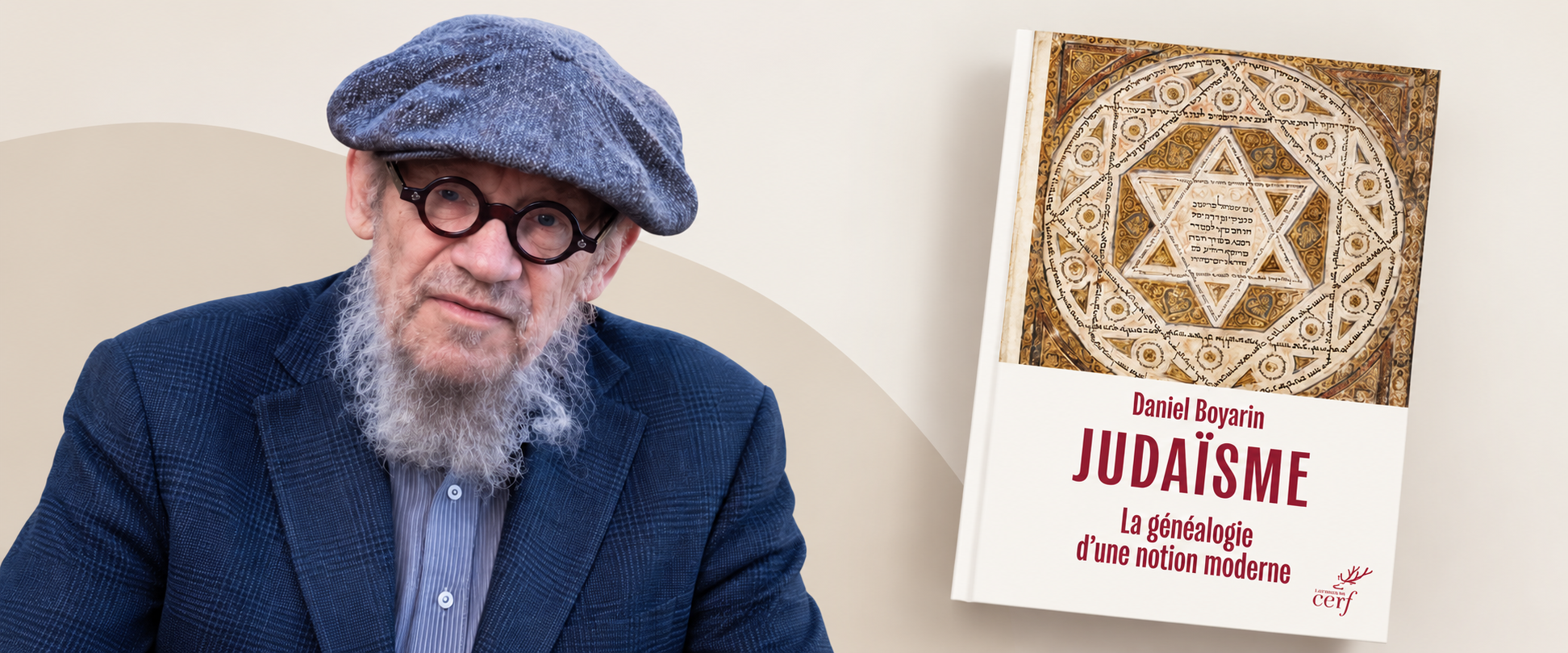
In “Judaism: The Genealogy of a Modern Notion” (recently translated into French) Daniel Boyarin argues that “Judaism,” conceived as an abstract religion, is an invention of Western modernity, derived from Christian categories that Jews eventually internalized. David Lemler takes the critical force of this genealogy seriously, while discussing some of its presuppositions. Can we rediscover an “indigenous” Jewish identity by breaking away from European modernity, or must we instead embrace this history of exchanges, tensions, and hybridizations that has also shaped Judaism?
History has become, according to a famous phrase by Yosef Hayim Yerushalmi, “the faith of the fallen Jews.” Emancipation and modernity have drawn them out of a way of life based on the ritual reenactment of an immemorial biblical past, bringing them into history and establishing history as a new mode of relating to oneself.
With this idea, Yerushalmi is undoubtedly advocating for his own way of being Jewish in modernity, and many other ways have been devised to continue being Jewish in a secularized world, including the “Orthodox” perpetuation of premodern rituals.
Daniel Boyarin is undoubtedly among those contributing to the invention of unique ways of continuing Jewishness in modernity—or rather, postmodernity. His proposal is an original combination of a “return” to a claimed orthopraxy and a recourse to history, in the vein of a critical genealogy of what is commonly called “Rabbinic Judaism .” In the art of bringing academic Jewish studies out of their institutional ghetto, of diverting them from their tendency to constitute a “decent burial of Judaism”—to borrow Moritz Steinschneider’s phrase as reported by Gershom Scholem—he is a master and a guide.
Burying “Judaism”
Yet it is indeed to a burial of “Judaism” that Judaism, Genealogy of a Modern Notion (2018, French translation, 2026) invites us, since the book reveals just how harmful the use of this word is to the understanding of Jewish tradition and Jewish reality. Far from merely tracing the history of a word, the book sets forth an epistemological—and, consequently, political—agenda regarding what it means to be Jewish today.
Jews did not use the term “Judaism” to define themselves before the modern era
Without delving into the details of a philological inquiry that spans the centuries with a delightful (or rather joyful) blend of flair and rigor, the thesis can be summarized simply. Jews did not use the term “Judaism” to define themselves before the modern era, which began with the Emancipation. They thus adopted a term that has a long history of controversy within the Christian tradition. By “Judaism”—or, originally, ioudaismos in Greek and iudaismus in Latin—the Church Fathers and, later, medieval Christian thinkers targeted and constructed a rival “Church” and an “orthodoxy —a theological foil that allowed them to define the normative version of Christianity. Pre-modern Jews, for their part, did not have this word; they had, so to speak, no “Judaism,” no abstraction or religion by which they could identify themselves.
By appropriating the word, Jews became Christians—or rather, the distorting and distorted mirror image of Christians. They allowed themselves to be epistemologically colonized. What remains, then, is to emancipate them from this emancipation. From this perspective, history becomes the critical instrument for a possible return to self for the fallen Jews.
Indigenization of the Jews
If premodern Jews did not have “Judaism,” what did they have? They had what Boyarin phrases Jewish “doings”, Jewish ways of acting.. When a Jewish author of antiquity happens to use the Greek word ioudaismos (rare occurrences in the Second Book of Maccabees and in Paul, notably), it is to designate the way the Judeans acted and lived. The Hebrew word yahadut, which is absent from ancient sources, appeared in the Middle Ages to denote—according to Boyarin—not the abstract composite of theological beliefs and the norms and institutions that support them (what secular modernity calls “religion”), but a certain way of life, determined by a legal status prescribed by the Torah and rabbinic halakhah.
I will discuss this general statement regarding the Middle Ages further on. But for now, I would like to highlight what is remarkable and symptomatic about this assimilation of Jews to their actions. According to the schema of Jewish “autocoloniality,” within which Boyarin situates his analysis, Jews must be reduced to a state of “indigenity.” We, as postmodern Jews, are in a position to serve as ethnologists of premodern Jews, colonized by modern Judaism. Jews have always acted in a Jewish manner. Jews have always been designated, hostilely, under the category of “Judaism.” Today’s Jews can free themselves from this category—which they have themselves internalized—by rediscovering themselves as active subjects.
In his autoethnological practice, Boyarin posits a methodological principle derived from Wittgenstein: a name has meaning, within a symbolic system, only insofar as it exists in the language or languages that articulate it. The category “Judaism,” as applied to the premodern Jewish tradition, is a so-called “etic” category—exogenous to the tradition itself—which lacks such a term or its equivalent. Yet the ethnologist—practicing critical ethnology in the vein of Eduardo Viveiros de Castro’s “cannibal metaphysics”—must, as much as possible, refrain from approaching the indigenous other with Western epistemological categories, and thereby reducing them to one’s own perspective. On the contrary, the ethnologist must allow these other ways of living and thinking to teach them what is particular and situated about our own way of life.
This nominalist stance is dictated by the format of the original English-language book, which is dedicated to challenging a series of “key terms” in Jewish studies—all those terms that seem so obvious they are never questioned (starting with “Jews” or “Judaism”). But starting from the idea that the absence of a word implies the absence of the thing, the concept, or an equivalent leads to overlooking the full range of ways in which Jews have continually produced other words and other ideas through which they conceive of themselves.
Defining Oneself: A Jewish Doing
This self-reflection is perhaps “Jewish doing” par excellence. And Boyarin himself has taught us, in other books he does not draw upon here, to conceive of it as the product of interactions—generally polemical—with those others who define Jews in their place (see in particular Border Lines, The Partition of Judaeo-Christianity, 2004). The Church Fathers formulated their foundational dogmas through the creed developed at the Council of Nicaea in the 4th century. They did so by attributing to the Jews a “Judaism”—a set of deviant beliefs contrary to Christian orthodoxy. At the same time, the rabbis developed a foundational discourse—that of the house of study—where the practical “doings” of Jews were scrutinized within a specific “doing”: that of study. In other words, “Judaism” is nothing more than one of the terms by which Jews have defined themselves throughout their long history.
“Judaism” is a religion, a pure product of the secularization of Western Christian society—in other words, of the secularization of Christianity. While it is conceivable without the Jews, it is undoubtedly not the best category for understanding Jewish identity today and therefore calls for deconstruction.
Does this invalidate Boyarin’s thesis? Is there not a modern specificity in the fact that Jews—or rather, certain Jews—have appropriated a concept forged by others and against them in order to define themselves? Yes and no.
“Judaism” is a modern notion, if by it we mean the “religion” of the Jews—an abstract concept blending beliefs, practices, and institutions, defining a specific sphere of social existence that can be conceived independently of the Jews themselves. As Ahad Haam—a major thinker of cultural Zionism, with whom the anti-Zionist Boyarin strangely finds common ground—put it at the end of the 19th century, the ethical universalist monotheism that modern Jewish thinkers have forged under the name “Judaism” to justify Jewish existence in modernity has nothing specifically Jewish about it. Ultimately, it could very well be conceived of even if—God forbid (lo ‘alenu)—Jews were to cease to exist. The Jewish religion does not need the Jews, and, I would add, the reverse is also true.
“Judaism” is a religion, a pure product of the secularization of Western Christian society—in other words, of the secularization of Christianity. While it is conceivable without Jews, it is undoubtedly not the best category for understanding Jewish identity today and therefore calls for deconstruction.
But at the same time, it is neither new nor specifically modern for Jews to borrow a conceptual framework to think about themselves, adopting it at the cost of modification and subversion. To echo the decolonial critique, it is their condition as a minority in exile that partly explains this way of incorporating concepts from the hegemonic culture within which they live.
Being Jewish becomes a religious characteristic that integrates harmoniously into the modern state by occupying its well-defined place
The Talmud employs the concept of “Torah” to define Jews. Many have noted that this involved a reinterpretation of biblical precepts within the Roman conception of law. The picture, however, is incomplete unless we take into account that this reworking is accompanied by a critique of imperial political power (equated with idolatry)—which gives the law its “force”—and of the obligation to study the law.1 The concept is imported, but subverted. The law becomes Jewish.
Let us also consider the medieval case of the importation of a Greco-Arabic concept of “belief” (i‘tiqād, later rendered as emunah in many Hebrew translations). From Saadia Gaon (10th century) to Maimonides (12th century), major authors of the Jewish tradition operating within the Islamic world reshaped Jewish tradition as “monotheism,” a doctrine of the one God. Yehuda Halevi (12th century), an author extensively discussed by Boyarin in support of his thesis regarding a modern invention of “Judaism,” is, however, perhaps the first to use, in Arabic, an abstract term that is its exact equivalent: “yahūdiyya.” In a surprising passage from his Kuzari (3:17), he proposes redefining membership in Israel through the sincere profession of what he calls “the beliefs of Judaism” (‘aqīdat al-yahūdiyya). In doing so, he adopts an Arab-Muslim approach to defining collectives as communities of beliefs and laws, designated by the names of abstract entities (yahūdiyya, naṣrāniyya—one of the terms for Christianity—or even islām). But he transforms this approach to conceptualize a dispersed and deterritorialized collective.
Finally, let us consider the case of Moses Mendelssohn (18th century), a leading figure of the German Enlightenment and the father of modern Jewish thought. Mendelssohn is credited by Boyarin and others with the Jewish adoption of the term “Judaism” (Judentum, which appears, for example, in the subtitle of his Jerusalem, Religious Power and Judaism) and, above all, for transforming Jewish tradition into a religion modeled on a Protestant-style denomination. Being Jewish became a religious characteristic that integrated harmoniously into the modern state by occupying its well-defined place, after its institutions had renounced the exercise of any coercive power.
It is true that Mendelssohn calls for the abandonment of the Yiddish “dialect”—which he despises—and the adoption of the German language. This rejection of the language of exile in favor of the Christian language is obviously far-reaching and deeply disruptive. It could not leave the Jews’ self-understanding unchanged. Yet it is remarkable that Mendelssohn, the first to endow the Jews with “Judaism,” is also the first to state (in German) that Judaism “is not a revealed religion,” but rather “revealed law.” In other words, appearing as a modern religion, “Judaism” immediately challenges the very category of religion. All subsequent forms of this negation—“Judaism is not a religion”—including those of the Zionists (“it is not a religion, but a political or cultural identity”)—are already in the making in the very adoption of the confessional framework implied by the term “Judaism.” With the Jewish adoption of the term “Judaism,” “religion” becomes Jewish and, in doing so, ceases to be perfectly adequate to itself, caught between a community of beliefs and a secular political identity.
Reinventing what it means to be Jewish based on Judaism
Have Jews ever spoken their own language? Jacques Derrida held (specifically regarding the Jews of Algeria) that their experience attests to the fact that no one ever truly possesses a language, not even their mother tongue. Aramaic, Arabic, German (or any other modern European language) are undoubtedly the languages of the other. Yiddish and “Judeo-languages” in general are hybridizations.
Reinventing what it means to be Jewish today can only be achieved by coming to terms with this ambivalent relationship between Jews and Europe, between Jewish thought and Western tradition.
Here again, the anti-Zionist Boyarin aligns with Zionism in the idea that Jews should be given back their language, but in a form other than Modern Hebrew. For him, this involves a postmodern reclaiming of a premodern Jewish identity. Ultimately, his proposal—which perhaps only an American Jewish scholar could have formulated—can be read as a rejection of the modern, European aspect of the history of Jewish thought, including Zionism and the State of Israel, as European projects. Through the process of his genealogy and ethnography, he hopes to discover within Jewish thought a different kind of thought, capable of challenging the categories of Western thought.
This undertaking rests on a dual distancing, or even a dual alienation. To become an ethnologist of premodern Jews, one must regard the moment of the modern invention of Judaism as foreign to Jewish thought. One must exclude from a normative history of Jewish tradition figures such as Mendelssohn or the proponents of the Wissenschaft des Judentums, the (academic) science of Judaism. One must also distance oneself from premodern Jewish tradition, which has become opaque to us due to the epistemological veil cast by the latter.
But can we do away with a part of history? Isn’t that like sawing off the branch on which the very undertaking of a critical genealogy of “Judaism” rests? Yet it is only through the epistemological tools of Western modernity that such a genealogy is possible.
Is this, moreover, even desirable? The reciprocal relationship between Jews and Europe is marked by ambivalence: they shaped it through their presence and their rejection, and contributed to the modernity that sought to exterminate them. Yet they are largely (though not exclusively), in many respects, products of a European history—that of medieval Christendom, the Enlightenment, and the colonial empires. Reinventing what it means to be Jewish today—which is once again becoming a “burning question” (to borrow Eliezer Ben Yehuda’s phrase)—can only be achieved by coming to terms with this ambivalent relationship between Jews and Europe, between Jewish thought and Western tradition.
- On this point, see Ivan Segré’s review of my book, The Invention of Judaism (Albin Michel, 2025), in his article titled What Is Judaism? (https://lundi.am/Qu-est-ce-que-le-judaisme). ↩︎
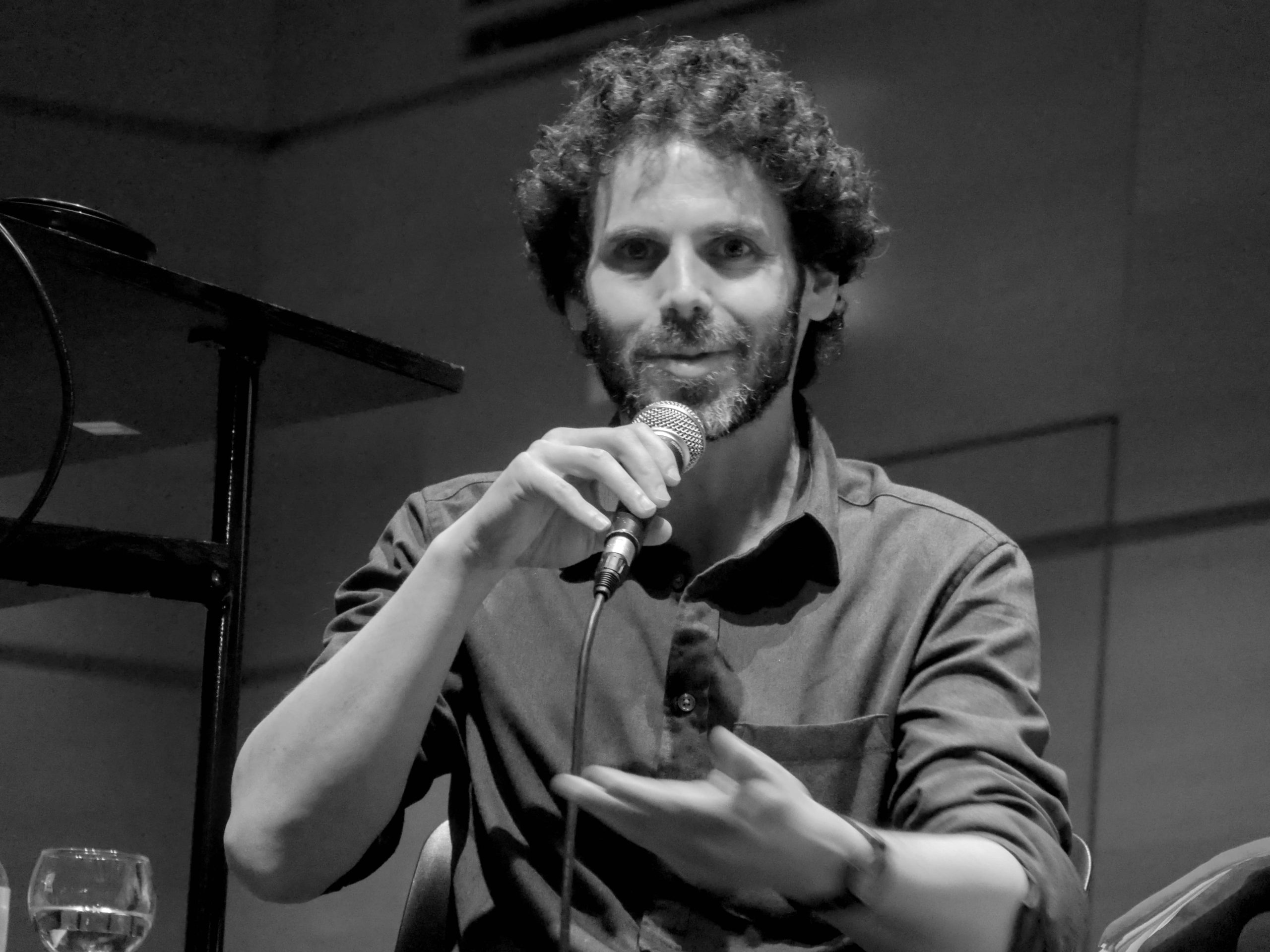
David Lemler
David Lemler is a philosopher specializing in medieval Jewish thought. He is a professor in the Department of Arabic and Hebrew Studies at Sorbonne University. His publications include: ‘The Invention of Judaism: How Jews Define Themselves’ (Albin Michel, 2025) and ‘The Creation of the World and the Limits of Language. On the Art of Writing by Medieval Jewish Philosophers' (Vrin, 2020).