Bitter Love. Israel or the Shores of Intimacy (2/4)
Episode 2: War from Afar
In Grenoble, Israel becomes a daily obsession: news bulletins from Kol Israel, maps of South Lebanon, imagined governing coalitions, debates on Radio Kol HaChalom. The Second Intifada turns this long-distant fascination into a personal and political rift. Upon leaving the community radio station, the narrator discovers the ambiguous figure of the “critical Jew,” celebrated inpro-Palestinian circles yet already troubled by the unease of his own symbolic role.
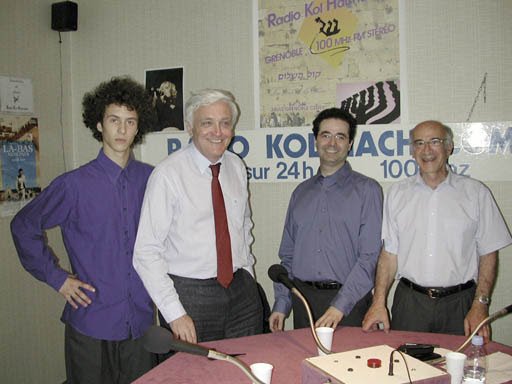
I began listening to Radio Kol HaChalom—”the Voice of Peace”—toward the end of middle school. For nearly twenty years, this small local Jewish station had quietly taken its place among the community radio stations that had flourished in Grenoble since the 1980s. Broadcasting on 100 FM, RKH, as everyone called it, filled the daytime airwaves with Californian soft rock, commercial-free, which made it especially popular with the city’s bus drivers. Its news bulletins consisted of rebroadcasts from Parisian Jewish radio stations, along with the French-language programs of Israel’s national broadcaster, Kol Israel.
I tuned in over breakfast, spooning cereal into my mouth. Every morning at at 7:30 , RKH aired news bulletins from Israel. Every word spoken by the correspondent on the ground, Katy Bisraor, conjures images in my mind: “Last night, two soldiers were killed in a Hezbollah ambush in the western part of the security zone in southern Lebanon. The air force and artillery retaliated against the Shiite militia… .” All this news forms fascinating images that etch themselves into my mind. A few minutes later, as I walk through the pedestrian streets of downtown Grenoble on my way to Stendhal Middle School, my little internal Israeli-Lebanese war gives way to my romantic struggles and all the concerns of that delicate and difficult age. That evening, I fall asleep listening—with my Walkman under the covers—to the phone-in shows on Skyrock, where Tabatha Cash and other future ex- porn stars would come on to boost the ratings on the cheap.1 Throughout the evening, hosts and the audience trashed the National Front but I was mostly thrilled to learn about the vast world of relationships with women.
These brief news bulletins Jewish radio gradually sparked an obsession with another corner of Israel. At the time, 850 square kilometers of Lebanese territory were under Israeli military occupation, supported by a local militia, the South Lebanon Army (SLA). The SLA was initially opposed to the Palestinian armed groups that had taken refuge in southern Lebanon after being expelled by King Hussein’s Jordanian army during the Black September fighting of 1970. When the Lebanese civil war officially ended in 1990, Israel retained control of the so-called “security zone,” intended as a buffer preventing infiltrations and attacks on the Galilee. Katyushas, the South Lebanon Army, the Security Zone, Hezbollah, and UNIFIL (the United Nations Interim Force in Lebanon…) : these names became part of the sprawling geography of my adolescent imagination. I drew maps of the Galilee Panhandle, where, six hundred kilometers north of Eilat, Israel’s narrow northern tip is wedged between Lebanon and Syria. I imagined life in Kiryat Shmona, the City of Eight, just across the border,a town that has grown accustomed to shells and rockets ever sincePLO fedayeen established themselves nearby in the 1970s, followed years later by Hezbollah. In my mind danced the the names of Tyre and Sidon To me, they were nothing more than strategic points on a map, imaginary destinations for a boy who was terrified of blood and physical violence, yet eager to consume information about this war without images—a lingering remnant of Lebanon’s civil war and, in retrospect, a prelude to the broader regional confrontation between Israel and Iran. .
Southern Lebanon forms a strange secret garden—a garden strewn with landmines, bombed, occupied by Israeli soldiers and their faceless Lebanese auxiliaries, a landscape haunted by the shadows of Hezbollah and Amal Shiite militiamen (the other political-military group resisting the IDF) who hide in orange groves to evade surveillance by AH-64 —a world away from my daily life in Grenoble in the 1990s.
Several times a month, I go to the Grenoble Public Research Library. It’s a huge room on the top floor of a rather ugly 1960s building across from the main post office. Long wooden tables accommodate students, researchers, and curious visitors who, if they look up, can admire the Chartreuse Mountains through the large picture windows. There, I fill out request sipes, writing down the reference number RP1091 to request old issues of Le Monde. I know—from books and from the Quid, which was then an important source of knowledge for me—when the major stages of the clashes between the Israeli army, its Lebanese allies, and the fighters of Amal and Hezbollah took place.2 I have to wait about half an hour, alternating between reading the newspapers and observing the women who are there. I then receive my treasure: either bound in a large book with a very thick cover, or simply a cardboard box containing all the issues from a single month stacked inside. I carefully go through each edition and photocopy the few articles mentioning skirmishes, bombings, “Israeli ,” and exchanges of bodies between parties mediated by the Red Cross. This plunges me into the news of the time, with its soccer games, inflation, the Rocard government, and AIDS.
With my little haul gathered, once back home, I carefully glued the articles into a red binder that holds all my documentation on this conflict that nobody cares about, which I methodically archive. As a collector, when I come home from rock climbing or a trip to the mall, I open my binder and can reread the stages of this low-key war.
What did I feel when I stood overlooking southern Lebanon from the Israeli side in the summer of my fifteenth year, in 1998? With the Scouts, we were on a three-week trip to Israel for the fiftieth anniversary of the state’s founding. The trip ticked every box for what’s expected of visitors discovering the best of Israel: a tour of Jerusalem’s Old City, a pre-dawn climb up the fortress of Masada, a visit to a kibbutz and Yad Vashem, a camel ride with Bedouins in the Negev Desert… We spent a Shabbat at a youth hostel in Shlomi, a small town from which we could see the Lebanese border. Dozens of surveillance towers were deployed facing those steep hills where “my” Shiite guerrilla fighters were going to try to kill my very distant Israeli brothers, who were only a few years older than I was. I had never been so close to my little war, but not much is stirring inside me—even if the memory I’m recounting here is perhaps too subdued. I did, however, call my mother from a payphone, all excited, telling her, “This is it, I’m here!” but my passion for southern Lebanon remains a mystery to my friends, who are more concerned with whether France will win the World Cup.
I was thrilled when, at the start of high school, I graduated from listener to host at RKH. The station was a cheerful mix: former Scouts, almost Jews, religious ones and people with no ancestral ties to Judaism all hosted shows—whether focused on reading, sports, or literature. We broadcast from above a plastered synagogue so unassuming that no one looking from the outside would ever guess it was a place of worship. At the top of a steep, dark staircase lies the warm glow of the studios. The large windows, the control panel, recording booths, a few computers, and boxes full of vinyl records. The ugliness of the gray carpet doesn’t detract from the magic of the voices on the air—of course, those from Israel, but especially my own. I discover the immense satisfaction of knowing that when I speak into a microphone, all of Grenoble can hear me. Every Sunday evening, with my little crew, I chat away, hosting a somewhat chaotic show that’s a cross between a teenége call-in show and a press review. The atmosphere is easy going. From time to time, the station director—a man in his forties who trusts us—gently reminds us that we’re broadcasting above a synagogue and that it is probably not necessary to talk about masturbation on every single show. In 1999 and early 2000, I’d plaster ads for my show all over the corridors of my high school, climb onto a table in the middle of the courtyard to harangue my potential audience without ever questioning myself.
One of my scout friends, with whom we hosted this show, move to Israel in the summer of 2000. He was 18 and had just completed his training at a hotel management school. He was the first person in my circle to do that. A strange decision, unimaginable to me. There’s an impenetrable wall between my obsession with Israel and the idea of living there, of deciding to become part of it. I don’t think I asked him why he was leaving. I remember his fascination before his aliyah: everything there would be bigger, newer, more efficient, better.
In the few emails we exchanged afterward—me from the computer in the radio station, him from an internet café in Israel—there was a complete lack of understanding. For me, the army exists in history books, on television, and in the newspaper. I postponed my French National Defence Preparation Day so as not to miss my high school theater classes; he was probably waking up at 5 in the morning to learn how to handle an M16 and carry out orders shouted in Hebrew.
The fall of 2000 and the Second Intifada marked a turning point. The radio station closed ranks behind the Israeli government. I continue to question the use of force, and the radio station director defends me against the criticism he receives, while telling me that his station isn’t there to criticize Israel too harshly. Anger spreads from email to email over a cartoon by Plantu, a column on France Inter, or the coverage in Libération3. The freedom of tone that had characterized this little radio station—and given me so many extraordinary encounters and unforgettable moments—is gradually narrowing as anxiety spreads among Jews. Anxiety for that small country over there, but also here in France, where reports of synagogues set on fire and rabbis assaulted are now buzzing in our ears. It’s becoming hard not to be afraid, even for those—and I was one of them, and sometimes still wish I were—who want to tell themselves they won’t be swayed by exaggerations and propaganda. We’re pushing back against a threat that could undermine the very foundations of our lives in peaceful, post-Cold War Europe. In my mind, everyone loves Woody Allen’s movies, and Maurice Papon is in prison4 and I have nothing left to fear.
Despite the collective tension, the radio continues to offer me opportunities I never expected at my age. I can conduct interviews with candidates for municipal elections as well as with the European Union’s special envoy for the peace process, Miguel Angel Moratinos. In May 2001, surrounded by journalists three times my age, we welcomed historian Elie Barnavi, Israel’s ambassador to France. His steely eyes, handsome face, and erudition make him Israel’s finest representative. We admired him even though his mission was to be the voice of a government led by Ariel Sharon. Forty-five minutes of questions and answers that I remember as being marked by perfect grace. There’s a photo from that meeting where I’m standing tall, hands on my hips, happy to be involved in world affairs. A few days later, returning home from a party around midnight, my father and I watched live footage on CNN in the moments following the suicide bombing at the Dolphinarium nightclub in Tel Aviv. The camera lingered on injured teenage boys and girls, screams in the night, and the flashing lights of emergency vehicles.
I don’t know whether I should be ashamed of Israel while still loving it, or if I can live with this obsessive preoccupation. I have no way of influencing events over there, and the radio station is rallying behind Israel. As the weeks went by, I therefore resolved to take action here—by breaking away. After several days of hesitation, in March 2002, I announced live on the air, in the middle of a broadcast, my decision to leave the radio station. I deliver a prepared speech,explaining that I shared my group’s fears, but that it is no longer possible for me to remain within what I feel has turned into a closed-off community no longer capable of accepting dissent or rational discussion about Israel’s political choices.
I conclude with a quip: “Radio Kol Hachalom, yes; Radio KolhaSharon, no!”
This did not make the general-turned-prime minister tremble, of course. But as a maverick, I began to make a name for myself. I was welcomed with open arms by the pro-Palestinian community in the Dauphiné region, eager to have me speak in their conferences and meetings with students at underprivileged middle schools.
I fall out with several friends from the Scouts and see this as a sign of my independence, discovering the ambivalent with being a ‘critical Jew’. Who is brave? Who is a coward? I take pleasure in calling this or that person a “Sharonite.” The ease of little nicknames that serve to discredit. I don’t yet feel uncomfortable being the Jewish mascot of pro-Palestinian movements. I enjoy charming people as a “good Jew,” allowing others to criticize Israel with complete peace of mind. I become enamored with heterodox Jewish figures, both local and from the distant past, and form a friendship with a journalist from Le Monde diplomatique, who then paints an overly flattering portrait of me in a book on what he calls “Jewish malaise.”
Throughout the bleak years of the Second Intifada, Israel was off-limits, though I never clearly asked myself why. Did I ever consider going there? I was afraid—probably of dying in a terrorist attack. My parents had lost their enthusiasm for Israel and stopped traveling there themselves. At the end of 2003, however, I decided to prepare for a trip. I had to move beyond watching from afar. I could no longer be content with just reading about the subject without experiencing it firsthand. A few weeks before my departure, Israel stepped up its war against Palestinian Islamist movements, deciding to directly target and kill Hamas leaders. The movement’s founder and leader, the elderly Sheikh Ahmed Yassin, a frail man in a wheelchair with a long white beard, was assassinated as he left a mosque in Gaza when his convoy was obliterated by missiles fired from an Israeli helicopter. Cries for revenge rose from every Palestinian city. I found myself caught between a reasonable political perspective—which I like to believe is moderate—which condemns the excessive use of force and fears the consequences of a purely warlike mindset—and a pleasurable yet discreet fascination with Israeli military effectiveness, with a state and a society that stand united in their refusal to yield to an enemy.
I returned to Israel in 2004. I was twenty years old. It was the first time I had travelled there alone, as an adult. Since then, the Second Intifada had broken out, and news of the Israeli-Palestinian conflict—marked by constant violence—flooded the television. Suicide bombings, airstrikes, and clashes unfolded against a backdrop in which 9/11 and the 2003 invasion of Iraq shaped the region’s destiny. I am no longer the hesitant observer of my adolescence. I am completely immersed in it. Not only do I continue to avidly read everything written on the subject in the French press, but the website of Haaretz is the first thing I open every morning when I switch on my computer in my bedroom. While I remain very interested in French politics, I am passionate about Israeli politics. I scribbled imaginary Knesset election results; I reenact—by fudging the scores—the May 1996 showdown between Benjamin Netanyahu and Shimon Peres. I indulge in political fantasies—scenarios that might have changed the world. I meticulously calculate the balance of power in a governing coalition involving political parties whose ballots I wouldn’t be able to read in an Israeli voting booth. I never explain the level of detail behind my political fantasies and obsessions to those around me.
My departure coincides with a devastating heartbreak. As my upcoming stay in Israel takes shape, I’ve been in what I consider my first truly adult love affair for just over a year—. “I love like a grown-up,” I told myself during a trip to Italy. She took me to contemporary dance performances, I took her to the first editions of the Israeli Film Festival in Paris. Then she left to study at a prestigious Parisian school, and our relationship began to founder. Before long, the three-hour TGV ride was undermining what we had built. The separation unfolds without me fully realizing its consequences, certain that, deep down, this woman’s heart and body still belong to me. The vanity of a cocky young man. One evening, on the phone, she tells me she met someone else at the end-of-year gala. It is just a few days before my Air France flight. Scandalously, I hope she’d be worried about my safety and that the shadow of terrorism will be enough to rekindle her love for me. I imagine healing my wound by meeting a beautiful sabra one evening in a bar in southern Tel Aviv, or—better yet—falling for an Israeli Arab woman who’d let me live out a story straight out of the movies? But the chemistry between me and Israelis my age—men and women alike—is nonexistent, something that every subsequent trip will confirm. Something insurmountable prevents any genuine closeness.
- Tabatha Cash is a former adult film actress who was widely known in France in the early 1990s, when pornography was primarily available on VHS videotapes or through a paid subscription to the television channel Canal+, which broadcast a new pornographic film on the first Saturday of each month at midnight. Skyrock is a Paris-based radio station that primarily broadcasts mainstream rap and R&B music.
↩︎ - Quid, a French encyclopedia published annually between 1963 and 2007, was a popular reference in France. The motto of the encyclopedia was “Everything on everything… right now”.
↩︎ - Jean Plantureux, known as Plantu, is a French political cartoonist. His drawings regularly appeared in Le Monde.
↩︎ - Maurice Papon was a senior French civil servant. During the Second World War, as Secretary-General of the Gironde Prefecture, he oversaw the arrest and deportation of approximately 1,600 Jews between 1942 and 1944. They were sent to the Drancy internment camp before being deported to Auschwitz, where they were murdered. Despite this, Papon went on to enjoy a long administrative and political career. He held several senior positions, including Prefect of Police of Paris, where he oversaw the police response to the 1961 massacre of pro-independence Algerian demonstrators, and later served as Minister of the Budget in Raymond Barre’s government. He was finally brought to trial in the late 1990s. In 1998, he was convicted of crimes against humanity. He was released from prison on medical grounds in 2002 and died in 2007.
↩︎
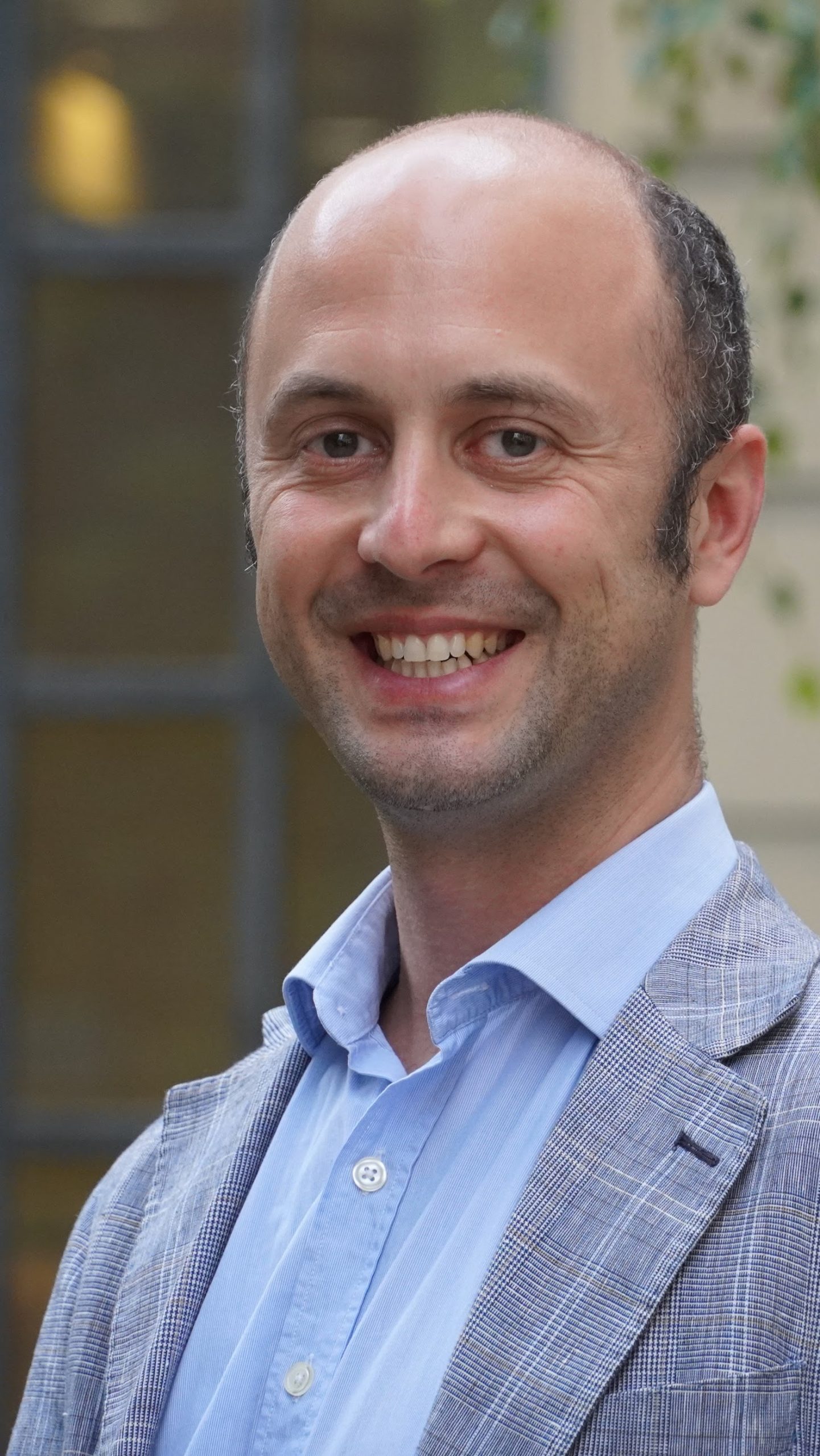
Samuel Ghiles-Meilhac
Samuel Ghiles-Meilhac holds a Ph.D. in sociology and teaches at Sciences Po Paris. He is the author of "Le CRIF De la résistance juive à la tentation du lobby de 1943 à nos jours" [The CRIF: From the Jewish Resistance to the Temptation of the Lobby, 1943 to the Present] (Robert Laffont, 2011) and "Le Monde diplomatique et Israël Histoire moderne de l'Etat juif à travers un journal de référence" [Le Monde diplomatique and Israel: A Modern History of the Jewish State Through a Leading Newspaper] (Le Manuscrit, 2006).