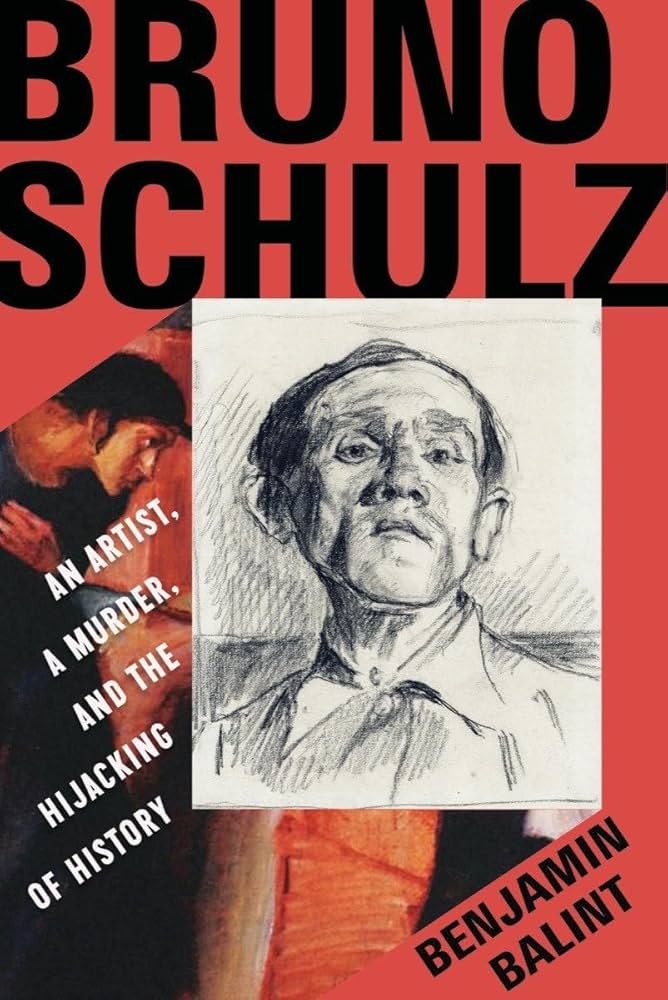
Benjamin Balint is known to readers for his remarkable book Kafka’s Last Trial (W. W. Norton, 2018), a pioneering account of the legal saga that unfolded in Israel over Franz Kafka’s manuscripts[1]. Continuing his exploration of great Jewish artists, their lively presence in our contemporary world, and the question of their collective “legacy,” Benjamin Balint has published an astonishing book on Bruno Schulz, at the crossroads of biography, cultural history, and literary narrative. In Bruno Shultz: An Artist, a Murder, and the Hijacking of History[2], we discover the fascinating posterity of part of his work: notably the frescoes painted in the children’s bedrooms of a Nazi officer, rediscovered, then “saved” by Israeli agents and exhibited at Yad Vashem. But who was Bruno Shultz? An interview with Benjamin Balint.
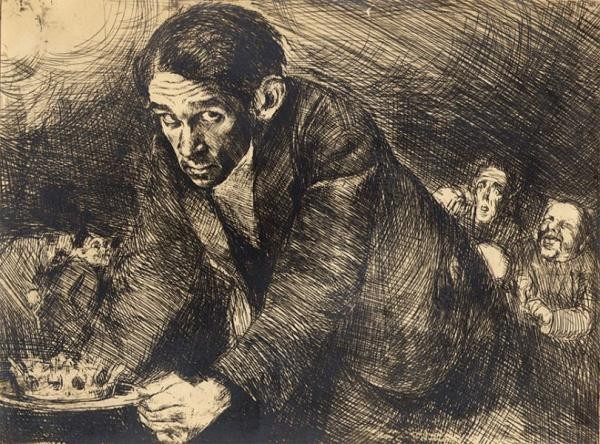
Léa Veinstein: Your book opens with you coming face-to-face with murals by Bruno Schulz, painted in 1942 and “muted by time”, as you write, now on display at the Yad Vashem Museum in Jerusalem. Before going back with you to the circumstances of their creation, and their arrival in the singular place, I’d like to start again with what you felt about the frescoes the moment you saw it: “they invite us to speculate, to fill in what’s missing”. Is it “what was missing” that prompted you to write about this story?
Bruno Balint: Yes, you’re right. As with all meaningful art, the fragmented murals posed more questions than they answered, creating in me a compulsion to reconstruct a fuller portrait, however elusive, of this extraordinary, fractured life. “Reality is as thin as paper,” Schulz once wrote, and standing before these faded fairy tales, I felt precisely that fragility. They prompted a quest for the missing pieces, the erased stories, the vanished voice of an artist lost between the shadows of history.
LV: Bruno Schulz has a singular place in this galaxy of Jewish writers from Eastern Europe, firstly because he was both a writer and an artist, and secondly because he is difficult to place geographically: you write that he was “born an Austrian, lived as a Pole, and died a Jew”. How do you write a portrait of someone so difficult to define? What would you say about him to readers unfamiliar with him?
BB: It’s true—Bruno Schulz resists the comforts of categorization. The outlines blur almost immediately: born an Austrian subject in the vanished Habsburg province of Galicia, he came of age in newly independent Poland, and died, hunted and shot, as a Jew during the Nazi occupation. How, then, to introduce someone so elusive to readers who’ve never met him?
I’d say that he was an alchemist of the ordinary who believed in what he called “the infinite fecundity of matter”; a writer who transformed his provincial hometown Drohobycz into a place of universal myth; and the kind of artist whose Jewishness was not inscribed on his sleeve, or even fully legible to his contemporaries, but deeply woven into the grammar of his vision. I’d say: begin your reading anywhere, and prepare to be unsettled.
LV: His prose is captivating, a little unsettling, with a form of realism that constantly veers towards a world of fantasy. Some of the biggest names in contemporary literature, particularly in the United States, claim to be influenced by his texts (Jonathan Safran Foer, for example, who you quote as saying “the two books by Schulz are the sharpest axes I’ve ever come accross”). Could you tell us a bit about his style, and what, in your opinion, makes his work so great?
BB: Schulz writes in a language rich with sensuous detail and astonishing metaphors. His prose possesses an intoxicating density and invites readers into a state of heightened perception, where realism buckles and folds under the pressure of the imagination. His sentences—so lush, so latticed, so thick with ferment—do not so much describe a world as dream it into being. What makes Schulz great, in my view, is his ability to capture the boundless imagination of childhood, where there’s no firm border between animate and inanimate, between past and present. The father becomes a cockroach, a stamp album a metaphysical ledger. He turns “tandeta”—what is cheap, outmoded, cast aside—into vessels of wonder. These metamorphoses are for me what makes Schulz impossible to imitate and impossible to forget.
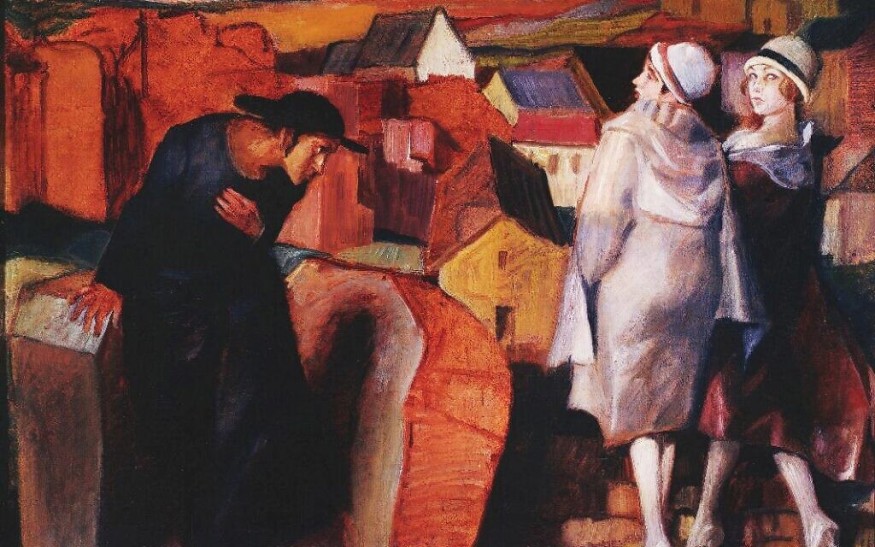
LV: Remarkably, Schulz was also an artist (first of all, an artist, since we learn that he taught art, as his first profession). I confess I’m not very familiar with his drawings, so I went looking for some to review in preparation for this interview, and on Wikipedia I came across this sentence listing the recurring motifs of his pictorial work, – and the mix really made me laugh: “The recurring motifs of Bruno Schulz’s graphic work are the woman-idol and idolatry, sado-masochism, table scenes, street scenes, carriages, Judaism and female nudes”. Is it as mixed up as that?
BB: It certainly sounds funny when listed that way! But behind the eccentric bouquet lies something interesting: a visual artist whose obsessions were as layered and symbolic as his sentences. Schulz’s visual style—particularly in his early graphic cycle The Booke of Idolatry—is saturated with the figure of the woman as fetish, as punishing goddess, as bearer of mystery and humiliation. These images are not simply voyeuristic fantasies. They emerge from a deeply interiorized masochistic dialectic: of reverence and abasement, desire and dread.
To call this “eclectic” is to miss the inner coherence of Schulz’s symbolic economy: The woman’s stiletto is also a stylus; the leash is also a line of script. As Schulz wrote, “In our mythologized childhood, the world was whole.” His drawings attempt, line by inked line, to recover that wholeness from its erotic and spiritual fragmentations.
LV: Returning to your own work, we know that Schulz has a strong link with Kafka, to whom he is often referred. You devote a chapter to this connection, entitled “Metamorphosis: Kafka and Schulz”, in which you note, among other things, both writers use of the first name Joseph in texts with a strong autobiographical charge. How do you understand this?
BB: There’s something intimate and revealing about both Kafka and Schulz choosing “Joseph” for their protagonists. Schulz’s young narrator Józef (Joseph) unmistakably stands in for the author himself, wandering through a phantasmagoric version of his own hometown. Kafka’s Josef K., too, can be read as a kind of guarded self-portrait – less overt, hidden behind an initial, yet haunted by the very anxieties Kafka grappled with in life.
This shared name also resonates biblically. Joseph in Genesis is a dreamer, an interpreter, a beloved son betrayed and exiled. Schulz in particular weaves this biblical echo into his art. Like the biblical Joseph Schulz’s Joseph is a visionary, one who sees through reality’s masquerade.
Josef K. in The Trial awakens into a nightmare of accusation, an innocent man prosecuted for an unknown crime, which can’t help but remind us of the biblical Joseph’s unjust imprisonment. But Kafka inverts the biblical template: Josef K. is a dreamer trapped in a waking dream of guilt, an exile in his own city.
Both authors, through Joseph, ask: How do we read the riddle of our lives? Kafka answers with a kind of tragic irony – Joseph K. cannot decode the Law and thus meets his fate feeling condemned and forsaken. Schulz answers with defiant imagination – Joseph finds small epiphanies that redeem fleeting moments from meaninglessness.
LV: It’s often said that Schulz was Kafka’s translator into Polish: you explain that, in fact, it was his partner Josefina Szelinska who did the translation…
BB: The first Polish translation of The Trial (1936) bore the name Bruno Schulz on the title page. But the work of transposing Kafka’s German into Polish was done, in fact, by his fiancée, Józefina Szelińska—brilliant, discreet, and unjustly overlooked. “We received 1,000 złotys,” she later wrote, “600 for me and 400 for Bruno—a fair division, since without his inspiration there would be no translation.” It was not merely generosity. It was—how shall we say it?—a recognition of Schulz’s catalytic presence in the work.
Yet if Schulz didn’t translate Kafka’s words, he did translate Kafka’s world into his own idiom. “Kafka lifts off the realistic surface of existence like a delicate membrane,” he writes in his afterword to the translation of The Trial, “and fits it onto his transcendental world.” In that afterword, Schulz gives us less a reading of Kafka than a mirrored self-portrait. “His attitude to reality,” he writes, “is radically ironic, treacherous, profoundly ill-intentioned—the relationship of a prestidigitator to his raw material.” That last phrase could well apply to Schulz himself.
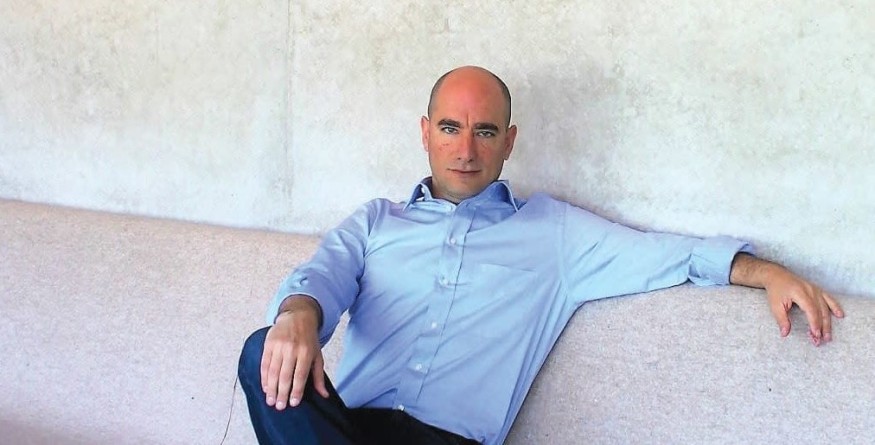
It’s worth remembering, too, the love story under this literary collaboration. Józefina—whom Schulz called “Juna” in his letters—was no literary assistant. She was his equal, sometimes his superior. Their joint authorship—if we may call it that—of Kafka’s Trial was a moment of creative doubling. But it was she, not he, who bent over the page and found the right rhythm, the syntax of dread, the cadence of absurdity. He lent her his name; she lent Kafka her ear.
LV: Bruno Schulz’s relationship with women is no less complex than Kafka’s – and we can see through your book the influence they had on his art. In France, we recently discovered or rediscovered Deborah Vogel thanks to the collection of poems Figures du jour 1930 and Mannequins 1934, published by La Barque in a bilingual French and Yiddish edition. What can you say about this relationship?
BB: Deborah Vogel was indeed a profound influence and correspondent, a kindred spirit to Schulz. Their relationship was deeply intellectual and emotionally intense, driven by mutual admiration and artistic dialogue. Vogel’s avant-garde sensibilities and intellectual rigor both challenged and stimulated Schulz.
Vogel’s poetry—her experiments in simultaneity and montage, what she called “a lyric of cool stasis and geometrical ornamentality”—was as different from Schulz’s florid mythopoesis as glass is from gauze. And yet, they recognized each other. In her letters to him, Vogel invoked their walks and talks as “one of the rare, wonderful things that happen only once in a lifetime.”
What passed between them—erotic? intellectual? both?—remains partially veiled. But we can say this: she understood him. Perhaps better than anyone. Not as an artist to be explained, but as a soul to be witnessed.
LV: We learn that Deborah Vogel chose to learn Yiddish, which was relatively despised in the avant-garde literary circles of Lwow, and to rehabilitate it by inventing contemporary poetry in this language. Schulz himself wrote in Polish. Did he learn Yiddish too?
BB: Bruno Schulz lived at the crossroads of cultures. Yet the language of his craft was Polish, not Yiddish. He belonged to a generation of Galician Jews largely raised with Polish as their mother tongue, even in his hometown – a town where Orthodox Jewish life thrived alongside Polish influence. He did not receive a traditional Jewish education, and there’s no record of him reading Hebrew or Yiddish texts in the original. He committed himself to Polish letters, both by instinct and by choice. This choice was not made in isolation; it was part of a deliberate self-definition vis-à-vis the dominant culture’s language and literature.
But through Vogel, Schulz did gain a window into the vibrant Yiddish literary milieu; through their conversations, he found the fertile ground in which he began to create a Jewish modernist writing in the Polish language. He was friendly with other Jewish writers in Galicia who straddled the language divide, including Rachel Auerbach, a young essayist and critic writing in Yiddish.
And contemporaries in Yiddish circles took note of Schulz’s talent. Some, like Vogel, championed him during his life, while others discovered him after World War II. Isaac Bashevis Singer, for example, came to celebrate Schulz as a lost genius of their generation, who had effectively transposed the music of Yiddish into Polish keys. As the critic Chone Shmeruk said, Schulz’s situation was emblematic of Polish Jews of his time: educated in Polish yet heir to Jewish lore, he straddled identities.
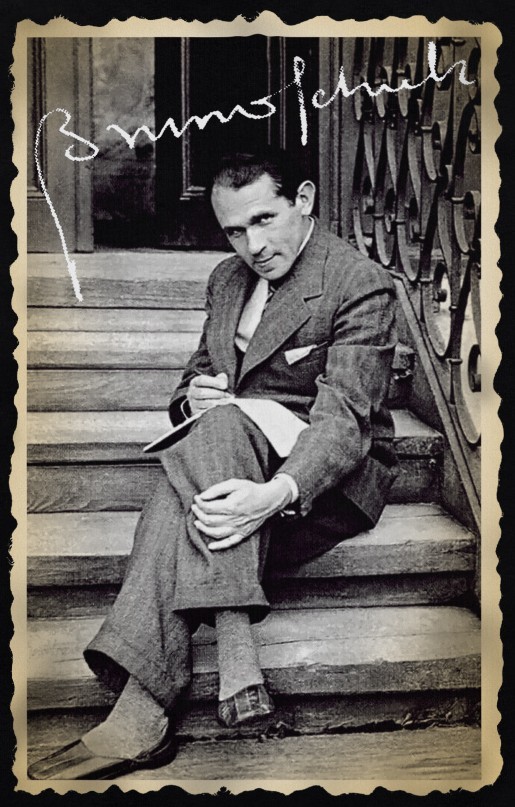
LV: Deborah Vogel was murdered during the liquidation of the Lwow ghetto in 1942, along with her mother, husband and 5-year-old son. Bruno Schulz was forced to live in the Drohobycz ghetto. How does his life change at this point?
BB: The forced relocation into the Drohobycz ghetto marked the devastating unraveling of Schulz’s life. The violence, loss, and isolation sharpened the contrast between his internal imaginative life and external horror. Yet even there, amid extreme deprivation, he persisted—his creativity becoming a desperate assertion of dignity, defiance, and spiritual survival.
LV: Then there’s the “encounter” with Felix Landau, an SS officer “with a Jewish name”, you say… living inside the ghetto, and who already knew Bruno Schulz?
BB: Felix Landau indeed embodies the sinister ironies of the era: an SS man named Felix, the “happy” one, whose presence imposed grim burdens upon Schulz. Landau, Schulz’s “guardian devil,” became the perverse arbiter of his existence. Schulz was trapped in a twisted role as artist-servant, his genius commandeered as the very currency of survival. He became a court artist compelled to aestheticize his own oppression, painting children’s fairy tales in the shadow of genocide.
LV: It was in this context that Landau asked or forced Schulz to paint frescoes on the walls of the children’s rooms in the villa he occupied. Can you describe them for us, and tell us what we know about the circumstances of their creation?
BB: It’s the sort of irony the devil himself might have invented. To commission Schulz to paint tales of innocence and wonder onto the walls of a child’s room in a Nazi villa was not just grotesque, it was a kind of sadism. Schulz was commanded to summon innocence and delight into a world where both had been obliterated. Schulz took that coercion and conjured a stubborn remnant of autonomy. One of the murals depicts a charioteer—a blue-helmeted driver with taut reins in hand. It’s Schulz’s last self-portrait, and I see it as a subtle assertion of dignity.
LV: On Thursday November 19, 1942, known as “Black Thursday”, Bruno Schulz was shot in the head on a ghetto street. There are different versions of who killed him, and why. We still don’t know where his body was dumped. You have some very fine pages on this uncertainty: you take up each possible version with an investigator’s precision. And you write: “we’re left to the polyphony of memory”. Why was it important to recreate this polyphony in the book?
BB: The narrative of Bruno Schulz’s death has always been shadowed by ambiguity. Recounted by some as an act of revenge—“You killed my Jew, I killed yours”—the account offers a grotesquely transactional logic. To flatten his murder into a single line of Nazi dialogue risks reducing it to myth, to what David Grossman has called a “devastating sample of Nazi syntax”—which, while chillingly memorable, cannot bear the full freight of reality.
But there are other versions. Other witnesses. Other silences. And so, to write about Schulz’s death is not to settle on a single account, but to attend to what I call the “polyphony of memory”: a fugue of voices, contradictory and incomplete, each warped by trauma, time, or the sheer insufficiency of language to arrest the horror.
Why was it important to recreate this polyphony? Because it is truer—truer to the nature of history in extremis, where events pass through the kaleidoscope of fear and no single vantage survives intact.
And finally: to recreate the plural accounts of Schulz’s last day is, in a small way, to insist on the legitimacy of plurality itself. That, too, is a kind of fidelity.
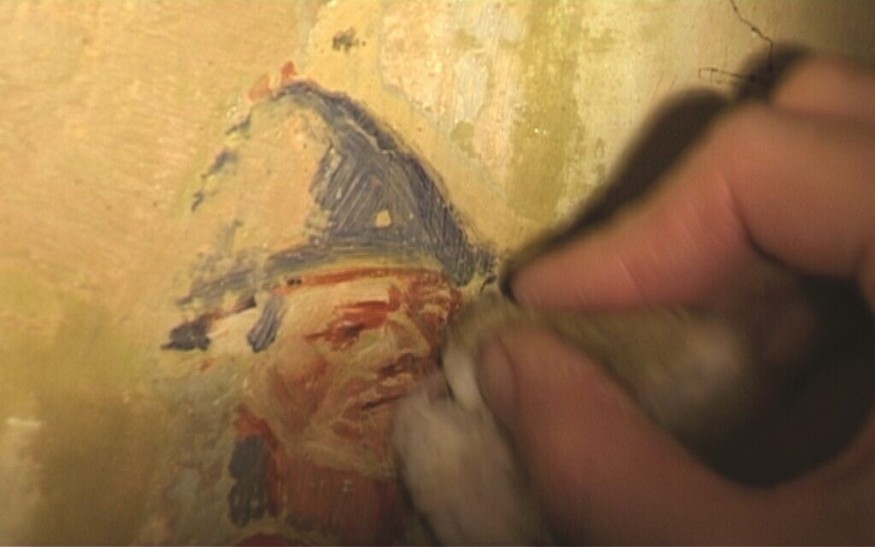
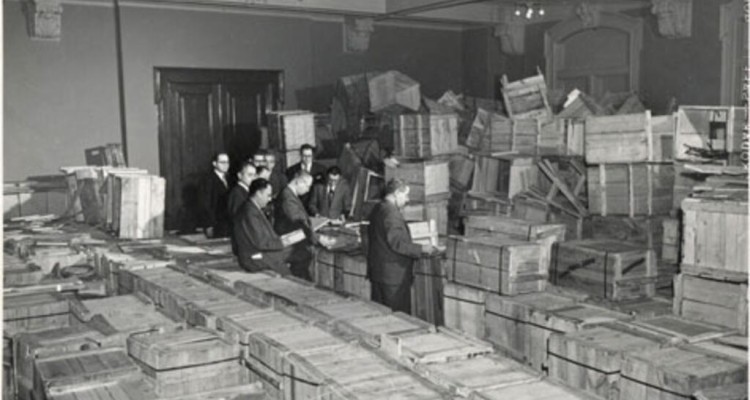
LV: The complex geo-political history of the region has “moved” the town from the Austro-Hungarian Empire, to Poland, to the USSR, then to the Third Reich and today, to the Ukraine (it is now called Drohobytch and lies 64 km south-west of Lviv). Memory has literally been covered in layers: and so have the frescoes painted by Schulz in this villa. Your book recounts the incredible rediscovery of these frescoes, in 2001, by a documentary filmmaker…
BB: Precisely so. A German filmmaker, Benjamin Geissler, rediscovered them, and in doing so, sparked an extraordinary debate about heritage and memory. That these fairy-tales should reemerge in post-Soviet Ukraine, amid flaking plaster and forgetting, is almost too emblematic. Their discovery was miraculous, their subsequent removal by Israeli agents controversial. Schulz’s legacy was suddenly caught between competing national claims—Polish, Ukrainian, Jewish, each vying to assert narrative control. I write of a “competitive martyrology.” This troubling dynamic underscores the complicated politics around Holocaust remembrance. It demonstrates how memory itself can become an arena of conflict, how “official memory” can distort and commodify suffering.
LV: You write in your Prologue that these frescoes are showing us “how Holocaust becomes an object of Realpolitik”- what has this story taught you about this complex subject, different from the cultural heritage you observed before with the “Kafka case”, I suppose?
BB: Great question. Yes, I’ve always been fascinated by how the past is not just preserved but actively fought over, by how a writer’s own wishes can be at odds with the way later generations seek to possess their legacy, by the paradoxes inherent in claiming possession of something essentially intangible—genius, creativity, legacy. I’m interested in distinguishing the possible ownership of artifacts from the impossible ownership of legacies. Such stories are inevitably about far more than the individual; they reflect how societies struggle with memory itself.
In Kafka’s case, as you wrote about so beautifully in «J’irai chercher Kafka», the struggle played out in a courtroom. On the surface it was a legal battle over who owned Kafka’s original manuscripts – was it the elderly woman who had inherited them, the German literature archive in Marbach, or the National Library of Israel? But as I reported this saga, it became clear that this trial was really symbolic: here was Israel and Germany – two nations with very different connections to Kafka – each essentially saying “Kafka belongs with us.” I found a deep irony in this. When Israel’s National Library fought for Kafka’s papers, it wasn’t just about preserving literature; it was about asserting a claim to cultural patrimony. The same goes for Germany’s literary archives, of course.
Now, with Bruno Schulz, the context is different – wartime Poland and a post-Holocaust aftermath – but the core questions are just as central. Schulz was a Polish-Jewish writer and artist who was killed in the Shoah, and for decades his work was relatively obscure, cherished mostly by literary connoisseurs. Then, long after his death, a dramatic controversy erupted over a series of murals he had painted on a nursery wall while forced to work for a Nazi officer. In 2001 these forgotten murals were rediscovered in modern-day Ukraine, and what happened next was almost surreal: agents from Yad Vashem (the Holocaust museum in Jerusalem) stealthily removed the murals and took them to Israel, sparking an international dispute. This incident is the “hijacking of history” I refer to in the book’s subtitle – it’s a vivid example of how art can be literally and figuratively appropriated. In writing about Schulz’s afterlife, I’m examining how the murals became the focal point of a debate over cultural ownership: Do those paintings belong to the place where they were created (Drohobych, which is now Ukraine)? Or do they belong to the Jewish people, since Schulz was a Jewish victim of the Holocaust? Or perhaps to Poland, since he wrote in Polish and was a seminal figure in Polish literature? These questions don’t have easy answers – which is exactly why they intrigue me.
One reviewer captured this by saying my book investigates the “contested rituals of remembrance” surrounding Schulz. I loved that phrasing, because it suggests that how we remember an artist – the ceremonies, the museums, the narratives we build – can become almost ritualistic, and in Schulz’s case different groups have competing rituals. And again there’s a poignant irony: Schulz himself was an intensely shy, private person who never imagined becoming a posthumous symbol. Yet history had other plans for him – his identity was fixed by others (Nazis saw him only as a Jew to be killed; later, institutions saw him as a Jewish artist to be commemorated), and so his work was literally fought over long after he was gone. In the end I try to treat Schulz’s legacy as, in a sense, belonging everywhere and nowhere. His art doesn’t sit neatly within one nation’s borders – and in that way, his story challenges the very idea of the nation-state as the ultimate owner of cultural memory.
LV: The last official visit of the Ukrainian delegation to see the murals at Yad Vashem dates back to 2009, so today of course we are thinking reading this, that everything you tell was happening before the war, which would certainly have endangered these frescoes too…
BB: Schulz’s murals survived the Holocaust by a miracle – hidden under layers of paint until their discovery in 2001 – and were then spirited away to Jerusalem in a controversial bid to save them. At the time, that removal was decried by many as a cultural theft, an affront to Ukrainian heritage. But now, as Russian missiles ravage Ukraine, that very act of “rescue” is put into a different light. The notion that Schulz’s art might be safer in Israel, once a contentious claim, looks different when we see how this war is endangering Ukraine’s cultural treasures. We are watching museums ransacked, artworks stolen en masse – as if the invaders were trying to wipe out not just a people, but their memory. In the blackened ruins of Mariupol, for example, Russian soldiers systematically emptied the galleries, making off with everything from centuries-old Scythian gold to Torah scrolls. Curators and archivists have risked their lives to protect these treasures; one was even kidnapped and interrogated at gunpoint for refusing to reveal where she’d hidden her museum’s prized collection. Observers have noted that this may be the single biggest art heist in Europe since the Nazis pillaged the continent in World War II. Ukrainians themselves understand the stakes: they’ve called it a form of cultural erasure.
Bruno Schulz’s own fate tragically illustrates the human cost of such erasure. War robbed him of everything. He was gunned down in the street by a Gestapo officer – reportedly while carrying home a loaf of bread for his hungry friends. That night, a friend hurriedly buried Schulz’s body in the Jewish cemetery, but even that modest grave was lost to time – the cemetery itself was later obliterated, leaving no trace of him. His final manuscript disappeared in the chaos of that war. This is what war does: it silences voices and shatters the fragile vessels of memory. Yet I also find a poignant lesson of resilience in Schulz’s story. In the face of war’s attempt to annihilate identity, every act of remembrance becomes a defiance. So today, Schulz’s legacy urges us to salvage what we can, to guard the heritage – because preserving memory is how we answer those who seek to erase it, in this war or any other.
LV: After years on the Kafka case, now years on this incredible Schulz’s murals story, you continue to observe and analyze how Israel deals with the complex heritage of European Jewish writers. Why is this important today?
BB: One might say of the cultural legacies of diasporic writers like Kafka, Schulz, or the forgotten modernists of Bukovina (my next project) that to claim them wholly, to nationalize them, is to risk misplacing the fragile center of their lives and works, which were so often shaped in tension with the very notion of belonging. And yet I feel that the effort — to steward, to interpret, to wrestle with these legacies — is both inescapable and necessary.
Israel, born in the shadow of catastrophe and animated by the promise of cultural revival, has always stood in a vexed relation to the Jewishness of the Diaspora — particularly to the lost worlds of European Jewish life. Kafka’s archive, Schulz’s murals: each offers a case study in this ambivalence. Each instance reanimates questions of cultural inheritance, of how a state founded to gather exiles copes with the textual and artistic remains of a culture annihilated.
When the Israeli Supreme Court deliberated over Kafka’s papers, the question was not merely who possessed legal ownership, but who could claim spiritual custodianship. The same question arises with Schulz’s frescoes — painted under duress, lost to time, extracted by Israeli agents. Israel’s effort to rescue them exposed the tensions between patrimony and possession, between honoring memory and appropriating it. We must ask not only where these voices are best archived, but where they are best heard.
Interview conducted by Léa Veinstein
Notes
| 1 | See Philippe Zard’s K.: “Kafka: A Treaty of Misheritage”. |
| 2 | Published by W. W. Norton & Company |