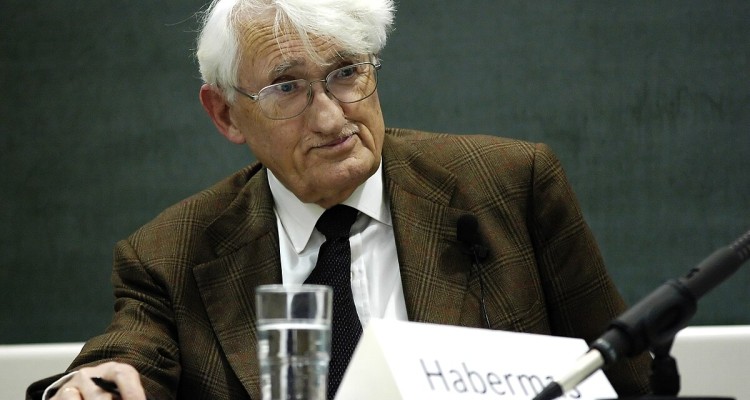
Jürgen Habermas is undoubtedly the greatest thinker on the reconstruction of Europe, the clarification of its normative foundations established after 1945, and its definition as a supranational entity that has made the defense of individual and minority rights, as well as international justice, its unwavering imperative. In particular, his relentless criticism of nationalism is fueled by a vivid memory of the abyss that was the Shoah. Are we at the end of this historical cycle? Habermas’ masterful analysis here focuses on Europe in light of the new global situation, of which the war in Ukraine is both a revelation and a current testing ground. Ending this war is the urgent task of the moment. However, the fundamental question remains. How, in a situation of global weakening of the West, the liquidation of democracy in the American sphere, and persistent national resistance in European countries, starting with Germany, to moving towards political integration, can we imagine the future? This future hangs in the balance, with a weakened Europe, undermined by populism on the left and right, linked against its will to American power at a time when the latter is turning its back on its founding principles. While pessimism may be rife, we cannot afford to give up. For what is becoming increasingly improbable is nonetheless vital to our individual and collective ways of life, insofar as they are based on a normative constitution of Europe that deserves to be maintained.
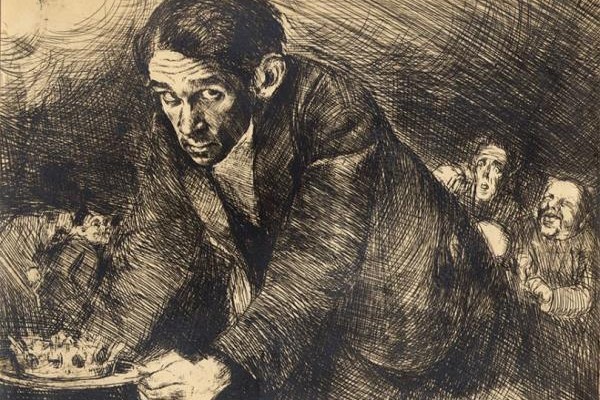
Benjamin Balint is known to readers for his remarkable work on Kafka through Kafka’s Last Trial (W. W. Norton, 2018), a pioneering account of the legal saga that unfolded in Israel around Franz Kafka’s manuscripts. Continuing his exploration of the great Jewish writers, their lively presence in our contemporary world, and the question of collective “legacy”, Benjamin Balint published a stunning book in 2023, at the crossroads of biography, cultural history, and literary narrative, on the writer and artist Bruno Schulz. In Bruno Shultz: An Artist, a Murder, and the Hijacking of History, we discover the fascinating posterity of part of his work: frescoes painted in the children’s bedrooms of a Nazi officer, rediscovered, then “rescued” by Israeli agents and exhibited at Yad Vashem. Léa Veinstein spoke to Balint for K. from Jerusalem.
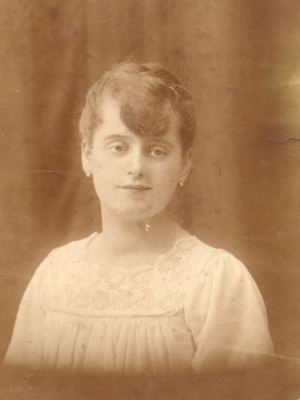
From integration into the Magyar nation to fleeing to England to escape rising antisemitism: this is the family history, that of his maternal grandmother, recounted by Stephen Pogany. Between hopes of emancipation, exile, and disillusionment, this story reveals a fragment of early 19th-century European Jewish history.